Skip to content
You may be lying awake wondering what your spouse knows, what you don't, and how anyone is supposed to sort out a marriage that involved a home, accounts, debts, children, and years of shared life.
Introduction Facing the Unknown in Your Divorce
One of the hardest parts of divorce is facing the unknown.
A spouse who handled the money may suddenly say, “I already gave you everything,” while you still have questions about bank accounts, credit cards, business income, or messages that could affect the children. Clients often come in worried about two things at once. What they do not know, and what they will be forced to hand over about their own life.
That tension is exactly why discovery becomes such a turning point in a Texas divorce.
Discovery is the formal process for getting information and evidence from the other side. It includes written questions, document requests, witness information, and other records that let your lawyer evaluate what the case is worth and what issues need to be proved. In practice, discovery is often the stage where fear starts to give way to facts.
Why discovery matters to you
Texas divorce cases are not decided on suspicion alone. Courts look for records, dates, numbers, communications, and testimony that can be backed up. If there is a dispute over property, income, reimbursement, support, or parenting issues, the side with organized proof usually stands on firmer ground.
Discovery directly shapes:
- Settlement pressure, because documents often change how confident each side feels about holding out or compromising
- Case strategy, because your lawyer has to build arguments around evidence, not guesses
- Cost and timing, because broad requests can increase fees while targeted requests can narrow the fight
- Your stress level, because uncertainty is often harder on clients than a difficult fact they can finally address
Many clients expect discovery to feel like an attack at first. That reaction is normal. The process can feel intrusive, especially when your finances, parenting decisions, and private communications are being examined. Once there is a plan for what to gather, what to object to, and what actually matters, the process usually feels more manageable.
This is not just a courtroom formality
Discovery sets the tone for the rest of the case. A spouse who is open and organized can often move settlement discussions forward faster. A spouse who delays, hides documents, or gives half-answers usually increases conflict and expense for everyone involved.
That is the practical reality. Discovery is how a divorce stops being a swirl of accusations and starts becoming a case built on records, explanations, and choices. It can be uncomfortable, but it also protects you. It gives your attorney the tools to test claims, measure risk, and push for a result based on facts instead of pressure.
What Discovery Is and Why It Is Necessary
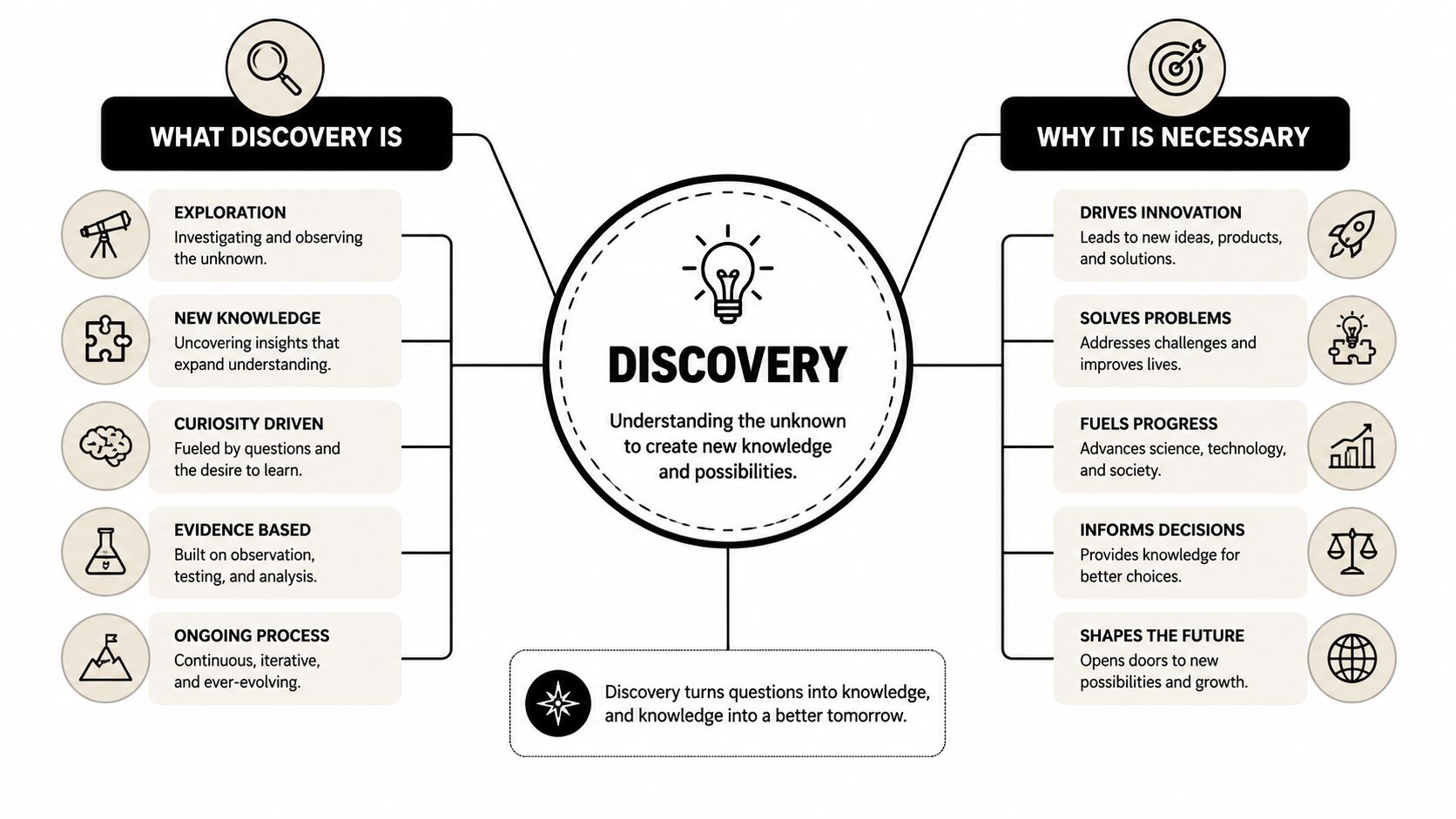
A good way to think about discovery is this. You can't divide what you haven't identified.
Texas is a community property state, which means many assets and debts acquired during the marriage may be part of the marital estate. Before anyone can negotiate seriously, attend mediation, or ask a judge for a ruling, both sides need a usable picture of what exists. Discovery is the legal process that creates that picture.
Discovery creates a shared factual record
Texas family-law discovery is a rules-driven evidence system that includes requests for production, interrogatories, requests for admissions, depositions, and subpoenas. The process is designed to give each side a complete picture of assets, liabilities, income, and expenses, which directly affects property division and support calculations (Austin Divorce Attorney on the Texas divorce discovery process).
That matters because divorce isn't only about what feels fair. It's about what can be shown through records and testimony.
A spouse might say there's no extra income. Tax returns, account statements, or business records may tell a different story. A parent might claim certain expenses are necessary for the child. Discovery helps test that claim against documents.
It prevents trial by surprise
Without discovery, a contested divorce would turn into guesswork and ambush. One side could hold back records, then try to introduce them later when the other spouse has no time to respond. Discovery is supposed to stop that.
Here's what discovery often helps uncover:
- Financial information such as bank statements, retirement accounts, debts, deeds, and insurance records
- Income proof including pay information, tax records, and business-related documents
- Custody-related evidence such as communications, calendars, school records, or other relevant materials
- Missing pieces that point to hidden accounts, transfers, or inconsistent explanations
Practical rule: Discovery works best when it's used to answer specific questions, not when it's used to overwhelm the other side with paper.
When clients ask what discovery is really like in a Texas divorce case, this is the first honest answer. It is part inventory, part fact-check, and part pressure test. If the information supports your position, discovery strengthens it. If the information reveals a weakness, you're better off finding that out early than at the courthouse.
The Standard Toolkit Common Discovery Methods
Discovery isn't one thing. It's a set of tools, and each tool has a specific job. Good lawyers don't use every tool in every case. They choose the right one for the problem in front of them.
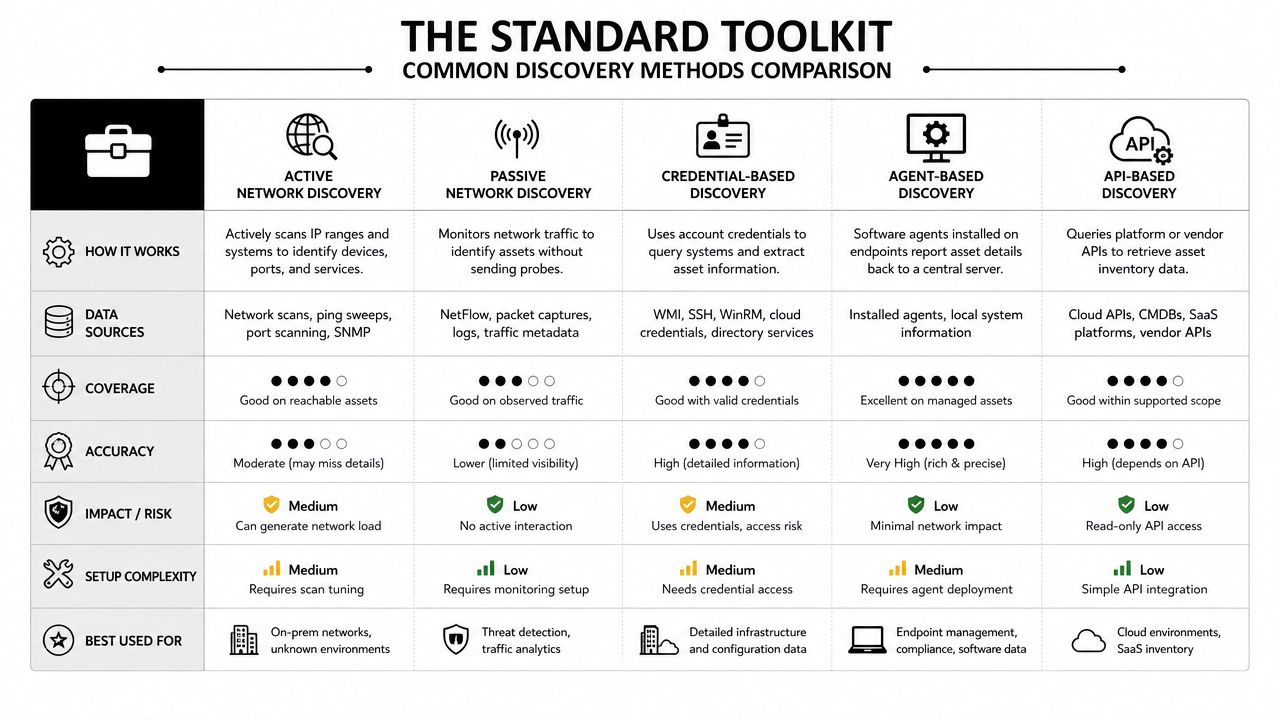
The most common discovery tools
Some tools are straightforward. Others are more demanding. Together, they let your legal team build a clean record.
- Requests for production ask for documents and electronic records, such as bank statements, tax returns, deeds, retirement statements, credit card records, and similar materials.
- Interrogatories are written questions answered under oath. They're useful for identifying accounts, employers, witnesses, or a spouse's version of disputed facts.
- Requests for admissions narrow the fight. They ask the other side to admit or deny specific statements, which can reduce what has to be proved later.
- Requests for disclosure seek core case information under Texas procedure, such as basic witness and claim information.
- Depositions are formal question-and-answer sessions under oath, usually with a court reporter present.
- Subpoenas go to third parties, such as banks, employers, or records custodians, when the needed information isn't likely to come voluntarily from your spouse.
A short video can help if you want a quick visual explanation of how these tools work in practice.
What document requests often look like
When children or support issues are involved, each party may have to produce two years of tax returns, two recent pay stubs, account statements, retirement records, insurance documents, and real-property records, with responses typically due within 30 days of the request (Perry Eaton on discovery in a Texas divorce).
That list tells you something important. Discovery is rarely abstract. It usually lands in your life as a demand for very specific records.
| Tool | What it does well | What it won't do alone |
|---|---|---|
| Requests for production | Gets documents | Doesn't explain missing documents |
| Interrogatories | Gets sworn written answers | Answers may still be vague |
| Requests for admissions | Narrows disputes | Doesn't replace evidence |
| Depositions | Tests credibility live | Can cost more than written discovery |
| Subpoenas | Reaches third parties | Requires careful planning |
If you're organized, discovery becomes more manageable. If your records are scattered across phones, email accounts, apps, and paper files, the process feels heavier fast.
The Texas Discovery Timeline and Key Deadlines
A lot of clients get their first real jolt from discovery when they realize the clock is already running.
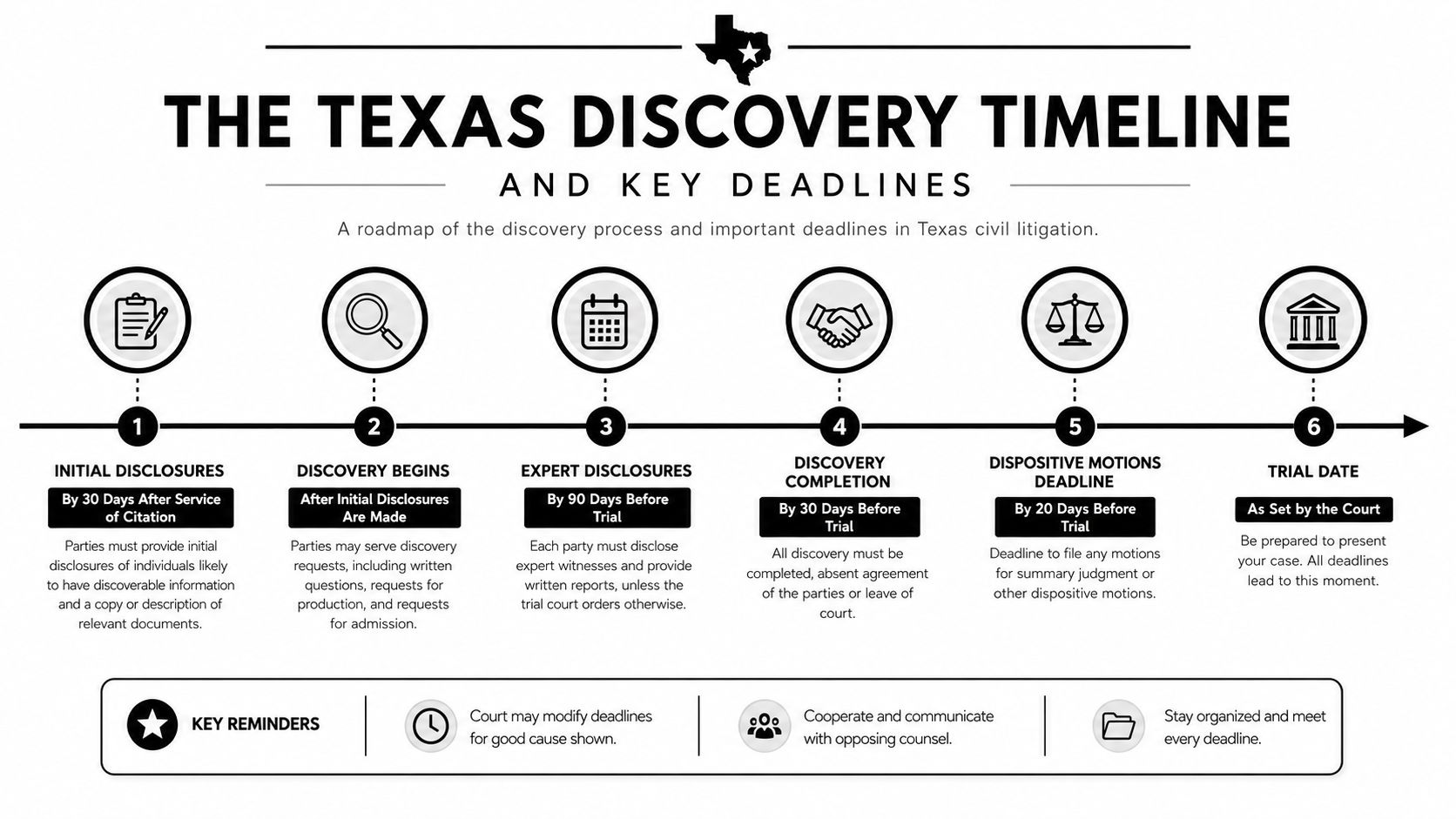
The timeline is shorter than many people expect
Texas divorce discovery moves faster than people assume, especially once written requests start going out. One Texas practice summary explains that written discovery may be served up to 60 days before trial, responses are often due within 30 days, and discovery generally must be completed 30 days before trial (Versus Texas on Texas divorce discovery rules).
That schedule creates real pressure. If records are still sitting in unopened mail, buried in an app, or spread across several accounts, deadlines stop feeling technical and start feeling expensive.
How this usually unfolds in real life
In a typical contested case, discovery tends to move in stages.
- The petition and answer are on file. At that point, the case shifts from accusations and positions to proof.
- Written discovery is served. One side asks for documents, sworn answers, or admissions.
- The response deadline starts running. Waiting to get organized burns time you usually cannot get back.
- Gaps and disputes show up. A document is missing, an objection is raised, or the answers are too vague to be useful.
- Follow-up work begins. That can include narrower requests, subpoenas, or a deposition if written responses are not enough.
- The deadline to complete discovery approaches. Settlement pressure rises because both sides can now see the strengths and weaknesses of the evidence.
The clients who handle this stage best are usually the ones who gather records early, flag problems quickly, and stay focused on what matters.
Why the recent rule change matters
For Texas family-law cases filed after September 1, 2023, parties are no longer working under the old system that required automatic initial disclosures at the outset. As noted earlier in the article, that change affects how and when information gets exchanged.
The practical result is straightforward. A spouse who needs bank records, tax returns, business documents, appraisals, or third-party records often has to ask for them sooner and more deliberately. If discovery starts late, the case can reach mediation or trial prep before the missing information is in hand.
That is one reason discovery strategy matters from the beginning. Good timing can lower the chance of last-minute fights, rushed hearings, and avoidable legal fees.
What Discovery Really Feels Like Costs and Privacy
This is the part many articles skip.
Discovery often feels personal in a way clients don't expect. It's one thing to hear the phrase “exchange of information.” It's another to sit at your kitchen table pulling bank statements, reading old messages, and wondering whether private details of your life will end up attached to court filings or discussed in a deposition.
Why people feel exposed during discovery
Texas family-law guidance notes that discovery can become broad, invasive, and expensive, potentially including bank records, texts, social media, and medical history. The same source notes that costs can range from the mid-thousands in ordinary cases to over $60,000 in high-net-worth disputes (Walters Gilbreath on the reality of discovery).
That doesn't mean every divorce will reach that level. It does mean you should treat discovery as a serious part of the case, not a side issue.
For many people, the hardest parts are these:
- Loss of privacy because records that felt private may become relevant
- Emotional fatigue because reviewing years of financial and personal information is draining
- Fear of judgment because discovery can force uncomfortable explanations
- Fee pressure because every request, objection, review, and follow-up creates legal work
What works and what usually backfires
Clients usually save money and stress when they stay selective, organized, and honest. They spend more when they react emotionally and turn every request into a war.
What tends to work:
- Targeted requests focused on disputed issues
- Early document collection so your lawyer isn't chasing basic records at the last minute
- Cost-benefit decisions about whether a deposition or subpoena is worth it
- Clear boundaries on overbroad requests when privacy matters and the request goes too far
What usually doesn't work:
- Over-disclosing casually without legal review
- Hiding bad facts and hoping they won't surface
- Using discovery to punish instead of prove something
- Refusing to discuss fees openly as the work expands
If you're worried about the financial side of a contested case, it helps to review a practical breakdown of what a contested divorce can really cost in Texas.
The most useful mindset is this. Discovery is uncomfortable because it is thorough. But thoroughness is often what protects you from a one-sided story.
How Discovery Changes for Your Specific Case
No two divorce cases need the same level of discovery. The right approach depends on what is disputed, how much trust exists, and whether the information is easy to get or likely being withheld.
A simple case looks very different from a complex one
In a lower-conflict divorce, discovery may stay narrow. The parties may exchange core financial records, prepare sworn inventories, and move toward negotiation or mediation without heavy motion practice. If both spouses are transparent, there may be little reason to conduct depositions or issue subpoenas.
In a contested case, discovery usually becomes much more deliberate. If one spouse owns a business, controls the books, or handles all online accounts, your lawyer may need more than voluntary document exchange. The case may require subpoenas, detailed written questions, or deeper review of financial records.
Here is a side-by-side comparison:
| Case type | Discovery focus | Common pressure point |
|---|---|---|
| Uncontested or near-agreed | Basic financial exchange | Completing paperwork accurately |
| Contested property case | Accounts, debts, valuations, transfers | Missing or incomplete records |
| High-asset divorce | Business records, third-party records, tracing issues | Cost control |
| Custody-heavy dispute | Parenting communications, schedules, records related to the child | Privacy and relevance |
| Support dispute | Income, expenses, employment records | Whether income is being fully shown |
Discovery shifts based on the issue
If your primary concern is property division, discovery tends to center on the marital estate. If your main concern is custody, the focus often shifts toward communications, schedules, decision-making, and evidence tied to the child's best interests.
Some examples help:
- For parents: Discovery may focus less on luxury spending and more on calendars, school issues, insurance, and communication patterns.
- For business owners: The problem is often not one missing statement. It's whether the records tell a complete story.
- For high-value estates: Discovery has to be disciplined. Broad requests can be justified, but every step still needs a reason.
- For military families: The paperwork and benefits questions can be more specialized, so the requests need to be specific.
Your case doesn't need the most discovery possible. It needs the discovery that answers the questions a mediator or judge will actually care about.
That's why strategy matters. The right discovery plan is not the biggest one. It's the one that fits your facts.
Handling Discovery Disputes and Evasive Parties
Sometimes the other side responds fully and on time. Sometimes they don't.
They may object to everything, produce partial records, claim they can't find documents, or answer direct questions with vague language that reveals almost nothing. When that happens, discovery shifts from information gathering to enforcement.
The court can require compliance
Discovery requests are not casual suggestions. If a spouse fails to respond properly, your lawyer can ask the court to step in through a motion to compel. That asks the judge to order the missing answers or documents to be produced.
If the issue involves third-party records, a subpoena in a Texas divorce case may be one of the most useful tools for getting documents directly from a bank, employer, or another records holder.
Evasion has consequences
Courts expect parties in family cases to participate in good faith. If a judge believes someone is withholding information without a valid reason, the court can impose remedies. Those can include requiring compliance, addressing fees related to the dispute, or limiting how the noncompliant party presents certain issues later.
Here are common signs that a party may be evading discovery:
- Incomplete production where statements skip months or key attachments are missing
- Boilerplate objections raised to nearly every request without meaningful explanation
- Memory failures that somehow affect only financial details
- Late production timed to make review difficult before mediation or trial
What your lawyer does in this stage
A good response to evasive conduct is usually methodical, not theatrical.
- Document the deficiency clearly. Judges respond better to specifics than complaints.
- Narrow the dispute where possible. Some issues can be resolved without a hearing.
- Ask for court help when needed. If the missing information matters, enforcement may be necessary.
- Tie the request to a real issue. Courts are more likely to act when the relevance is obvious.
This should reassure you of one thing. If your spouse refuses to be transparent, that doesn't mean you're helpless. Texas procedure gives your side ways to push for answers and to create accountability when a party tries to play games with the evidence.
Your Discovery Preparation Checklist and Final Advice
Discovery is easier on clients who prepare early. It is harder on clients who wait until a deadline arrives and then try to reconstruct years of finances in a weekend.
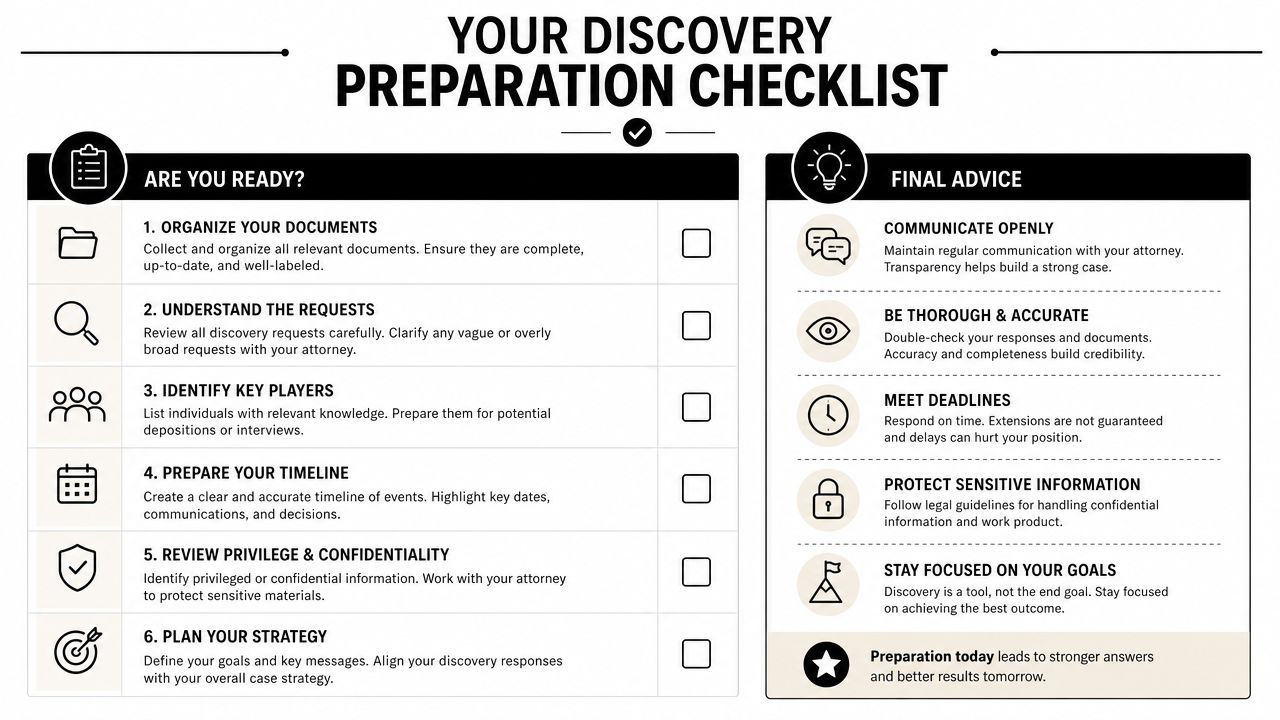
Your working checklist
Start with the records you can access now. If you need a fuller pre-filing guide, review this checklist of documents to gather before filing for divorce.
Use this practical list as your baseline:
- Collect core financial records such as tax returns, pay information, bank statements, retirement statements, credit card records, loan documents, and property records
- Make an asset and debt list even if it's incomplete at first
- Preserve electronic information including relevant emails, texts, account access details, and downloadable records
- Flag unusual activity such as transfers, withdrawals, new debts, or accounts you suspect exist
- Stay honest with your lawyer especially about facts you think are embarrassing or unhelpful
- Respond promptly when your legal team asks for documents, clarifications, or signatures
Final advice that saves time and stress
Don't treat discovery like a test you have to pass alone. Treat it like a project that needs structure. The earlier you organize your records, the easier it is for your lawyer to spot what matters and what doesn't.
Also, don't assume mediation and discovery are opposites. In many Texas divorces, discovery is what makes productive mediation possible. Once both sides have enough information, settlement talks often become more realistic. If your case involves children, related issues like child custody, child support, mediation, and enforcement should be part of the larger strategy, not treated as isolated topics.
If you want professional help managing this process, the Law Office of Bryan Fagan, PLLC offers Texas family-law representation that includes guidance through document collection, written discovery, subpoenas, mediation preparation, and trial planning as part of a broader divorce case strategy.
Key takeaway
What is discovery really like in a Texas divorce case?
It is organized, deadline-driven, and often uncomfortable. It can feel invasive, and in some cases it can be expensive. But it is also one of the main tools that protects you from hidden facts, incomplete stories, and unfair outcomes.
If you prepare early, stay candid with your lawyer, and focus on the issues that matter, discovery becomes much more manageable.
If you're facing divorce or a custody dispute and need clear guidance on discovery, property division, support, or mediation, schedule a free consultation with Law Office of Bryan Fagan, PLLC. You don't have to guess your way through this process. With the right legal strategy, you can move forward with more clarity, better protection, and a stronger plan for your future.