Skip to content
Feeling like you constantly have to look over your shoulder is a heavy burden, especially during a stressful divorce or custody dispute. When a former partner’s behavior crosses the line from merely annoying to genuinely alarming, you need to know that Texas stalking laws exist specifically to protect you. These laws are built on the understanding that a pattern of unwanted contact or surveillance is a serious issue, and you have legal options to get your safety and peace of mind back.
Understanding Your Rights Under Texas Stalking Laws
When you feel like you're being watched, threatened, or harassed—especially in the middle of a tense family law matter—it's easy to second-guess yourself. You might wonder if you're just overreacting or if the behavior is truly "bad enough" to call the police. Trust your instincts. Your feelings are valid, and you absolutely deserve to feel secure.
This guide is designed to help you. We're going to walk through the Texas stalking laws in clear, straightforward terms, helping you understand your rights and the legal protections you can use. We firmly believe that knowledge is the first step toward taking back control. Once you understand what the law considers stalking, you can take confident, decisive action.
What You Will Learn
Think of this guide as a roadmap to help you regain your footing. We'll cover:
- The Legal Definition of Stalking: We will break down what a "pattern of conduct" actually means and show you how a series of seemingly small actions can add up to a serious criminal offense.
- Civil and Criminal Consequences: You'll see the significant penalties offenders can face, which include felony charges and potential prison time.
- Digital Harassment and Cyberstalking: We’ll explain how the law applies to modern harassment, from relentless unwanted texts and social media monitoring to GPS tracking devices.
- Practical Steps for Protection: You will get a step-by-step breakdown of how to get a Protective Order, which is a powerful legal tool to keep someone away from you and your family.
The stress of a divorce or custody case is more than enough to handle on its own, without adding the fear of being stalked or harassed. Our goal here is to give you the information you need to protect yourself and move forward with confidence. You don't have to figure this out alone.
What Exactly Is Stalking Under Texas Law?
When you’re trying to understand your rights, the last thing you need is dense legal jargon. So let's cut through the confusion and talk about what stalking really means for you and your family in plain English. Under Texas Penal Code §42.072, stalking isn’t about a single, isolated incident that makes you uncomfortable.
Instead, the law focuses on a pattern of behavior. Think of it this way: one strange text message might be easy to dismiss. But when it's followed by unwanted calls, unexpected "gifts" on your doorstep, and then seeing the same car outside your work, those individual pieces start to form a clear, threatening picture. The law looks for these kinds of repeated actions, done knowingly, that would cause any reasonable person to feel afraid, harassed, intimidated, tormented, or terrified.
The Core Elements of Stalking
For someone's behavior to cross the line from just annoying to criminally illegal in Texas, a prosecutor has to prove a few key things. It’s the combination of these elements that really matters.
The main ingredients are:
- A Pattern of Conduct: This isn't a one-time thing. The behavior must have happened on more than one occasion—it could be two times or twenty, but it can't be a single event.
- Knowingly Directed at You: These actions have to be intentionally targeted at you or a member of your family or household. It’s not random.
- Causes a Reasonable Fear: This is the most important element. The conduct must be something that would make an ordinary person fear for their safety or the safety of their loved ones. It’s not just about how you felt, but how a "reasonable person" would feel standing in your shoes.
How Texas Law Has Evolved to Protect You
The laws around stalking haven't stood still; they've grown stronger over the years to better protect you and your family. Texas first passed its stalking law in the early 1990s, defining it as repeated conduct that made someone feel harassed, annoyed, alarmed, abused, tormented, embarrassed, or offended.
But as technology and harassment tactics evolved, so did the law. A major update on September 1, 2023, expanded these protections significantly. The law now explicitly includes actions that cause a victim to feel terrified or intimidated. Just as importantly, it broadened protections to include threats against your family, household members, and even dating partners, closing a critical loophole.
This simple decision tree can help you quickly assess whether the behavior you're dealing with fits the legal pattern of harassment or threats.
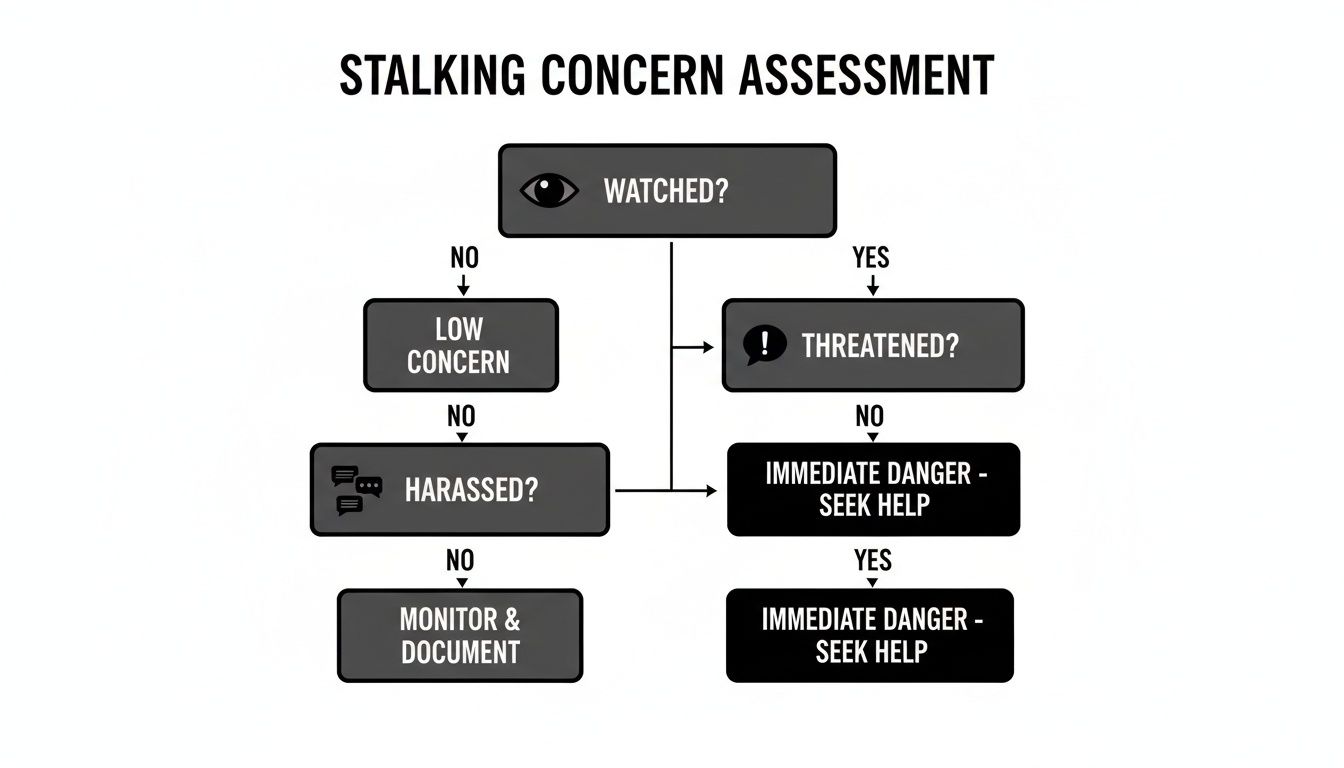
As the flowchart shows, when someone is repeatedly watched, threatened, or harassed, it creates the exact kind of pattern the law is designed to stop.
What Does a Pattern of Conduct Look Like?
Understanding what a "pattern of conduct" actually looks like in the real world is crucial, especially when emotions are high during a divorce or custody fight. It’s a series of actions that, when pieced together, reveal a campaign of obsession and intimidation.
A pattern of conduct isn't about a magic number of incidents. It’s about the cumulative effect of repeated, unwanted actions that create an environment of fear and control.
Examples of behavior that could build a pattern of stalking include:
- Sending a barrage of unwanted emails, texts, or social media messages.
- Following you to work, home, or your child's school.
- "Coincidentally" showing up everywhere you go, like the grocery store or the gym.
- Leaving unwanted items or creepy "gifts" on your car or at your front door.
- Using technology like GPS trackers or spyware to monitor your every move.
- Making threats—veiled or direct—against you, your kids, your pets, or your property.
When these things happen over and over, they stop being isolated annoyances. They become a deliberate campaign of harassment that Texas stalking laws are built to shut down. The next step is knowing how to use the legal system to protect yourself, which often starts with understanding the difference between a protective order vs. a restraining order in Texas.
The Serious Consequences: Stalking Penalties In Texas
It’s one thing to feel harassed, but it’s another to understand just how seriously Texas law punishes stalking. This isn't some minor offense that ends with a slap on the wrist. In Texas, a first-time stalking charge is immediately classified as a felony, putting it on par with many serious crimes. The penalties are designed to be a strong deterrent and to ensure offenders cannot cause any more harm.
When you're already dealing with the immense stress of a divorce or a custody battle, knowing the law is on your side can bring a real sense of security. The legal system understands the danger, and the punishments are designed to match.
Penalties For A First Stalking Offense
In Texas, there’s no "warning shot" for a first stalking conviction. The law is clear and the consequences are immediate.
Someone convicted of stalking for the first time faces a third-degree felony charge. This is a major crime with penalties that reflect just how serious the offense is.
- Prison Time: A conviction can mean 2 to 10 years in a state prison.
- Significant Fines: On top of that, a judge can impose a fine of up to $10,000.
These aren't just numbers on a page; they are actively enforced across Texas. The message is unmistakable: this kind of threatening behavior will not be tolerated.
Escalating Consequences For Repeat Offenses
Things get even more serious if the offender has been convicted of stalking before. From the justice system's perspective, a repeat offense shows the person is an ongoing threat to you and the community.
If someone has a prior conviction for stalking (or a similar crime in another state), a new charge gets elevated to a second-degree felony. That escalation comes with much heavier potential punishments.
For a repeat offender, the stakes are significantly higher. A second-degree felony conviction for stalking can lead to a prison sentence ranging from 2 to 20 years, along with the same potential maximum fine of $10,000.
This tiered system ensures that individuals who don't learn their lesson the first time face a much longer prison sentence, giving their victims a greater degree of safety.
To help you see the full picture, here’s a quick breakdown of the potential penalties.
Texas Stalking Penalties at a Glance
This table summarizes the criminal classifications and potential punishments for stalking offenses in Texas, helping you understand the gravity of the crime.
| Offense Type | Felony Degree | Prison Sentence | Maximum Fine |
|---|---|---|---|
| First Stalking Offense | Third-Degree Felony | 2 to 10 years | Up to $10,000 |
| Repeat Stalking Offense | Second-Degree Felony | 2 to 20 years | Up to $10,000 |
As you can see, Texas law is structured to deliver severe consequences that escalate with repeat behavior, underscoring the state's commitment to protecting victims.
New Protections During The Legal Process
Recent changes to Texas law have added another layer of protection for you while a case is still in progress. As of September 1, 2023, judges now have more power to set specific bond conditions for people accused of stalking.
This was a direct response to the frightening reality that stalking often continues even after an arrest is made. Under the updated Texas Penal Code §42.072, a judge can now explicitly forbid an accused stalker from tracking you as a condition of their release on bond. This includes ordering them not to:
- Use a tracking device to monitor your movements.
- Physically follow you or keep you under surveillance.
- Communicate with you or your family in any capacity.
Breaking these bond conditions is now a felony in itself. As detailed in recent legal analysis, this update gives judges a vital tool to protect you from the moment an arrest is made. You can find more insights about these new protections and what they mean for stalking cases. This proactive measure is designed to give you immediate peace of mind, knowing the court can act fast to stop the harassment before the case even gets to trial.
Beyond Physical Following: Cyberstalking and Digital Harassment
That pit-in-your-stomach feeling when a new, unknown social media profile starts following you can be just as scary as seeing an unfamiliar car parked on your street. Stalking isn’t just about physical following anymore. It has moved online, where harassers can hide behind a screen to intimidate, monitor, and try to control you. This is especially common in heated divorces where digital tools are often used as weapons.
The good news is that Texas stalking laws have kept up with technology. The same legal rules apply whether the harassment is happening in person or online. If the behavior is repeated, unwanted, and makes you feel afraid or intimidated, it can be a criminal offense. The law sees a threat sent via text message the same way it sees one delivered face-to-face.

What Digital Harassment Looks Like
Cyberstalking can take on many forms, and recognizing the pattern is the first step toward making it stop. A stalker might use technology in ways that seem minor at first but quickly escalate into a full-blown campaign of fear.
Common examples of digital harassment include:
- Constant Unwanted Communication: This goes way beyond an annoying ex who won’t stop texting. We're talking about a relentless flood of emails, direct messages, or phone calls designed to completely overwhelm and scare you.
- Creating Fake Profiles: Someone might create fake social media accounts to spy on you, contact your friends and family to spread lies, or post humiliating content about you.
- Using Tracking Technology: This is one of the most violating forms of cyberstalking. An ex-partner might place a GPS tracker on your car, use "Find My iPhone" features without your permission, or install spyware on your phone or computer to watch your every move.
- Publicly Posting Private Information: This tactic, often called "doxxing," involves sharing your personal details like your address, phone number, or workplace online to encourage others to join in the harassment.
As you navigate these different forms of digital harassment, it's absolutely critical to understand how to protect personal information online as a first line of defense. Securing your accounts and being careful about what you share can create a powerful barrier against this kind of digital intrusion.
Proving a Pattern of Digital Conduct
Just as with physical stalking, the key to building a strong legal case is showing a pattern of conduct. A single angry email probably isn't enough, but dozens of them—combined with threatening social media comments and proof of GPS tracking—paint a very clear picture for law enforcement and the courts.
The digital trail left by a cyberstalker is often their undoing. Every text, email, and social media post creates a timestamped piece of evidence that can be used to prove a pattern of harassment.
This is exactly why documenting everything is so important. Do not delete harassing messages, emails, or voicemails. Take screenshots of social media posts, friend requests from suspicious accounts, and any other digital interaction that makes you feel unsafe. Organize this evidence by date and time to clearly show the relentless nature of the behavior.
This documentation will be your most powerful tool if you decide to pursue a Protective Order or if criminal charges are filed. It transforms your case from a "he said, she said" argument into one backed by undeniable digital proof.
At The Law Office of Bryan Fagan, PLLC, we can help you organize this evidence into a compelling case that clearly illustrates the pattern of abuse. You do not have to put up with this invasion of your privacy and safety alone.
How to Legally Protect Yourself: Your Next Steps
Knowing the law is on your side is one thing, but true control comes from taking decisive action. This is the moment you shift from feeling like a target to actively protecting yourself and your family. In Texas, the single most powerful tool for this situation is a Protective Order. It’s a court order specifically designed to stop harassing and threatening behavior by making it illegal for the stalker to come anywhere near you.
Let’s walk through exactly how you can use the legal system to reclaim your safety, step-by-step.

Seeking a Protective Order in Texas
A Protective Order is a civil court order, signed by a judge, that legally forbids someone from committing certain actions. This could mean prohibiting them from harassing you, threatening you, or coming within a certain distance of your home, your work, or your children's school. It is an absolutely critical tool for victims of stalking and family violence.
To get one, you (or your attorney) will need to file an application with the court and prove that family violence has occurred. The good news is that under Texas law, stalking is considered a form of family violence, giving you a solid legal foundation to request this powerful protection.
Step 1: Gather Your Evidence
The strength of your case for a Protective Order depends on the evidence you bring to the table. Your job is to paint a clear, undeniable picture of threatening behavior for the judge. The more organized and detailed you are, the stronger your argument will be.
Here’s what you need to start collecting right away:
- A Detailed Log of Incidents: Keep a journal or a digital note detailing every single incident. Write down the date, time, location, and a specific description of what happened. No detail is too small.
- Digital Communications: Do not delete a single thing. Take screenshots of every harassing text message, email, social media comment, and direct message. This digital paper trail is incredibly compelling.
- Photo and Video Evidence: If the person has shown up at your home or work, safely use your phone to take pictures or videos. Footage from a doorbell camera or other security systems is invaluable.
- Witness Information: Has a friend, family member, or coworker seen the behavior? Get their name and contact information. Their testimony can add significant weight to your case.
Step 2: File the Application
With your evidence in hand, the next step is to file an "Application for a Protective Order." This is typically done in the county where you or the alleged stalker lives. This legal document formally outlines the behavior and asks the judge to issue the order.
This is a stage where having an experienced attorney is a game-changer. We can ensure the application is filled out correctly, your evidence is presented in the most effective way, and all court procedures are followed precisely, preventing delays and strengthening your chances of success.
Step 3: The Court Hearing
Once the application is filed, the court schedules a hearing. This is your opportunity to present your evidence and testify about why you need protection. The person you’re filing against will also have a chance to tell their side of the story.
The judge will listen to both of you and review the evidence to decide if, based on a "preponderance of the evidence" (meaning it’s more likely than not), family violence has occurred. If the judge agrees, they will sign the Protective Order.
A signed Protective Order isn't just a piece of paper; it's a legally enforceable command. If the stalker violates any of its terms—like sending you a text or driving by your house—they can be immediately arrested and face new criminal charges.
Protective Orders vs. Restraining Orders
It’s easy to mix these up, but it’s crucial to understand the difference between a Protective Order and a Temporary Restraining Order (TRO). A Protective Order is rooted in findings of violence or stalking and carries criminal penalties for violations.
A TRO, on the other hand, is generally used in civil cases like divorce to prevent actions like selling marital assets or draining a bank account. While a TRO can include "no contact" rules, violating it usually leads to civil penalties (like fines), not a new arrest. You can learn more about the specific uses of a Texas temporary restraining order in our detailed guide.
What to Do Next
Taking legal action can feel like a monumental task, but you don’t have to face it alone. The steps you take right now can secure your safety for years to come.
- Continue Documenting Everything: Even after you file, keep meticulous records of any new incidents.
- Shore Up Your Safety: Inform trusted family, friends, and your employer about the situation. If you feel it’s necessary, share a photo of the individual with security at your workplace.
- Consult with an Attorney: An experienced family law attorney can guide you through every step, represent you in court, and help you build the strongest possible case for a Protective Order.
You have the right to live without fear. Taking these legal steps is how you enforce that right and reclaim your peace of mind. Our team is here to provide the compassionate, authoritative guidance you need to protect yourself and your family.
Your Path to Safety and Peace of Mind
Feeling unsafe in your own home or life is a terrible burden to carry, but you have the right to feel secure. Texas law is designed to protect that right, and this is your moment to move from feeling like a victim to feeling empowered. With the right information and legal support, you can take back control of your life. You don't have to go through this alone. The key is to turn that fear into focused, deliberate action.
What to Do Next
Here is a clear, actionable checklist summarizing the most critical steps you can take right now to protect yourself under Texas stalking laws:
- Trust Your Instincts: If someone's behavior feels wrong, threatening, or just off, it probably is. Don't second-guess yourself or wait for things to get worse. Your gut feeling is your first line of defense.
- Document Everything: Start a detailed log of every single incident. Save every text message, email, social media interaction, and voicemail. This collection of evidence will become the bedrock of your legal case.
- Report the Behavior: Contact your local police department and file an official report. A police report creates a formal record of the harassment and is a crucial first step toward getting a Protective Order.
- Enhance Your Security: Taking practical security steps can bring immediate relief and a sense of control. This includes setting up strong essential home security measures to create a safer environment. In some cases, you might even consider hiring professional help; you can learn more about private investigator costs and when hiring one makes sense in our detailed guide.
- Consult an Experienced Attorney: The legal system is complicated, and you shouldn't have to navigate it by yourself. A compassionate family law attorney can guide you through the process of obtaining a Protective Order and make sure your rights are fiercely defended every step of the way.
You have endured enough. Taking the first step to seek legal help is the most powerful move you can make to ensure your safety and that of your family.
The most important step you can take is the one you take today. We invite you to schedule a free, completely confidential consultation with our team. Let us listen to what you're going through, explain your options clearly, and help you build a legal strategy to protect your future. Contact us now to get started.
Frequently Asked Questions About Texas Stalking Laws
When you're caught in a stalking situation, it can feel overwhelming. The legal system can seem like a maze, but getting clear, straightforward answers is the first step toward finding your footing. Below, we've answered some of the most common questions we hear about Texas stalking laws to help you see the path forward.
What Kind of Evidence Is Best for a Stalking Case?
In a stalking case, the most powerful evidence is anything that shows a clear pattern of conduct. A single text message might not be enough, but a collection of items showing repeated, unwanted contact paints a compelling picture for the court. Think of it as building a story piece by piece.
To build the strongest case, you need to be organized and detailed. The most effective evidence includes:
- A Detailed Log: Keep a written journal with dates, times, locations, and a clear description of every single incident. Don't rely on memory alone.
- Digital Proof: Take screenshots of everything—harassing text messages, emails, social media comments, and voicemails. Whatever you do, don't delete them.
- Visual Documentation: Do you have a doorbell camera or other security footage? Save any photos or videos that show the person on your property or following you.
- Witness Statements: Talk to friends, family, or coworkers who have seen the behavior firsthand. Their accounts can be incredibly valuable in corroborating your story.
Can I Get a Protective Order if We Weren't Married?
Yes, absolutely. Texas law is designed to protect people from family violence, regardless of marital status. You can seek a Protective Order against someone you were in a dating relationship with, lived with, or are related to by blood or marriage.
The court isn't focused on whether you have a marriage certificate. It's focused on whether family violence—which includes stalking—has occurred. If you can show a pattern of threatening behavior that makes you fear for your safety, you have every right to seek this critical legal protection.
What Happens if Someone Violates a Protective Order?
Violating a Protective Order is a very serious offense in Texas, completely separate from the original stalking charge. If someone under a Protective Order contacts you in any way—sends a text, makes a call, or even just drives by your house—they can be arrested on the spot.
A first-time violation is typically a Class A Misdemeanor, which can mean up to a year in jail and a $4,000 fine. But if that person has violated a protective order before, the charge gets bumped up to a third-degree felony, carrying a potential prison sentence of 2 to 10 years. The courts take these violations extremely seriously because their main job is to keep you safe.
You have the right to feel safe, and you shouldn’t have to untangle these complex legal questions by yourself. At The Law Office of Bryan Fagan, PLLC, our compassionate attorneys are here to give you the answers you need and the authoritative legal representation you deserve. Schedule a free, confidential consultation with us today to go over your situation and learn how we can help protect you and your family. Contact us now to get started.