Skip to content
Facing the start of a divorce can leave you feeling completely overwhelmed and uncertain about what your spouse might do next. A Temporary Restraining Order (TRO) in Texas is a legal tool designed for this exact moment, acting as a crucial "pause button" to provide immediate protection for you, your children, and your shared assets. It is a powerful court order meant to stop harmful actions before they can happen, giving you the breathing room to navigate your next steps with confidence.
Feeling Unsafe or Worried About Your Assets?
The beginning of a divorce can feel like every step is filled with uncertainty about your safety, your children, or your finances. You are not alone in fearing that your spouse might drain the bank accounts, change the locks, or disrupt your children's lives out of anger or spite.

This is precisely why Texas family courts provide a tool called a Temporary Restraining Order, or TRO. A TRO is an ex parte order, which is a plain-English way of saying a judge can sign it based on your request alone—without your spouse even being in the room—to prevent immediate and irreparable harm. Its purpose is to create stability in a crisis.
How a TRO Creates Stability in a Crisis
A TRO isn't about deciding who is right or wrong in your divorce. Its sole purpose is to freeze the situation and establish a clear set of ground rules that both you and your spouse must follow from day one. This order helps maintain the status quo, creating a stable and predictable environment while the legal process gets underway.
This immediate protection is vital. Texas courts issue these emergency orders because they are often necessary to prevent imminent danger or financial chaos. A TRO can put a stop to a wide range of destructive actions before they start, giving you peace of mind.
To give you a clearer picture, here is a practical breakdown of what a TRO can immediately prohibit your spouse from doing and why it matters so much for your case.
Immediate Actions a TRO Can Stop
| Action to Prohibit | Why This Is Important for Your Case |
|---|---|
| Draining Bank Accounts | Protects your share of community funds needed for living expenses and legal fees, as defined by the Texas Family Code. |
| Selling Community Property | Prevents your spouse from getting rid of shared assets like a car, furniture, or other property. |
| Changing Insurance Policies | Ensures you and your children remain covered by health, life, and auto insurance during the divorce process. |
| Harassing or Threatening You | Provides a legal boundary for communication, helping to keep you and your children safe from emotional distress. |
| Disrupting the Children's Lives | Stops your spouse from unilaterally changing schools, pulling the kids out of activities, or interfering with their routine. |
By preventing these actions, a TRO gives you the breathing room you desperately need to focus on the next steps in your case. It ensures that one person can't create chaos while you are trying to find a path forward.
Your First Line of Defense
Ultimately, a TRO is your first line of defense against rash decisions fueled by the intense emotions of a divorce. It protects your financial stability and your family’s well-being right from the start. Gaining a clear understanding of how to protect assets during divorce is a critical first step.
For those facing extreme circumstances who feel they need more than just legal remedies, exploring options like executive protection services during sensitive situations can offer an added layer of safety. The most important thing to remember is that you have options, and you don’t have to face this uncertainty alone.
What to Do Next
A Temporary Restraining Order provides immediate but temporary protection, usually for 14 days. The next critical step is preparing for a temporary orders hearing, where a judge can extend these protections for the entire duration of your divorce.
Navigating this process requires swift, strategic legal action. You need an advocate on your side who understands how to present your case to a judge effectively and secure the stability you and your family deserve.
Feeling vulnerable? You don't have to navigate this alone. Contact The Law Office of Bryan Fagan, PLLC, for a free consultation. Our experienced attorneys can help you take immediate action to protect what matters most.
What a Temporary Restraining Order Actually Does in Texas
Going through a divorce can feel like the ground is constantly shifting beneath your feet. A Temporary Restraining Order (TRO) isn't just another piece of legal paper; it's a powerful tool for creating immediate stability when everything else feels out of control. Think of it as a judge hitting the "pause button" on your entire situation.
This court order effectively freezes things as they are. It stops either you or your spouse from making any sudden, rash decisions that could harm your finances, your property, or your children’s well-being. A TRO lays down the initial "rules of the road" for your divorce, ensuring one person can't take advantage of the other while emotions are running high.
Understanding the Different Types of Orders
In Texas family law, you will hear similar-sounding terms for different court orders. It's easy to get them mixed up, but knowing the difference is critical for protecting your rights.
-
Temporary Restraining Order (TRO): This is your immediate, short-term "pause button." As an ex parte order, a judge can grant it based on your request alone, without your spouse present. A TRO is designed to prevent immediate and irreparable harm and typically only lasts for 14 days until a formal hearing can be held.
-
Temporary Injunction: This is the next logical step. After a court hearing where both you and your spouse can present your side of the story, a judge may issue a temporary injunction. This order takes the rules from the TRO and extends them for the duration of your divorce, turning a short-term fix into a long-term solution.
-
Protective Order: This is a completely different tool used specifically in situations involving family violence. While a TRO manages behavior and preserves assets in a divorce, a Protective Order is about physical safety. It can last for up to two years and has serious criminal penalties if violated.
Pursuing the right type of order is vital. For a more detailed breakdown, you can learn more about a protective order vs. a restraining order in Texas to see which legal tool fits your situation.
Standard Rules in a Texas TRO
So, what exactly does a TRO stop someone from doing? While a judge can tailor the order to your case, most TROs in Texas include a standard set of rules from the Texas Family Code. These rules are designed to be fair and to preserve your community estate.
A TRO is not about punishment; it’s about preservation. The court's goal is to ensure that when it’s time to divide property and make custody decisions, the assets are still there and the children’s lives haven't been turned upside down.
Common prohibitions in a TRO for both you and your spouse include:
- Harassing, threatening, or causing physical harm to the other person or the children.
- Hiding, selling, or transferring major assets without agreement.
- Taking on new, unusual debt or spending large amounts of community funds on non-essentials.
- Changing or canceling important insurance policies (health, life, or auto).
- Removing the children from their current school or daycare without agreement.
- Disrupting the children's established routines and daily schedules.
By putting these guardrails in place from day one, the court creates a level playing field.
What to Do Next
Understanding what a TRO can and cannot do is the first step toward regaining control. This order gives you a crucial window of safety, but remember, it is only temporary. The next, most critical step is the temporary injunction hearing. That hearing is your opportunity to go before the judge, present your case, and ask for these protections to be extended throughout your divorce. Preparing for that hearing is everything.
If you believe you need a Temporary Restraining Order, don't wait. Schedule a free, confidential consultation with The Law Office of Bryan Fagan, PLLC, today. We can help you take swift action to protect your family and your future.
How to File for a TRO in Your Texas County
The thought of walking into a courthouse can feel intimidating, but getting a temporary restraining order is a structured, step-by-step process. You don’t have to figure this out on your own.
The first step is for your attorney to draft and file an Original Petition for Divorce. This is the official document that begins your case. Crucially, this petition will include a specific request for a Temporary Restraining Order (TRO), laying out the immediate protections you need based on the Texas Family Code.
This infographic shows exactly how a TRO fits into the bigger picture of Texas family law, acting as a bridge toward more permanent, stable solutions.
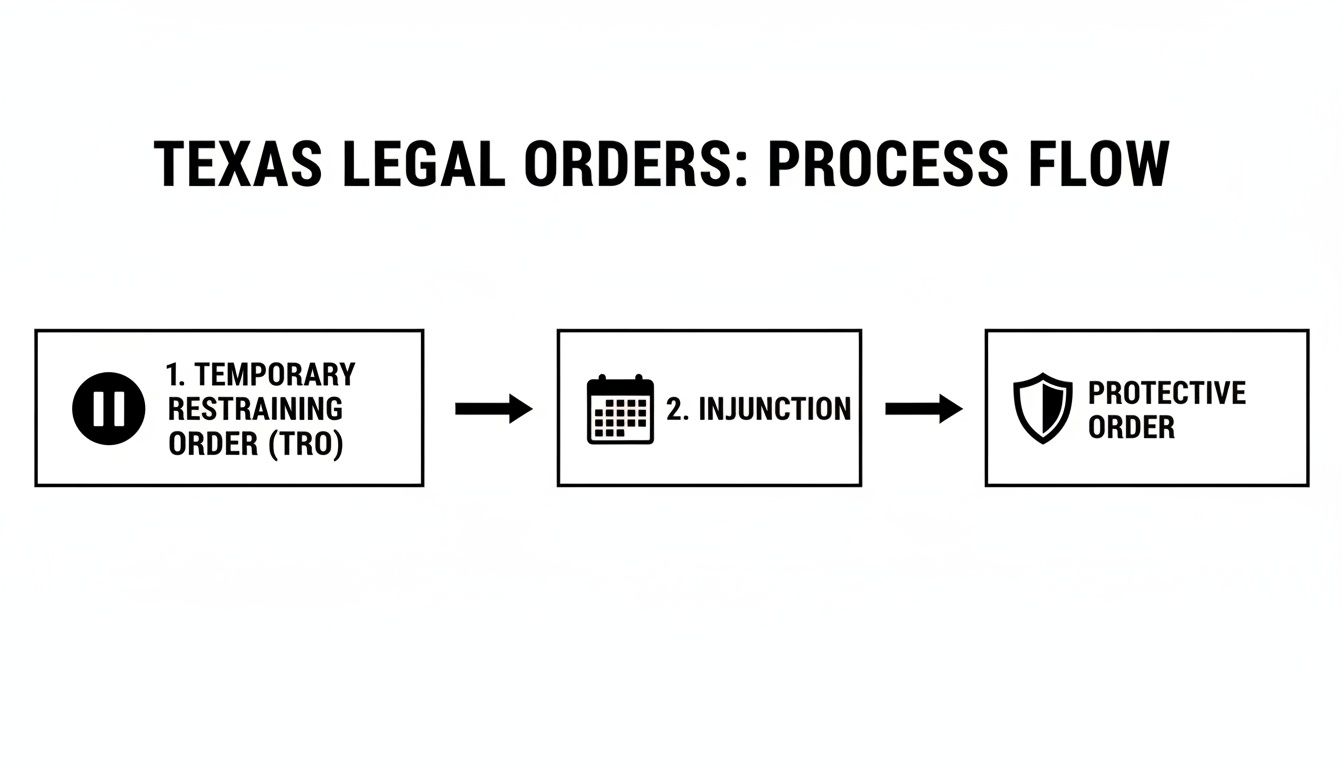
As you can see, the TRO is like an immediate "pause button." It gives everyone time to prepare for the formal injunction hearing, where the court will establish more long-term rules.
The Sworn Affidavit: The Heart of Your Request
Along with the petition, your lawyer will help you prepare a sworn affidavit. Think of this as your formal, written testimony to the judge. It’s a legal document where you will explain, under oath, precisely why you need the court’s immediate protection.
Your affidavit must be specific and factual. It needs to clearly describe the actions you fear your spouse might take and explain how those actions would cause irreparable harm to you, your children, or your property. This document is what convinces a judge that your situation is urgent enough to require immediate intervention.
The Ex Parte Hearing: A Private Meeting with the Judge
Once your paperwork is filed, your attorney presents it to a judge in an ex parte hearing. "Ex parte" is a legal term meaning your spouse and their attorney are not present. This is a critical feature of the TRO process, designed to prevent the other person from acting destructively the moment they learn you’re seeking court protection.
During this brief meeting, the judge reviews your petition and affidavit. If they agree that there’s a real risk of immediate and irreparable harm, the judge will sign the Temporary Restraining Order, and its protections are officially in place.
TROs are an essential tool for protecting families. According to the Texas Advocacy Project, a staggering 1 in 3 Texans will experience domestic violence, and our courts grant about 70% of these ex parte applications to prevent immediate threats. It’s a system designed to act fast when it matters most. You can discover additional statistics from the Texas Advocacy Project.
The Final Step: Service of Process
After the judge signs the TRO, one more crucial step remains. The order is not legally binding on your spouse until they have been formally notified. This notification process is called service.
A neutral third party—usually a sheriff’s deputy or a private process server—must personally hand-deliver a copy of the lawsuit and the signed TRO to your spouse. This step creates legal proof that your spouse received the court documents and knows the rules they must now follow. Once service is complete, the TRO is fully enforceable.
What to Do Next
Getting a TRO is a powerful first step toward creating safety and stability. But it’s just the beginning. The order is only valid for 14 days and leads directly to a temporary injunction hearing, where both sides get to present their case to the judge. Preparing for that hearing is critical if you want to keep these protections in place for the duration of your divorce.
If you believe you need the immediate protection of a Temporary Restraining Order, you must act quickly. Schedule a free, confidential consultation with the Law Office of Bryan Fagan, PLLC. Our team is ready to guide you through every step with confidence and compassion.
The Critical 14 Days After a TRO Is Issued
The moment a judge signs your Temporary Restraining Order can bring an incredible sense of relief. But it’s crucial to understand that a TRO isn't the end of the road; it's the start of a critical two-week period. Once the judge signs the order and your spouse is served, a 14-day clock starts ticking, leading directly to your next major court date: the temporary injunction hearing.

Think of the TRO as a temporary shield. Its purpose is to hold everything in place and prevent immediate harm while you prepare for what comes next. The upcoming hearing is your opportunity to ask the court to turn that shield into a more durable set of rules—called a temporary injunction—that will govern your case for the months ahead.
Preparing for the Temporary Injunction Hearing
This 14-day window is all about preparation. While your spouse has the right to appear and tell their side of the story, you need to be ready to show the judge exactly why the protections in the TRO are still necessary. Your attorney will work with you to gather evidence and build a compelling case.
This practical, step-by-step preparation often involves:
- Gathering Financial Documents: This means pulling together bank statements, pay stubs, credit card bills, and tax returns to paint a clear picture of the financial status quo.
- Collecting Communication Records: Emails, text messages, or voicemails that demonstrate harassment, threats, or concerning behavior can be incredibly powerful evidence.
- Documenting Behavior: Keep a detailed, dated journal of any incidents, especially anything that violates the TRO's terms. Specifics matter.
- Lining Up Witnesses: Testimony from a neutral third party, like a family friend, a teacher, or a neighbor, can add significant weight to your claims.
The goal is to present the judge with a clear, factual picture of your situation and explain why extending these court-ordered rules is in the best interest of your family and your estate.
What Happens If Your Spouse Violates the TRO
Unfortunately, not everyone respects court orders. If your spouse ignores the rules laid out in the temporary restraining order Texas courts have issued, you need to act immediately. A violation is considered contempt of court, and a judge can enforce the order with serious penalties.
Do not engage with your spouse directly about the violation. Instead, your first steps should be to:
- Document Everything: Write down the date, time, location, and specific details of what happened. Get screenshots or other proof if possible.
- Contact Your Attorney Immediately: Your lawyer needs to know about the breach as soon as possible to take action.
- File a Motion for Enforcement: Your attorney will file a formal request with the court, asking a judge to hold your spouse accountable.
Texas district courts issued over 45,000 TROs in family law cases in 2024, with 62% related to custody issues or preventing family violence. These numbers highlight why swift legal action is so vital—these orders resolve urgent problems within that critical 14-day window.
A judge can impose various penalties for a TRO violation, from fines to ordering your spouse to pay your attorney's fees. In severe cases, they can even order jail time. For a deeper look, you can explore our guide on filing a motion to enforce a court order.
What to Do Next
The 14 days after a TRO is issued are a strategic sprint. This period is your chance to work closely with your legal team to build the strongest possible case for the injunction hearing. The preparation you do now can set the tone for the rest of your divorce. By gathering solid evidence and responding correctly to any violations, you empower the court to protect your interests for the long haul.
Feeling uncertain about what to do next? Let us help you create a clear plan. Schedule a free, confidential consultation with The Law Office of Bryan Fagan, PLLC, to ensure you are fully prepared for your temporary injunction hearing.
How to Respond If You Are Served with a TRO
Being handed a temporary restraining order in Texas is a jarring experience that can leave you feeling confused, frustrated, and backed into a corner. Your mind may be racing, but the most important thing you can do right now is take a deep breath and resist the urge to react impulsively. How you handle these next few days will have a major impact on your case.
First, read every single word of the order. This is a direct command from a judge. The document will lay out exactly what you are forbidden from doing—such as contacting your spouse, selling assets, or changing the children's schedules. Violating any part of it, even accidentally, can lead to serious consequences like fines or jail time for contempt of court.
Keep this in mind: A TRO is based on just one side of the story—the one your spouse told the judge in a private (ex parte) hearing. You have the right to be heard, and you will get that chance at the upcoming temporary injunction hearing.
It is absolutely crucial that you do not contact your spouse. Do not call to argue, text to apologize, or try to "work things out." Any communication can be used against you as a violation of the order. Your next call should be to an experienced family law attorney.
Preparing Your Defense for the Injunction Hearing
The TRO is a short-term order, typically lasting only 14 days. This window is your time to prepare for the temporary injunction hearing, where the judge will hear from both sides and decide if the rules should stay in place for the rest of your case.
This hearing is your opportunity to tell your side of the story. You and your attorney should work together on these practical steps:
- Dissect the Allegations: Go through the claims your spouse made in their sworn statement line by line. Your lawyer will help you understand what's being alleged.
- Gather Your Own Proof: Your response needs to be factual. Collect documents that can disprove the allegations or provide necessary context, such as bank statements, text messages, emails, and photos.
- Build a Timeline: Create a clear, chronological account of events from your perspective. This helps you present a logical and coherent story to the judge.
- Line Up Witnesses: Consider anyone with firsthand knowledge of the situation, such as friends, family, or neighbors who can speak to your character or the events in question.
What to Do Next
Being served with a TRO feels like a guilty verdict, but it is not. It is the start of a legal process where you have the right to a fair hearing. The key is to respond calmly and strategically, follow the court’s order to the letter, and build a strong defense for your hearing. Don't let panic or anger drive your decisions.
If you have been served with a Temporary Restraining Order, you need to act immediately to protect your rights. Contact The Law Office of Bryan Fagan, PLLC, for a free and confidential consultation. We will help you understand the order, prepare your response, and ensure your voice is heard in court.
What to Do Next: From Short-Term Protection to Long-Term Stability
Securing a temporary restraining order is a courageous first step, but it is the beginning of the journey, not the end. Think of the TRO as an emergency shield—it offers immediate but temporary safety. Now is the time to build a legal strategy that will protect your family and your future for the long haul.
Your next milestone is the temporary injunction hearing, typically scheduled within 14 days. This hearing is where a judge decides if the protections you've secured will remain in place while your divorce or custody case moves forward. Success at this stage demands solid preparation and persuasive evidence.
It's normal to feel overwhelmed, but you don't have to figure this out on your own. This is the moment to move from crisis mode to strategic planning with an experienced legal guide in your corner.
Here are practical next steps:
- Keep Documenting Everything: Continue to keep detailed notes of every interaction and any violation of the TRO, no matter how small.
- Gather Your Evidence: Work with your attorney to collect the financial records, emails, and other communications you'll need for the injunction hearing.
- Think About the Big Picture: Start considering your long-term goals for custody, child support, and property division under the Texas Family Code.
A TRO gives you the breathing room you need to make clear, informed decisions instead of reacting to fear and chaos. Use this time wisely to lay the foundation for a secure new beginning.
The most important thing you can do right now is schedule a confidential consultation to understand your options. Let the experienced team at The Law Office of Bryan Fagan, PLLC, help you turn this crisis into a new chapter defined by security and confidence. We're here to listen, create a plan, and fight for the outcome you and your family deserve.
Feeling uncertain about what comes after a TRO? You are not alone. Call The Law Office of Bryan Fagan, PLLC, today for a free consultation and let us help you build a solid plan for your future.
Frequently Asked Questions About Texas TROs
Navigating a legal process, especially under stress, can leave you with more questions than answers. Here are plain-English explanations for some of the most common questions we hear from clients about getting a temporary restraining order in Texas.
How Much Does It Cost to Get a Temporary Restraining Order in Texas?
The cost of a TRO includes court filing fees and attorney fees. Filing fees are set by the county and are usually a few hundred dollars. Attorney fees depend on the complexity of your situation and the work needed to prepare your case.
At The Law Office of Bryan Fagan, PLLC, we believe in transparency. We offer a free, no-pressure consultation to listen to your story, walk you through the process, and give you a clear understanding of the investment required to protect your family and assets.
Can a TRO Force Someone to Move Out of the House?
This is a common misconception. A standard TRO issued in a divorce case typically cannot force a spouse to leave the marital home. Its primary purpose is to maintain the status quo—to keep the current situation stable, not to remove someone from the residence.
However, if family violence is a factor, the situation changes. In that scenario, you can request a "kick-out order," which is part of a protective order, not a TRO. A judge will only grant this after hearing evidence that family violence has occurred and is likely to occur again.
What Is the Difference Between a TRO and a Protective Order?
Understanding this distinction is critical, as they are two different legal tools for different situations.
- A Temporary Restraining Order (TRO) is a civil order used in divorce and custody cases. Its goal is to keep things peaceful and preserve assets. It stops actions like harassment, draining bank accounts, or disrupting the children's routines. A TRO is a short-term measure, usually lasting only 14 days.
- A Protective Order is specifically for situations involving family violence, as defined by the Texas Family Code. It is a much more powerful tool that can last up to two years and carries criminal penalties if violated. Its sole purpose is to ensure physical safety.
What Happens If My Spouse Ignores the TRO?
Judges take their orders very seriously, and violating a TRO is considered contempt of court. If your spouse ignores the order, your first step is to document everything: dates, times, and specific actions. Then, call your attorney immediately.
With that evidence, your lawyer can file a Motion for Enforcement with the court. A judge has the power to enforce the order and can penalize your spouse with:
- Significant fines.
- An order to pay your attorney's fees.
- In serious or repeated cases, even jail time.
You have options, and you do not have to figure this out alone. The experienced attorneys at The Law Office of Bryan Fagan, PLLC are here to help you get the protection you need with confidence and compassion. Take the first step toward a safer future by scheduling your free, confidential consultation today at https://texasdivorcelawyer.us.