Getting served with child support papers can make your stomach drop, especially when you're trying to figure out what happens next and whether you can handle it without a lawyer.
If you're asking how to defend yourself in child support court, the first thing to know is that panic usually causes the biggest mistakes. Texas courts expect evidence, organization, and calm. They don't expect a perfect speech.
Facing Child Support Court on Your Own
A court notice often lands in the middle of everything else. Work. Bills. Parenting schedules. Tension with the other parent. That pressure is real, and it can make the process feel more isolating than it is.

In Texas, you're far from alone. Roughly 70 to 80% of family law dockets include at least one pro se litigant, meaning a person is representing themselves in court, according to Texas Law Help's guide to representing yourself in family court. Child support hearings are full of parents trying to protect their income, explain their circumstances, and make sure the order matches reality.
What self-represented parents get wrong
People don't lose because they care too little. They lose because they prepare for the wrong fight.
They focus on what feels unfair instead of what they can prove. They bring long text threads but no pay records. They tell the judge the other parent is lying but don't bring documents that show the numbers are wrong.
Practical rule: Child support cases usually turn on paperwork before they turn on persuasion.
If you're defending yourself, your job is to make the court's decision easier. That means showing up on time, knowing what the other side is asking for, and bringing clean, organized proof of your income, your expenses that matter under the law, and your parenting time if it affects the issue before the court.
Where your defense actually starts
A strong defense begins before the hearing date. You need to know:
- What order or request is in front of the court. Is this an initial support case, a modification, or an enforcement matter?
- What facts the judge needs. Income, deductions, health insurance costs, and parenting schedule usually matter more than emotional history.
- What documents support your position. If you don't have them yet, that's the first problem to solve.
- What relief you want. You need a clear ask, whether that's guideline support, a lower amount based on verified changes, or time to correct missing records.
The parent who looks prepared often sounds more credible before a word of testimony begins.
If your case is tied to divorce or custody issues, child support may only be one part of a larger family law matter. In Texas, those cases can also involve conservatorship, possession schedules, temporary orders, and property issues. The court may address several of those topics in the same case, which is why discipline matters. Stay focused on the child support issue the judge is deciding that day.
Understanding the Texas Child Support Framework
Texas child support starts with a formula, not a gut feeling. If you don't understand the formula, it's hard to tell whether the number being proposed is accurate or inflated.
Under Texas Family Code § 154.125, guideline support for one child is 20% of the obligor's net monthly resources, and 25% for two children, with percentages increasing for more children, as set out in the Texas Family Code child support guidelines.
What the court looks at first
The key phrase is net monthly resources. In plain English, the court is looking at what counts as your net income for support purposes after allowed deductions. Texas law also permits certain deductions, including health insurance premiums for the child and other allowed items identified by the statute.
That doesn't mean every bill you pay lowers support. It means the law uses specific categories. Rent, car payments, and credit cards may feel central to your daily life, but they don't automatically change the guideline figure.
If you want a quick breakdown of the formula, this explanation of how child support is calculated in Texas is a useful companion to the statute.
Texas guideline percentages
| Number of Children | Percentage of Net Resources |
|---|---|
| 1 | 20% |
| 2 | 25% |
These are the percentages specifically confirmed in the statute facts above. For larger families, the percentages increase under the code.
Why the guideline number matters
Many parents walk into court thinking they need to prove the other side is unreasonable. Usually, you first need to prove the guideline number itself is wrong, or that the court has a legal reason to depart from it.
That distinction matters in divorce cases too. If you're sorting through custody, support, and parenting time at the same time, Divorce With Children in Texas gives a practical overview of how those issues are decided together.
Texas family law in plain English
Texas family courts often decide several connected issues in one case. During a divorce, the court can divide community property, decide conservatorship and possession, and address support. Property division and child support are different questions. A judge may divide marital property under the divorce laws while separately applying the child support guidelines to the obligor's net resources.
That's why you need to keep your arguments clean. If you're upset about who gets the house, that usually won't change the support formula. If the support number is based on the wrong income, though, that can change the order.
Your best defense is often narrow and specific. "The income figure is wrong because these records are incomplete" works better than "This whole case is unfair."
Gathering Your Financial Evidence and Documentation
The courtroom version of your story is only as strong as the paper behind it.
When courts grant non-guideline support amounts, over 70% of those deviations are tied to verified income changes or documented special expenses, and failing to file timely financial proof makes you 3 to 4 times more likely to end up with a higher support order based only on the other side's evidence, according to this discussion of child support deviations and documentation issues.
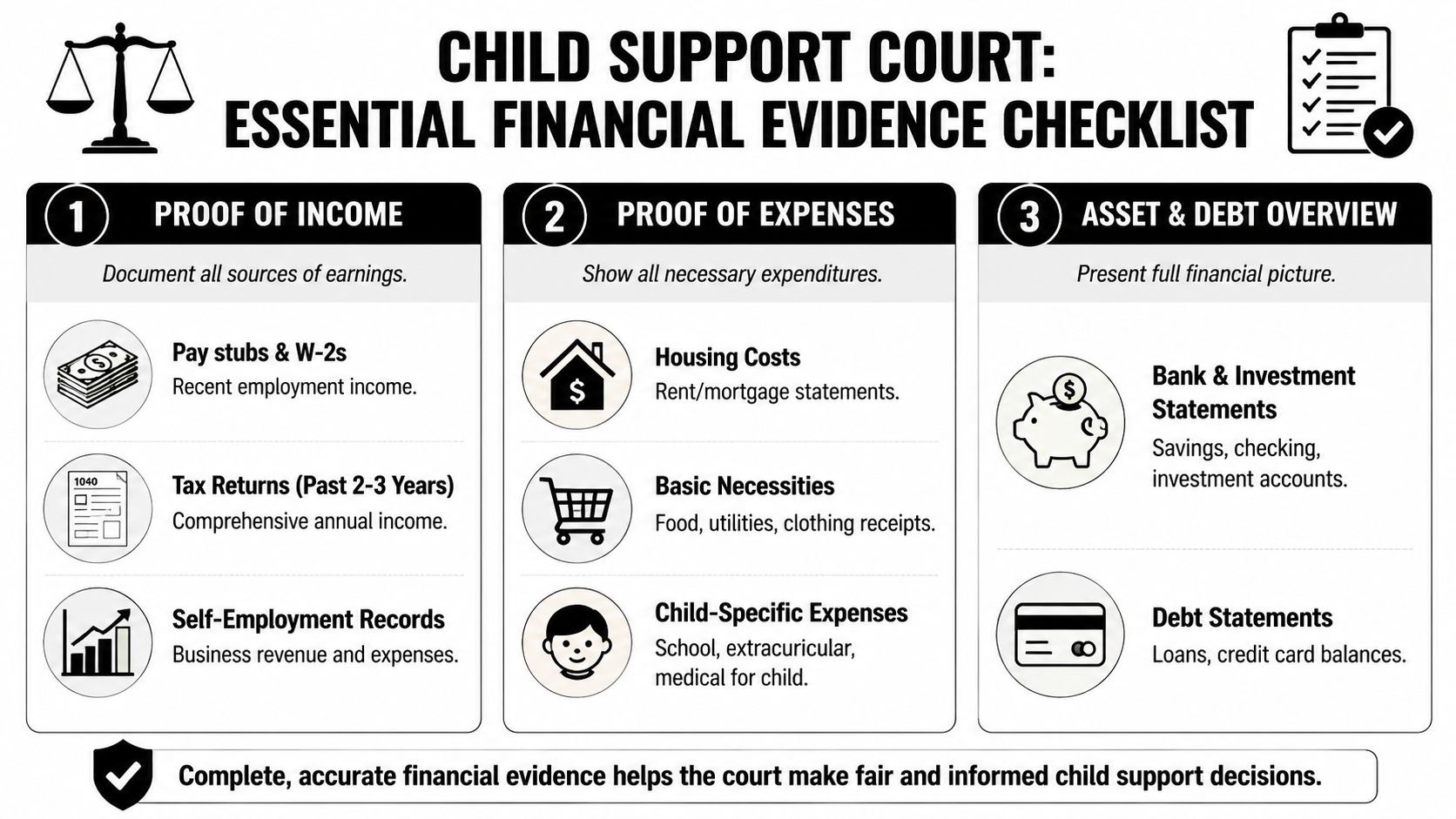
The documents that usually matter most
Bring records that show current reality, not guesses.
- Recent pay records. Pay stubs, W-2s, and anything showing your current wages help the court calculate present income instead of relying on an old assumption.
- Tax returns. These can show annual income patterns, side income, and consistency or inconsistency in earnings.
- Health insurance proof. If you pay for the child's coverage, bring the statement or payroll deduction record.
- Child-related expense records. If you're asking the court to consider unusual medical, educational, or other special expenses, bring receipts, invoices, or account statements.
- Parenting schedule records. Calendars, school pickup logs, and other reliable records can matter when time with the child is disputed.
- Proof of changed circumstances. Termination notices, disability records, or documentation of reduced hours can support a modification argument when your income has dropped.
Organize the evidence like you're helping the judge
A stack of loose papers hurts you more than is commonly understood. Put documents in date order. Label them. Make a short cover sheet for yourself that lists what each document proves.
For example:
- Income section with recent pay records and tax returns.
- Deductions section with health insurance and other allowed documents.
- Parenting time section if the schedule is disputed.
- Special circumstances section with medical, educational, or hardship records.
Bring your originals, plus neatly arranged copies for quick reference if the court asks questions.
If you're self-employed or have irregular income
Many self-represented parents find this challenging. Texas courts can deal with nontraditional income, but you have to make it understandable.
If you own a business, work as an independent contractor, or earn money through apps and platforms, don't rely on broad statements like "my income changes all the time." Show the pattern. Use tax returns, account statements, business records, and earnings summaries from the platform or client payment history. If there were business expenses, separate legitimate business costs from personal spending so the court doesn't assume you're hiding income.
A business owner should also think carefully before bringing only gross revenue figures. Gross income is not the same as net resources. The cleaner your records, the easier it is to make that point.
What doesn't work well
Some evidence sounds powerful but does little in a support hearing:
- Long complaint lists about the other parent
- Screenshots with no context
- Cash estimates with no backup
- Undated notes
- Arguments based only on fairness
If your case also includes substantial property issues, business ownership, or a high-value estate, the need for accurate records becomes even more important. In those cases, support disputes can overlap with discovery in the divorce itself, and poor documentation can create problems beyond child support alone.
Common Defenses and Strategic Arguments
Defending yourself doesn't mean standing there and denying everything. The stronger approach is to present a focused legal reason the proposed support amount is wrong or incomplete.
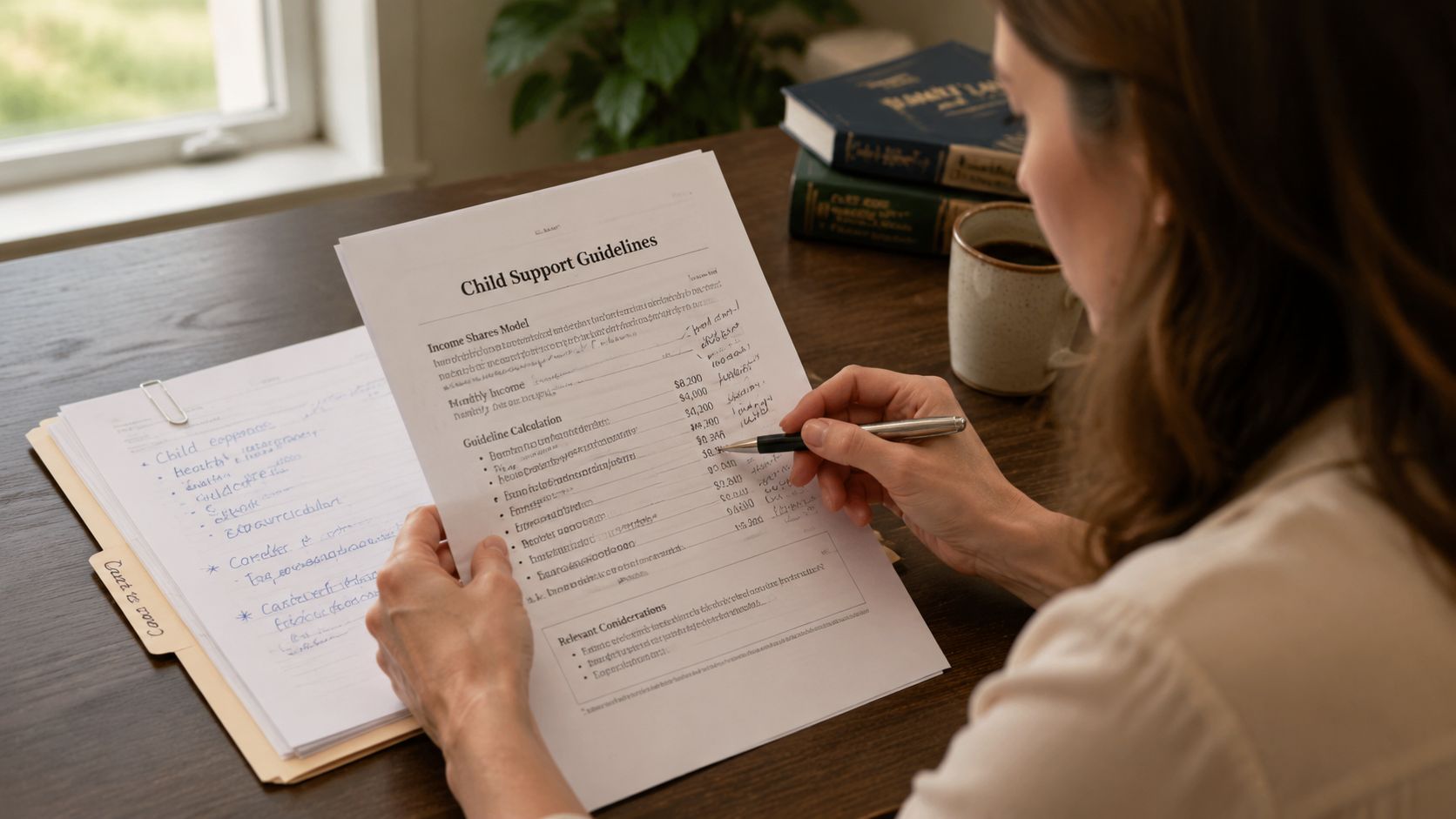
In Texas, a parent can start or change a child support order by filing a petition, serving the other parent, and moving into a court process that often leads to a hearing within weeks, with mediation commonly required before a final trial, as explained in this overview of Texas child support modification procedure.
Defense based on inaccurate income
This is the most common useful defense. If the other side is using stale pay information, incomplete business records, or assumptions about what you "could" earn without proof, challenge that with current records.
Your argument should sound like this: the guideline amount is being calculated from the wrong income figure, and the court should use verified current documentation instead.
That is much stronger than saying the amount feels impossible.
Defense based on verified changes in circumstances
A job loss, disability, reduced hours, or major shift in income can matter if you prove it with records. Courts are much more receptive to documented change than to a general claim that times are hard.
This is also where timing matters. Waiting too long to address a real income drop can leave you defending an outdated number while arrears keep growing. If you're dealing with that problem, this article on navigating Texas child support laws when you can't make payments gives useful context on responding before the situation gets worse.
Defense based on special expenses or parenting facts
A guideline amount is not always the end of the analysis. Some cases justify a different result when the evidence is strong.
Examples include:
- Documented health-related costs for the child
- Extraordinary educational needs supported by records
- A parenting schedule that differs from the assumptions behind the request
- Reliable proof that the financial picture presented by the other side is incomplete
Courts don't usually move off the guideline amount because one parent makes an emotional appeal. They move when the evidence shows the guideline inputs are wrong or the facts support a lawful deviation.
How to present the argument effectively
Keep your presentation simple. Judges hear many family law matters in a day. They respond well to direct statements tied to exhibits.
A clean structure works best:
- State the issue in one sentence.
- Identify the document that proves your point.
- Explain the effect on the calculation.
- End with the specific order you want.
After you've built that framework, this video can help you think through courtroom presentation and child support issues in a more practical way.
What not to argue
Don't argue that support should be lower because the other parent is difficult. Don't assume informal side agreements will control the case. Don't expect the judge to sort through messy records and build your argument for you.
If you're also in divorce litigation, keep the issues separated. Grounds for divorce, fault claims, and property division can affect the larger case, but child support still rises or falls on the financial and parenting evidence relevant to support.
Navigating Your Day in Court
Court is stressful because it's unfamiliar. Once you know the rhythm, it gets easier to stay steady.
Most child support hearings begin with the court calling the docket. You wait for your case, step forward when called, and identify yourself. The judge may already have reviewed some of the paperwork. That doesn't mean the outcome is decided. It means your job is to make the key facts easy to follow.
Before your case is called
Arrive early. Dress neatly. Turn your phone off. Bring your documents in the order you expect to discuss them.
If the other parent or their lawyer tries to talk before the hearing, keep the conversation short and civil. Don't argue in the hallway. Anything that raises the temperature before you walk into court makes it harder to think clearly.
Speak to the judge, not to the other parent. Even when you're correcting something false, keep your eyes and your words directed to the bench.
What the hearing usually feels like
A typical hearing moves in a straightforward sequence. One side explains the request. The other side responds. The judge may ask questions about income, health insurance, the child's needs, or whether documents were exchanged.
When it's your turn, slow down. Identify each exhibit before discussing it. If you interrupt, talk over the judge, or jump between topics, you make your strongest points harder to hear.
A good pattern is:
- State your position clearly. Tell the court what amount or outcome you're asking for.
- Tie each point to a document. "Judge, this pay record shows my current income."
- Answer only the question asked. Don't volunteer extra facts that open unnecessary disputes.
- Stay factual under pressure. If the other side exaggerates, correct the record with proof rather than frustration.
How to handle crossfire and emotion
Some hearings become tense fast. If the other parent says something unfair, resist the urge to react immediately. Write yourself a note and wait for your turn.
You don't need a dramatic closing statement. A short summary is usually better: the evidence shows your actual income, the requested amount relies on incomplete assumptions, and you're asking the court to enter an order based on verified records.
That approach works because it respects what judges are trying to do. They are making a legal decision, not choosing which parent tells the most compelling emotional story.
Understanding the Outcome and Your Next Steps
After the hearing, the judge may rule from the bench or sign an order later. Read the order carefully. Make sure you understand the support amount, the start date, how payments must be made, and whether an income withholding order will be used.
If you fall behind, the consequences can get serious quickly. In Texas, enforcement tools for unpaid child support include wage garnishment of up to 50 to 60% of disposable earnings, seizure of bank accounts, license suspension, and contempt proceedings that can lead to fines or jail time, as outlined in this discussion of Texas child support enforcement remedies.
If your circumstances change later
A child support order is not self-updating. If your income drops, your health changes, or the child's circumstances materially shift, you usually need to ask the court for a modification rather than waiting and hoping the issue fixes itself.
This guide to modifying child support in Texas is a practical place to start if the order no longer fits your real circumstances.
If your financial stress overlaps with debt problems, support obligations need special attention. For readers comparing how domestic support is treated in other legal settings, this guidance for Minnesota debtors on domestic support offers a helpful explanation of why these obligations are handled differently from many other debts.
Key Takeaway
If you're defending yourself in child support court, don't build your case around frustration. Build it around proof. Texas judges usually respond to accurate income records, documented expenses that matter under the law, and a clear explanation of what order you want.
If your case is part of a divorce, remember that support is only one piece of the larger process. Texas divorce cases can also involve filing, service, temporary orders, mediation, property division, custody rulings, and a final decree. Keeping those pieces organized will help you protect your position across the whole case, not just the support hearing.
If you're dealing with a child support hearing, a modification request, or a divorce involving children, Law Office of Bryan Fagan, PLLC offers free consultations so you can talk through your facts, understand your options under Texas law, and decide on the next step with more clarity and less guesswork.