Skip to content
Getting served with divorce papers can make you feel like your life just moved forward without your consent.
If you're reading this after setting the papers aside, missing a deadline, or hearing the word "default" for the first time, take a breath. A default divorce is serious, but it isn't the same as saying you have no options. In Texas, a default divorce usually means one spouse filed for divorce, the other spouse was properly served, and that spouse didn't file a written answer on time.
That can put the case on a fast track toward orders about your property, your children, your support obligations, and your future, all with very little input from you. But Texas courts still require procedure, proof, and a signed final decree. That matters, because it means there may still be time to act, and even after a default judgment, there may be legal ways to ask the court to revisit what happened.
What Happens When Divorce Papers Are Ignored
Individuals don't ignore divorce papers because they don't care. They ignore them because they're overwhelmed, angry, confused, hoping things will calm down, or convinced that refusing to engage will somehow stop the case.
It doesn't.
A default divorce happens when you are properly served and you don't file the response the court requires. That doesn't mean your spouse automatically gets everything requested, but it does mean you put yourself in a dangerous position. You lose the chance to shape the case early, challenge claims, ask for your own relief, and force a real negotiation.

If you've been served and haven't responded, this is the point where action matters more than regret. A good starting point is understanding what happens if you ignore divorce papers in Texas, because the legal effect of silence is often much broader than people expect.
Why people get caught in default
Some common situations lead to default:
- You thought informal talks were enough: Your spouse may have told you, "We're working it out," but the court still expects a filed answer.
- You misunderstood service: Many people assume they only need to respond if there's a court date attached. That's not how it works.
- You were emotionally frozen: That reaction is common, but the court won't pause the case because you're still processing the shock.
- You assumed the petition was exaggerated: Even if the filing contains requests you think are unreasonable, ignoring it gives you less influence, not more.
Practical rule: If you were served, treat the papers as active and urgent even if your spouse says, "Don't worry about it."
The most important shift is mental. Silence isn't a strategy in a Texas divorce. It's a risk. Once you understand that, you can start making decisions that protect you instead of hoping the problem goes away on its own.
The Legal Path to a Default Divorce in Texas
A default divorce follows a sequence. Once you know that sequence, the situation feels less mysterious and more manageable.
The case starts when one spouse files for divorce. The filing document is the petition. If you want a simple explanation of what belongs in that first filing, The Original Petition for Divorce in Texas explains what the document that starts a Texas divorce must contain.
To move the case toward default, the filing spouse must then make sure the other spouse is formally served. Proper service is a core due process requirement, and this guide to serving divorce papers properly and respectfully helps explain why that step matters so much.

Step one through step three
Here is the practical flow:
| Stage | What it means for you |
|---|---|
| Petition is filed | Your spouse opens the divorce case with the court. |
| You are served | You receive formal notice that a lawsuit has been filed. |
| Your answer deadline arrives | If you don't file a written answer by the legal deadline, your spouse may seek a default. |
Under Texas Rule of Civil Procedure 99(b), a default divorce in Texas happens when the respondent is properly served but doesn't file a written answer by 10:00 a.m. on the Monday after 20 days from service. Even then, Texas Family Code § 6.702 imposes a minimum 60-day waiting period from the filing date, so the earliest a divorce can usually be finalized is the 61st day after filing, except in limited family-violence or protective-order situations, as explained in this discussion of default divorce timing in Texas.
That timing point is important. Missing the answer deadline is serious, but it doesn't mean the divorce is instantly final the next morning. Your spouse still has to complete the remaining steps and ask the court to sign a final decree.
A short visual explanation can help if you're trying to understand the process quickly:
What still has to happen before the divorce is final
Even in a default setting, the case doesn't end by magic. The filing spouse still has work to do.
- Proof of service must be in the court file: The court needs to see that you were served correctly.
- A final hearing is still required: The petitioner must appear and present the requested relief.
- A judge must sign a final decree: Until that happens, the case is still pending.
A missed response deadline opens the door to default. It doesn't eliminate the court's role or the need for final paperwork.
People often miss deadlines for reasons that are painfully human. They moved. They were trying to save the marriage. They panicked. They assumed a text exchange counted as legal participation. None of those reasons are unusual, but none of them stop the process by themselves. If you've missed the answer deadline, the question isn't whether you should worry. The question is how quickly you can get involved before the decree is signed.
The Unseen Consequences of a Default Judgment
The harsh part of default isn't just the label. It's the loss of control.
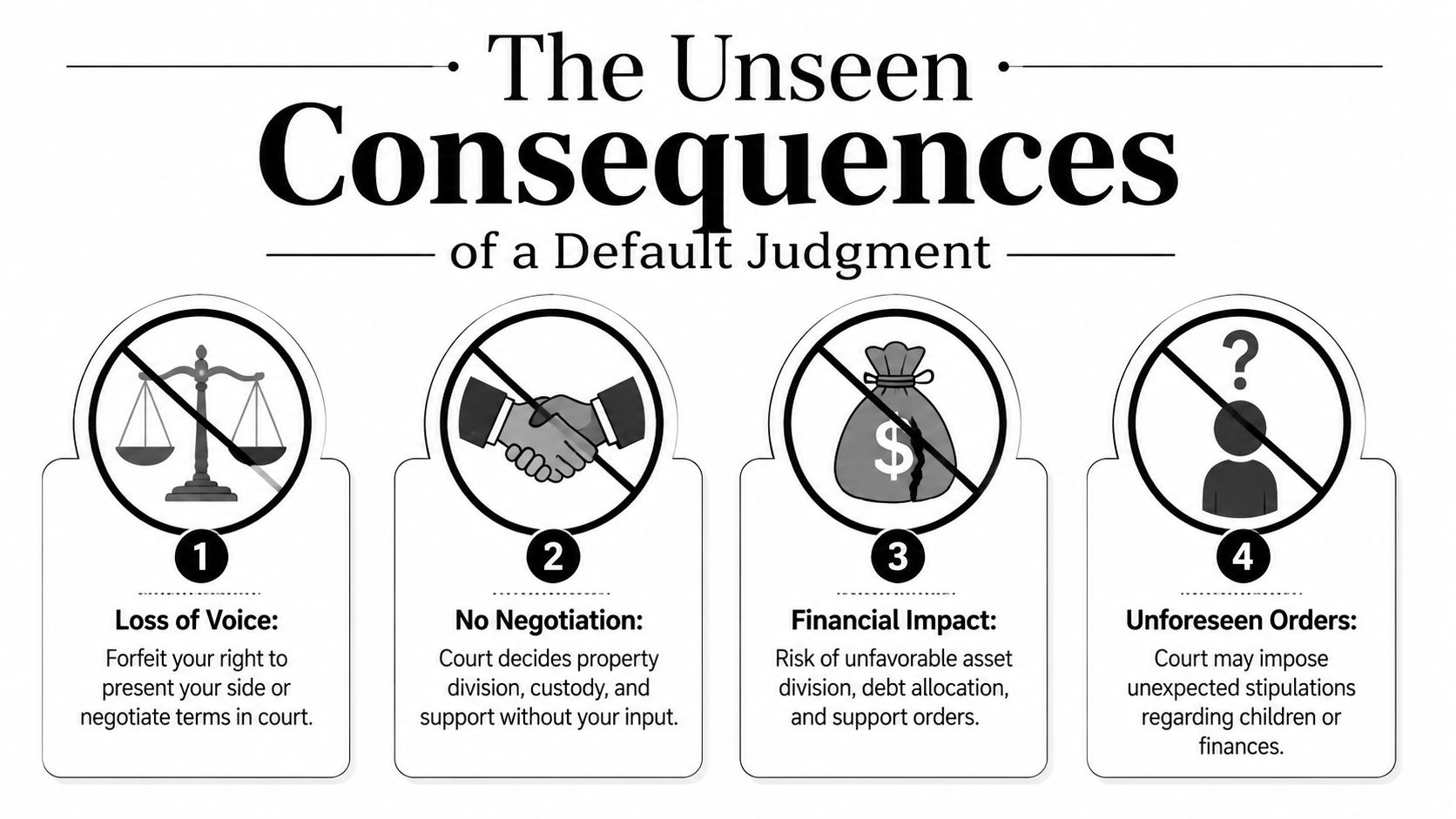
When you don't answer, you give up your best chance to influence the outcome before positions harden. Your spouse gets to present requests to the court without having to deal with your competing proposal in the usual way. That can affect nearly every part of the final decree.
Property division can move without your voice
Texas divorce orders often address the house, vehicles, bank accounts, retirement assets, credit cards, personal property, and ongoing debts. If you stay out of the case, you lose the practical ability to explain what property is missing from the picture, what debt was incurred by whom, or why a proposed division doesn't make sense.
That doesn't guarantee an unfair result, but it creates the conditions for one.
Consider the difference:
- With participation: You can identify accounts, correct mistakes, raise separate property issues, and negotiate terms.
- Without participation: The court hears one side's version of the marital estate and one side's proposal for how it should be divided.
Child-related orders can shape daily life fast
If children are involved, a default can affect conservatorship, possession, decision-making rights, and child support. In plain English, that means your parenting schedule, your authority, and your financial obligations may all be addressed without your input.
Judges still review child-related requests carefully. But if you're absent, you aren't there to explain your work schedule, your caregiving history, the child's routine, concerns about the other parent, or practical solutions that fit your family.
When you don't appear, the court doesn't hear your parenting story from you.
That can matter in ways people don't appreciate until the order is signed. School exchanges, holiday schedules, medical decision-making, travel restrictions, and support terms can become part of a binding court order.
Default can affect your leverage long after court
A default judgment can also change the tone of everything that follows. Once an order exists, you may spend your time trying to undo damage instead of preventing it. That usually means more stress, more paperwork, and fewer good options.
Here are some common after-effects:
- Enforcement risk: If the decree orders you to pay support, transfer property, refinance debt, or follow a parenting schedule, those obligations don't become optional because you didn't participate.
- Negotiation weakness: It's much easier to negotiate before a final decree than after one is entered.
- Emotional cost: Many people feel blindsided by terms they could have addressed if they had stepped in earlier.
A default isn't neutral. In practice, it often works like a surrender of your right to shape the outcome at the stage when your voice matters most.
How to Respond to or Reverse a Default Divorce
If the final decree hasn't been signed yet, the simplest path is usually the best one. Get involved immediately. Filing an answer before the divorce is finalized can stop the case from moving forward as a true default matter and force it back into an active case posture.
If the court has already signed a default decree, your options become narrower, more technical, and much more time-sensitive. That's when strategy matters.
If the decree is not signed yet
Your first priority is simple: act today, not later this week.
Start by doing these things in order:
- Read every page you were served with and look for the case number, court, and filing date.
- Confirm whether an answer has already been filed on your behalf. Don't assume.
- Prepare to file a written answer immediately if the decree has not yet been signed.
- Collect the key documents tied to property, debts, income, and the children.
- Get legal advice fast if the petition asks for orders that would seriously affect your rights.
A fast response can preserve your seat at the table even if you've already made a mistake.
If a default judgment has already been entered
At that point, you may still have legal remedies, but you should expect a harder fight. Depending on the facts and timing, one possible path may be a motion for new trial. Another may be a restricted appeal. Which route makes sense depends on the record, the dates, and what exactly happened in your case.
You may also hear lawyers talk about the Craddock test, which generally concerns whether the failure to answer was intentional or the result of conscious indifference, along with other requirements the court will examine. These are not casual, do-it-yourself issues in most cases. They require a close review of the file and the procedural history.
Urgency matters: The longer you wait after a default judgment, the fewer practical remedies you may have.
One reason people lose winnable default cases is delay. They spend valuable time being embarrassed, angry, or hopeful that the other side won't enforce the decree. That's usually a mistake.
The right goal is control, not panic
You don't need to know every rule before you act. You do need to stop the case from getting further ahead of you.
A useful next step is reviewing the Texas divorce timeline step by step so you can place your case where it stands and understand what deadlines may still matter. If you want legal representation, one option is the Law Office of Bryan Fagan, PLLC, which handles Texas family law matters including divorce, custody, property division, mediation, and enforcement.
What works in default situations is speed, documentation, and a realistic assessment of the record. What doesn't work is calling your spouse, arguing over text, or assuming a verbal promise will fix a court problem.
Special Risks for Business Owners and High-Asset Families
For some families, default is more than a procedural problem. It's a direct threat to years of work, planning, and accumulated wealth.
If you own a business, have executive compensation, manage investment accounts, hold real estate in multiple forms, or brought separate property into the marriage, your absence creates openings for costly mistakes. Some mistakes are hard to unwind later, even if you eventually get back into court.
When the business owner stays silent
Say you run a closely held business and assume the divorce won't move far because your spouse doesn't understand the company. That assumption can backfire. If you don't participate, you lose the chance to present your own records, explain cash flow, address debt tied to the business, or argue for a practical structure that protects operations.
In that setting, the problem isn't only valuation. It's control. The final decree may address ownership interests, reimbursement claims, account access, or obligations that interfere with how the company functions day to day.
If your case involves a company or professional practice, business valuation for divorce becomes a critical issue, because a paper estimate and a defensible legal position are not the same thing.
Separate property can be lost in the paperwork
Another common risk involves property that one spouse believes is clearly separate, such as an inheritance, a pre-marriage account, or a family asset. People often assume, "That was always mine, so the court will know that."
The court only knows what is properly presented.
If you don't appear, you lose the chance to trace funds, identify records, and challenge how assets are described. That matters for:
- Inherited property: If records are weak, the asset may become harder to distinguish from marital holdings.
- Retirement accounts: Without participation, the treatment of contributions and division terms may not reflect the full picture.
- Real estate interests: Title history, reimbursement issues, and occupancy arrangements often need explanation.
- Debt allocation: Business debt, personal guarantees, and tax-related obligations can be assigned in ways that create pressure long after the divorce ends.
In high-asset divorce cases, silence doesn't preserve complexity. It hands complexity to the other side.
High-value families need active planning
Default is especially dangerous when the estate includes layered assets and long-term consequences. A rushed decree can affect taxes, liquidity, management rights, and future disputes between former spouses. In these cases, the value of quick action isn't just legal. It's practical. You need time to gather records, identify experts if necessary, and build a proposal the court can use.
What to Do Next Protect Your Family and Your Future
If you're facing a default divorce, the most useful mindset is this: the situation is serious, but it is still a situation you can respond to.
Panic leads people to hide from the problem. Strategy leads people to gather facts, protect deadlines, and make smart choices quickly. Whether you've just been served, already missed the answer deadline, or learned that a decree may have been entered, your next moves matter more than your last mistake.
A practical action plan
Use this checklist right away:
- Locate every court paper you received. Keep the envelope, citation, petition, and any hearing notice together.
- Write down the service date and any dates you already know about. Accuracy matters.
- Pull your core records including bank statements, tax documents, pay records, retirement information, mortgage or lease documents, and anything tied to your children.
- Stop relying on informal promises from your spouse or your spouse's lawyer about what will happen.
- Get legal advice quickly if the case involves children, a house, a business, retirement assets, or disputed debts.

Protect more than the court case
A divorce decree affects more than your marital status. It can ripple into insurance, beneficiary choices, budgeting, housing, and long-term planning. After you've handled the court emergency, it helps to review practical resources like Coveredly's divorce financial guide to think through insurance and post-divorce financial decisions that people often overlook in the middle of a legal crisis.
You should also consider your strategic position. If the decree isn't signed, your immediate goal is to get back into the case. If it has been signed, your goal is to preserve any available remedy and avoid making the problem worse through delay or noncompliance.
Key takeaway
A default divorce in Texas doesn't happen because the court assumes your spouse is right about everything. It happens because the process kept moving while you were out of it. That distinction matters, because it means the answer isn't shame. The answer is action.
If you move quickly, organize your documents, and get informed advice, you may still be able to protect your rights, your relationship with your children, and your financial future.
If you're dealing with ignored divorce papers, a missed response deadline, or a default judgment, schedule a free consultation with Law Office of Bryan Fagan, PLLC. You can speak with a Texas family law team about where your case stands, what options may still be available, and how to respond with a clear plan.