Skip to content
When you know in your heart that your spouse's actions destroyed your marriage, it's easy to feel angry and powerless. But in Texas, the law provides a way for that wrongdoing to be officially recognized by the court. A fault based divorce texas is a legal path where you ask a judge to grant the divorce based on specific misconduct, like cruelty or adultery. This is more than just assigning blame; it's a strategic decision that can significantly impact your financial future and your children's well-being.
Understanding a Fault Based Divorce in Texas
When a marriage ends in Texas, you have two main routes: no-fault or fault. While most divorces are filed on no-fault grounds, simply stating the marriage has become "insupportable," a fault-based divorce is a powerful option when your spouse’s behavior is the direct reason your relationship has broken down.
This isn't about seeking revenge or airing personal details in public. Filing for a fault-based divorce is a legal strategy. It is a tool you can use to protect your financial future and, in some cases, the well-being of your children. By formally proving your spouse’s misconduct as defined by the Texas Family Code, you open the door to a more just and fair outcome.
What Does Filing on Fault Grounds Accomplish?
Pursuing a fault divorce isn't as simple as making an accusation. You have to provide the court with evidence to prove your spouse committed one of the specific wrongful acts recognized under Texas law. While this can feel like a daunting task, it can have a major impact on the final divorce decree.
A judge has the power to consider this fault when making critical decisions. For instance, if you prove your spouse's fault, the judge can award a disproportionate share—meaning more than 50%—of the community property to you, the "innocent" spouse. This is especially common in situations where the at-fault spouse wasted marital funds on an affair or engaged in behavior that damaged the family's finances.
A successful fault-based claim can lead to significant advantages:
- A More Favorable Property Division: You could receive a larger share of the community estate, including shared assets, real estate, and retirement funds.
- Impact on Spousal Support: Proving fault is a key factor in whether spousal maintenance (alimony) is awarded, for how long, and for how much.
- Protecting Your Children: In cases involving family violence or other conduct that endangers a child, proving fault can heavily influence child custody and visitation orders.
Choosing to file on fault grounds requires careful thought and a solid strategy. The process is more involved than a standard no-fault divorce, but for many people, it is the necessary step toward securing a stable and fair future.
No-Fault vs. Fault Divorce: A Quick Comparison
Deciding whether to file for a no-fault or fault-based divorce is one of the first major decisions you'll make. Each path has its own requirements, timelines, and potential outcomes. Understanding the fundamental differences is key to choosing the right strategy for your situation.
| Aspect | No-Fault Divorce (Insupportability) | Fault-Based Divorce |
|---|---|---|
| Primary Ground | The marriage is "insupportable" with no reasonable expectation of reconciliation. No one is blamed. | Specific misconduct by one spouse, such as adultery, cruelty, or abandonment, caused the marriage to end. |
| Proof Required | Minimal. You only need to testify that the marriage has broken down. | Substantial evidence is required to prove the specific fault ground to the court (e.g., photos, texts, witness testimony). |
| Impact on Property | Property is divided in a "just and right" manner, which often starts at a 50/50 split. | The judge can award a disproportionate (more than 50%) share of the community property to the innocent spouse. |
| Timeline & Cost | Generally faster, less expensive, and less contentious. | Typically longer, more expensive, and more emotionally taxing due to the need for discovery and evidence gathering. |
| When to Consider | When both spouses agree the marriage is over and can work together to divide assets and co-parent. | When one spouse's actions (like wasting assets on an affair) have damaged the marital estate or when you need leverage for a better settlement. |
Ultimately, the choice between no-fault and fault depends entirely on the facts of your case. While a no-fault divorce offers a simpler, more direct path, a fault-based divorce provides a crucial mechanism for achieving justice when one spouse’s misconduct has caused significant harm. Consulting with an experienced attorney can help you weigh the pros and cons and decide which approach best serves your interests.
The Seven Grounds for a Fault-Based Divorce in Texas
When your marriage breaks down because of one person's specific, damaging actions, Texas law allows you to hold them accountable. Filing for a fault-based divorce isn’t about pointing fingers; it’s a legal strategy that requires proving one of seven specific grounds laid out in the Texas Family Code.
Understanding these grounds is the first step toward building your case and fighting for a fair outcome.
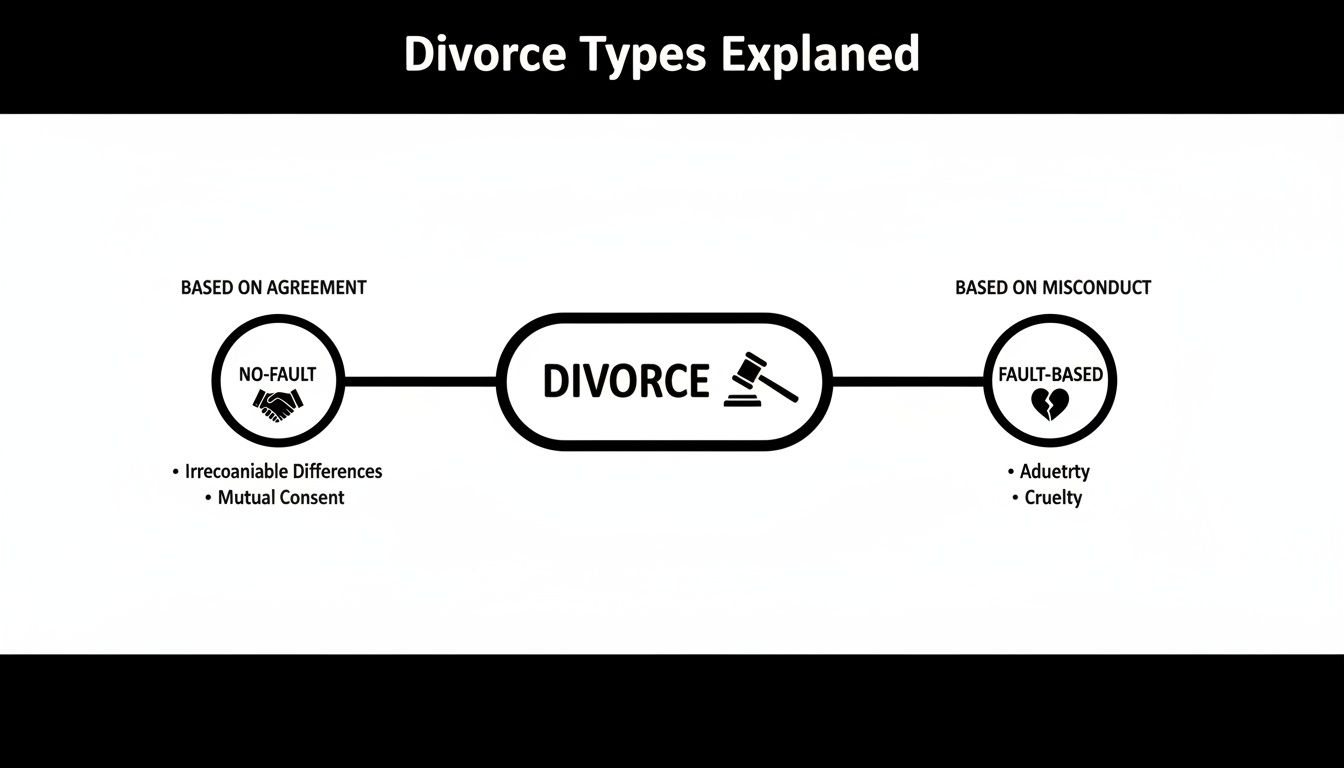
While a no-fault divorce can feel like a quiet agreement to go separate ways, a fault divorce is about proving that specific, harmful actions destroyed the marriage. Let's look at what those actions mean under Texas law.
1. Cruelty
Cruelty is one of the most frequently cited grounds for a fault divorce, but it’s not about a few bad arguments. Legally, cruelty is defined as a pattern of conduct so severe that it makes continuing to live together unbearable.
This can include:
- Physical abuse or threats of violence.
- A relentless pattern of emotional or verbal abuse, such as public humiliation, constant belittling, or controlling behavior.
- Financial abuse, like intentionally hiding money or cutting off your access to shared bank accounts.
To succeed on this ground, you must show the court that the behavior was willful and made your life together genuinely impossible.
2. Adultery
In Texas, adultery is defined as the voluntary sexual intercourse of a married person with someone other than their spouse. It's a powerful ground for fault because it often goes hand-in-hand with the wasting of community funds—money spent on gifts, trips, or financial support for an affair partner.
But suspicion isn't enough. Proving adultery requires concrete evidence, which might include text messages, emails, photos, financial statements showing suspicious spending, or testimony from a private investigator.
3. Felony Conviction
If your spouse was convicted of a felony and imprisoned during your marriage, this can be a ground for a fault-based divorce. For this to apply, they must have been imprisoned for at least one year in a state or federal prison.
It's important to note that they cannot have been pardoned. Also, you cannot use this ground if your own testimony was what led to their conviction in the first place.
4. Abandonment
Abandonment is more than just someone moving out to cool off. It occurs when one spouse leaves with the clear intention of never returning. To use this as a ground for divorce, they must have been gone for at least one full year.
This means you need to prove two things:
- Your spouse left with the intent to desert you.
- They stayed away continuously for at least 12 months.
Simply moving out during a trial separation won't qualify. A judge is looking for proof of their intent to permanently end the marriage by leaving.
5. Living Apart
This is different from abandonment because it doesn't require any ill intent. If you and your spouse have lived in separate households without cohabiting for at least three years, you can file for divorce on this ground. This is the law's straightforward recognition that a long-term physical separation is a clear sign the marriage has ended.
6. Confinement in a Mental Hospital
This is a very specific and rarely used ground. You can file for a fault divorce if your spouse has been confined to a mental hospital (either state or private) for at least three years. You must also show that their mental disorder is so severe that a relapse is likely, making recovery improbable.
7. Incurable Insanity
Though it doesn't involve "fault" in the same way as adultery or cruelty, incurable insanity falls under this section of the Texas Family Code. This ground applies if your spouse developed a severe mental disorder after you were married. To use this, you must prove they were of sound mind at the time of the marriage but later became afflicted with an incurable mental illness.
Each of these grounds has a high standard of proof. You can't just make a claim; you must back it up with credible evidence. If you believe your situation fits one of these scenarios, our comprehensive guide on the grounds for divorce in Texas can offer more clarity.
How to Prove Fault in a Texas Divorce Court

Knowing your spouse’s behavior gives you grounds for a fault-based divorce is one thing; proving it to a judge is another challenge entirely. In Texas, your word alone isn’t enough. The court needs to see clear, credible evidence that supports your claim. Think of it as building a legal case, piece by piece. Without solid proof, your argument simply won't stand up in court.
Gathering the Right Kind of Evidence
The evidence you’ll need depends on the grounds you're alleging—whether it's adultery, cruelty, or abandonment. Your goal is to build a compelling pattern of behavior that a judge finds undeniable.
Here are common types of evidence used in a fault based divorce texas:
- Electronic Communications: Text messages, emails, and social media messages can be incredibly powerful. A string of texts with an affair partner or a history of abusive emails can directly prove claims of adultery or cruelty.
- Financial Records: Bank statements and credit card bills often tell a story. Receipts for hotel rooms, expensive gifts you never saw, or large, unexplained cash withdrawals can all point to marital funds being spent on an affair.
- Witness Testimony: Testimony from friends, family, or neighbors who personally witnessed abusive behavior can be extremely persuasive. A neutral third party confirming your story adds significant credibility.
- Official Reports: Police reports from domestic disturbance calls or medical records detailing injuries from physical abuse provide objective, third-party validation for claims of cruelty.
- Private Investigator Reports: In adultery cases, a licensed private investigator can provide photographic or video evidence that is very difficult for a spouse to dispute.
Infidelity, for instance, is a prominent ground for fault-based divorce in Texas, and it's a claim that requires strong proof. Proving adultery with clear evidence like texts, witness testimony, or an investigator's report can intensify the proceedings but may be necessary to protect your financial interests. Find out more about how these statistics shape divorce cases in Texas and explore detailed insights from Central Texas Lawyers.
Understanding the Standard of Proof
In a Texas civil court, the standard of proof is a "preponderance of the evidence." This is a much lower bar than the "beyond a reasonable doubt" standard you see in criminal trials.
A preponderance of the evidence simply means that your claim is more likely to be true than not true. If you can convince the judge that there is a greater than 50% chance that your spouse did what you're alleging, you've met the legal standard. Imagine a set of scales—your evidence just needs to tip them slightly in your favor.
The Legal and Ethical Way to Collect Proof
It is absolutely crucial that you gather evidence legally and ethically. Illegally recording conversations or hacking into your spouse’s password-protected email account will do more harm than good. A judge will likely rule that illegally obtained evidence is inadmissible. Proving fault can be challenging, especially when dealing with accusations, making it important to understand strategies for addressing false allegations in divorce.
This is where the formal legal process of discovery comes in. Through discovery, your attorney can legally compel your spouse to hand over documents, answer written questions (interrogatories), and provide sworn testimony out of court (depositions). This is the proper—and most effective—way to get the proof you need. You can learn more about the discovery phase of divorce in our detailed guide.
An experienced family law attorney is your best asset here. We know the rules of evidence and can make sure every piece of your case is gathered correctly and presented effectively, protecting both your case and your future.
How a Fault Divorce Impacts Property, Custody, and Support

When you know your spouse’s behavior is why your marriage is ending, it’s natural to feel you deserve a better outcome. A fault based divorce texas isn't just about validation; it's the legal path to secure tangible results for your financial future and your children's well-being. This is where your effort pays off, translating into a more secure and stable life after the marriage ends.
The Impact on Your Share of Community Property
In a standard Texas divorce, the "community estate"—all property and debt acquired during the marriage—is divided in a "just and right" manner. Usually, that starts at a 50/50 split. A finding of fault, however, can completely change that equation.
The Texas Family Code gives a judge the power to award a disproportionate share of the community estate to the innocent spouse. This means you could walk away with significantly more than half of the assets. The court sees this not as punishment, but as a way to make things fair, especially if your spouse’s actions damaged the marital estate.
Consider these practical examples:
- Adultery: If your spouse spent $50,000 of your shared money on an affair—for gifts, trips, or dinners—a judge could award you an extra $50,000 in assets to make you financially whole again.
- Cruelty: If your spouse's abusive actions forced you to incur medical bills or therapy costs, the judge can factor those expenses into the property division to help you recover.
This is a powerful tool for rebuilding your finances. You can explore our guide to Texas divorce and property division to better understand how assets are valued and split.
How Fault Affects Spousal Support
Spousal maintenance, or alimony, is never a guarantee in Texas. To qualify, you must show you cannot provide for your own minimum reasonable needs and meet other strict legal requirements. Proving fault is one of the most compelling factors a judge considers when deciding whether to award support.
A proven claim of adultery or cruelty can be the deciding factor in whether you receive spousal maintenance. Just as important, a spouse who is found to have committed adultery may be completely barred from receiving maintenance themselves. If you are asking for financial support, proving your spouse was at fault strengthens your case for both getting the award and influencing the amount and duration of the payments.
The Critical Role of Fault in Child Custody
When children are involved, their safety and well-being are the court's absolute priority. A judge’s primary duty is to make orders that are in the best interest of the child. While some grounds for divorce, like living apart, won't affect custody, fault grounds involving family violence, substance abuse, or other dangerous behaviors absolutely will.
A finding of cruelty based on physical or emotional abuse can trigger severe consequences for the at-fault parent:
- They may be denied the right to be named a Joint Managing Conservator, stripping them of equal rights in decision-making.
- Their time with the children could be limited to supervised visits only.
- In the most extreme cases, their parental rights could be terminated altogether.
Even something like adultery can sway a custody decision if the behavior exposed the children to inappropriate situations. The court’s goal is always to create a stable, safe, and nurturing environment for your children.
Weighing the Pros and Cons of a Fault Divorce
Deciding to file for a fault based divorce in Texas is a high-stakes strategic choice that will define the tone and trajectory of your divorce. It’s about weighing the potential rewards against the very real challenges to see if this path aligns with your ultimate goals.
The Potential Advantages of Filing for Fault
For some, pursuing a fault claim is about getting justice. The biggest upsides usually boil down to these three things:
- A Disproportionate Share of Property: This is often the main motivator. A judge can award you more than 50% of the community estate as a way to compensate for the harm your spouse caused, especially if they wasted marital funds on an affair.
- Holding Your Spouse Accountable: Sometimes, it's not just about the money. Getting a court to formally acknowledge that your spouse’s actions—like adultery or cruelty—were the reason the marriage failed can bring a powerful sense of validation.
- Strategic Leverage: A strong, provable fault claim is a powerful bargaining chip. Even if you never go to trial, it can give you significant leverage in settlement talks and mediation, often leading to a more favorable outcome.
The Realistic Downsides and Challenges
While the potential wins are appealing, you must be ready for the fight. A fault divorce is almost never the quick, quiet, or cheap option.
Choosing to allege fault transforms the process from a simple dissolution of marriage into a contentious battle where you must prove your accusations with hard evidence.
Think carefully about these potential drawbacks:
- Increased Conflict and Stress: Accusing your spouse of adultery or cruelty is like throwing gasoline on a fire. It guarantees a more hostile process, which can make co-parenting a nightmare.
- Higher Costs: A fault divorce costs more. It demands more of your attorney’s time to gather evidence, take depositions, and prepare for a contested trial.
- Longer Timelines: Because you have to build and prove a case, everything takes longer. The discovery phase can drag on, and contested hearings can push your final resolution out by months or even years.
- The Emotional Toll: This process is emotionally draining. You’ll be forced to relive some of the most painful moments of your marriage in a public setting.
Ultimately, the decision to file on fault grounds requires a cold, hard look at your specific situation. An experienced attorney can help you analyze your evidence, get a realistic sense of the likely outcome, and decide if this is truly the right fight for you.
Your Next Steps on the Divorce Journey
Feeling overwhelmed by all this information about a fault-based divorce in Texas is completely normal. But this is also where you can start taking back control. Instead of feeling lost, you can begin to take deliberate steps to protect yourself and your future.
What to Do Next: A Practical Checklist
Before you make any major moves, focus on these small but critical actions. This checklist is designed to help you prepare thoughtfully and discreetly.
- Gather Evidence Quietly. Begin legally collecting and saving any evidence you already have access to, such as joint bank statements, credit card bills, and family photos or videos. Store digital copies in a private, password-protected cloud account your spouse cannot access.
- Do Not Confront Your Spouse. It is critical that you do not confront your spouse about your plans to file for divorce or the specific fault you might claim. Tipping them off could cause them to hide assets or destroy evidence. At this stage, silence is your most powerful tool.
- Start a Private Timeline. Using a new, secure email account or a private document, start logging a timeline of important events. Jot down dates of specific instances of cruelty, when you first suspected an affair, or when you noticed odd financial behavior. This will be invaluable when you speak with an attorney.
Key Takeaway
The single most important step you can take right now is to seek professional legal guidance. You do not have to walk this path alone. The decisions you make in the coming days will shape your future. Getting clear advice from an experienced family law attorney isn’t just a good idea—it’s essential for protecting your rights, your finances, and your family.
At The Law Office of Bryan Fagan, PLLC, we help Texas families navigate divorce with empathy and confidence. Schedule a free, no-obligation consultation with us. Let us give you the clarity and confidence you need to move forward with a trusted partner by your side.
Your Questions About Fault Divorce, Answered
When you’re considering a fault based divorce in Texas, it’s natural to have questions. This is a complex and emotional path. To help bring some clarity, we’ve answered a few of the most common questions our clients ask us.
Can I Still File on Fault Grounds if My Spouse Agrees to the Divorce?
Yes, absolutely. Just because your spouse agrees to get divorced doesn't mean the reason for the divorce is irrelevant. Think of it this way: agreeing to divorce just means you both agree the marriage is over. Filing on fault grounds is about explaining to the court why it’s over. Proving fault can be a powerful tool for getting a more favorable division of property or securing spousal support, even if the divorce itself is uncontested.
Is a Fault Divorce Going to Be a Lot More Expensive?
It’s true that a fault-based divorce can cost more upfront due to expenses for gathering evidence and preparing for a potential trial. However, it's better to see these costs as a strategic investment. Spending more now to prove fault could lead to you receiving a much larger share of the community estate or the spousal maintenance you need to get back on your feet. The goal is to secure your long-term financial health.
As you navigate the complexities of a fault divorce, it's crucial to understand the protections offered by the attorney-client privilege rules. This ensures your conversations with your lawyer about strategy, evidence, and your personal circumstances remain completely confidential.
If I Accuse My Spouse of Adultery, Will It Hurt My Own Custody Case?
This is a common fear, but the short answer is almost always no. When you file on fault grounds like adultery, you are making a claim about your spouse’s behavior. Unless your own conduct has put your children in danger, pointing out your spouse's fault won't backfire on your standing as a parent. A judge’s number one priority is always the best interest of the child. If your spouse's actions created an unstable or unsafe home, that is what will heavily influence the custody decision.
Navigating the strategic questions of a fault-based divorce requires experienced guidance. At The Law Office of Bryan Fagan, PLLC, our attorneys provide the compassionate representation you need to protect your family and your future. We invite you to schedule a free, confidential consultation to discuss your case and understand your options. Take the first step toward confidence and clarity by contacting us today at https://texasdivorcelawyer.us.