Skip to content
You may have finally agreed who keeps the house, how debts will be handled, and what happens to your retirement accounts, yet the settlement still isn't safe until Texas law turns it into an enforceable court-backed arrangement.
Understanding Your Texas Property Settlement Agreement
After months of difficult conversations, you and your spouse may reach a deal that feels like a relief. You agree that one of you will keep the home, the other will retain certain accounts, and each of you will take responsibility for specified debts. A handshake, email exchange, or informal promise may reflect that understanding, but it doesn't provide the same protection as a properly prepared agreement incident to divorce.
Texas Family Code section 7.006 supplies the statutory framework for a written agreement covering property division, liabilities, and maintenance. The statute was added by Acts 1997, 75th Legislature, chapter 7, section 1, effective April 17, 1997, and later amended by Acts 2019, 86th Legislature, Regular Session, chapter 161, House Bill 559, section 1, effective May 24, 2019. You can review the current statutory language in Texas Family Code section 7.006.
Why the written agreement matters
Suppose your spouse promises to refinance the marital home but the promise doesn't identify the loan, provide a deadline, or explain what happens if refinancing fails. You may believe you have settled the issue, yet the wording could leave you exposed to continued liability, credit problems, or another court dispute.
A properly drafted agreement identifies the assets and obligations with enough precision for you, your spouse, and the court to understand exactly what each person must do. It also gives the judge a document that can be approved and placed into the final divorce decree.
The statute permits the spouses to sign a written agreement, but the court must find the terms “just and right” before the agreement becomes binding on the court. Once approved, the court may set the agreement out in full in the decree or incorporate it by reference. If incorporated by reference, the agreement isn't required to be filed with the clerk under the statute.
For a broader explanation of settlement documents, review this guide to settlement agreements in a Texas divorce. The important point is simple: your agreement should be treated as a legal instrument, not as a summary of what you hope your former spouse will do.
Practical rule: If a financial promise matters to your future, put the promise in specific written terms before you sign.
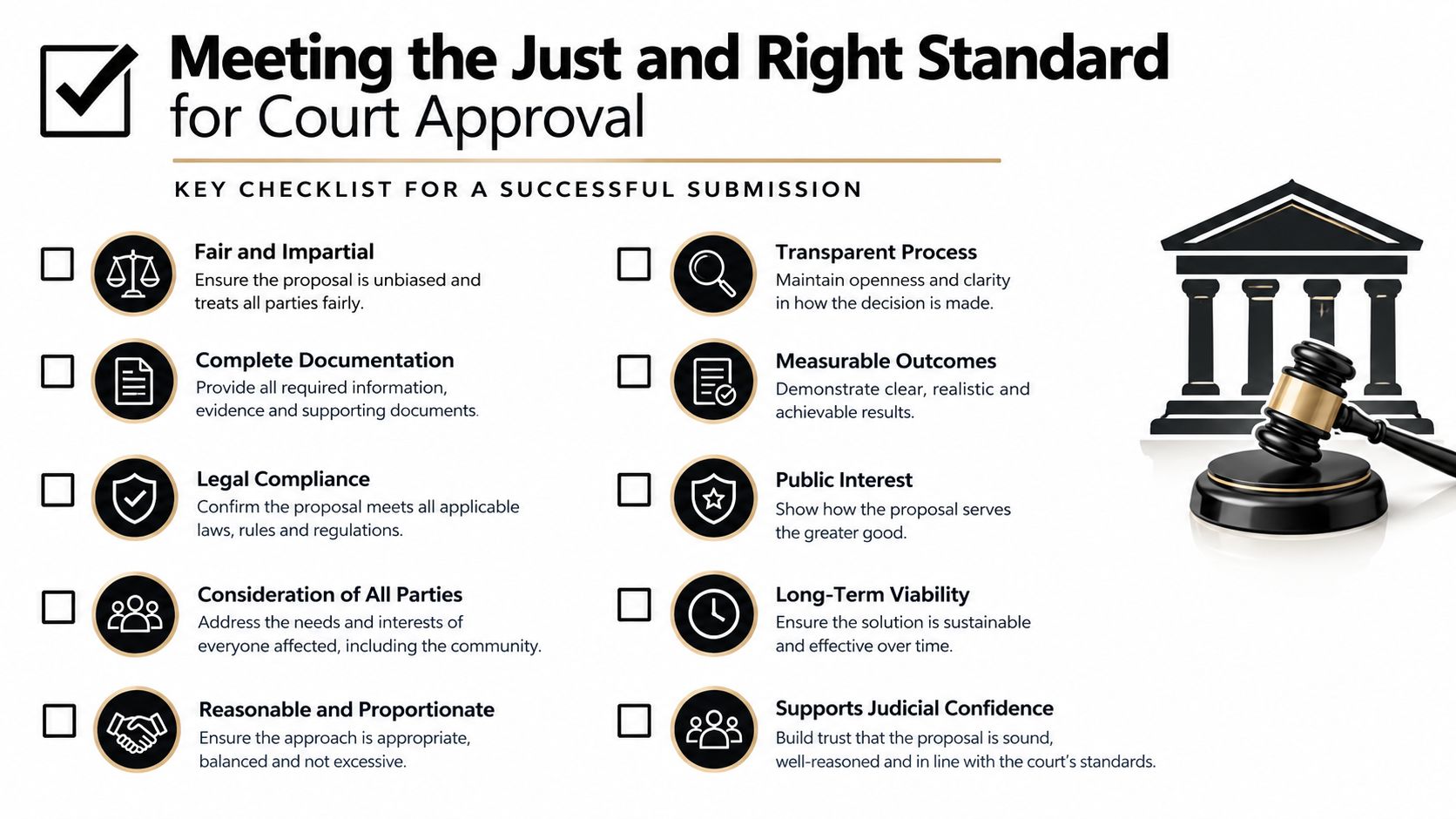
Meeting the Just and Right Standard for Court Approval
Your spouse's signature doesn't guarantee court approval. Texas law requires the judge to determine that the agreement is just and right before the court is bound by it. That standard gives the judge authority to examine whether the proposed settlement is legally acceptable and sufficiently supported by the circumstances of the case.
What you should prepare before approval
A strong agreement begins with a reliable financial picture. Before signing, gather account statements, loan information, property records, business documents, insurance details, and a complete list of significant obligations. You and your lawyer need to know what is being divided before you can evaluate whether the result is fair.
The judge may also need confidence that both spouses entered the agreement knowingly and voluntarily. A settlement reached under pressure, based on incomplete information, or containing terms one spouse can't reasonably understand creates avoidable risk.
Use this preparation sequence:
- Identify the marital estate. List real estate, vehicles, bank accounts, investments, retirement interests, business interests, personal property, and debts.
- Separate characterization from value. Determine whether an item is community property, separate property, or subject to a dispute before assigning it to either spouse.
- Explain unusual allocations. If one spouse receives more of a particular asset, document the reason. The explanation may involve debt, tax responsibility, liquidity, or another negotiated tradeoff.
- Remove coercive language. Your agreement should reflect informed consent rather than threats or confusion.
- Make performance measurable. State who must sign, transfer, refinance, sell, or pay, and identify the relevant deadline or triggering event.
- Coordinate the decree and attachments. The agreement, proposed decree, retirement orders, deeds, and related documents should say the same thing.
The court isn't there to rewrite your bargain into a deal you prefer. But Texas court guidance recognizes that if the agreement isn't just and right, the court may require revision or set the case for a contested hearing. Drafting quality therefore affects whether your settlement becomes immediately enforceable or remains vulnerable to rejection. For additional context, see what Texas divorce judges look for in a case.
You may also want a plain-English discussion of How Property Is Divided in a Texas Divorce, which addresses the just-and-right division of community property in depth. Don't sign because the numbers appear balanced. Sign when you understand the assets, the obligations, the tax consequences, and the practical steps required to carry out the deal.
Enforceability and the Dual Status of Your Decree
The hidden strength of an approved agreement incident to divorce is its dual status. It can operate as a private contract between you and your former spouse, and, after court approval and incorporation, it can also become part of the final judgment.
That distinction matters when your former spouse stops cooperating. A contractual promise may support a contract-based remedy, while a provision included in the decree can be enforced as a judgment. Approved contractual provisions may also be addressed through post-decree enforcement procedures in Texas Family Code Chapter 9.
Why the same court can remain important
Texas Family Code section 9.002 gives the court that signed the divorce decree continuing power to enforce the property division, including contractual provisions in an approved agreement incident to divorce. The statute means the final decree doesn't necessarily end the court's role if one spouse later fails to perform. The same court can retain authority over enforcement of the division. Review the statutory provision in Texas Family Code section 9.002.
Consider a former spouse who refuses to sign a deed, fails to transfer an account, or ignores an assigned debt. The remedy depends on the wording of the agreement and decree, the type of obligation, the evidence of noncompliance, and the enforcement procedure available. A vague provision forces you to spend time proving what the parties intended. A precise provision gives the court a clearer command to enforce.
This is why drafting should anticipate disagreement rather than assume continued cooperation. Your document should identify the asset, the required action, the responsible person, the timing, and the consequences of nonperformance where appropriate.
The contract and the judgment are not interchangeable
The contract side may matter when the obligation is written in the agreement but not expressed clearly in the decree. The judgment side matters when the provision has been approved and incorporated into the court's order. Your lawyer should examine both documents together, because an inconsistency can create unnecessary litigation over which language controls.
Don't wait until a missed payment or refused transfer becomes a crisis. If your former spouse isn't complying, collect the signed agreement, final decree, account records, payment history, messages, and proof of attempted cooperation. Then review how to enforce a Texas divorce decree when your ex won't comply with counsel who can match the facts to the proper remedy.
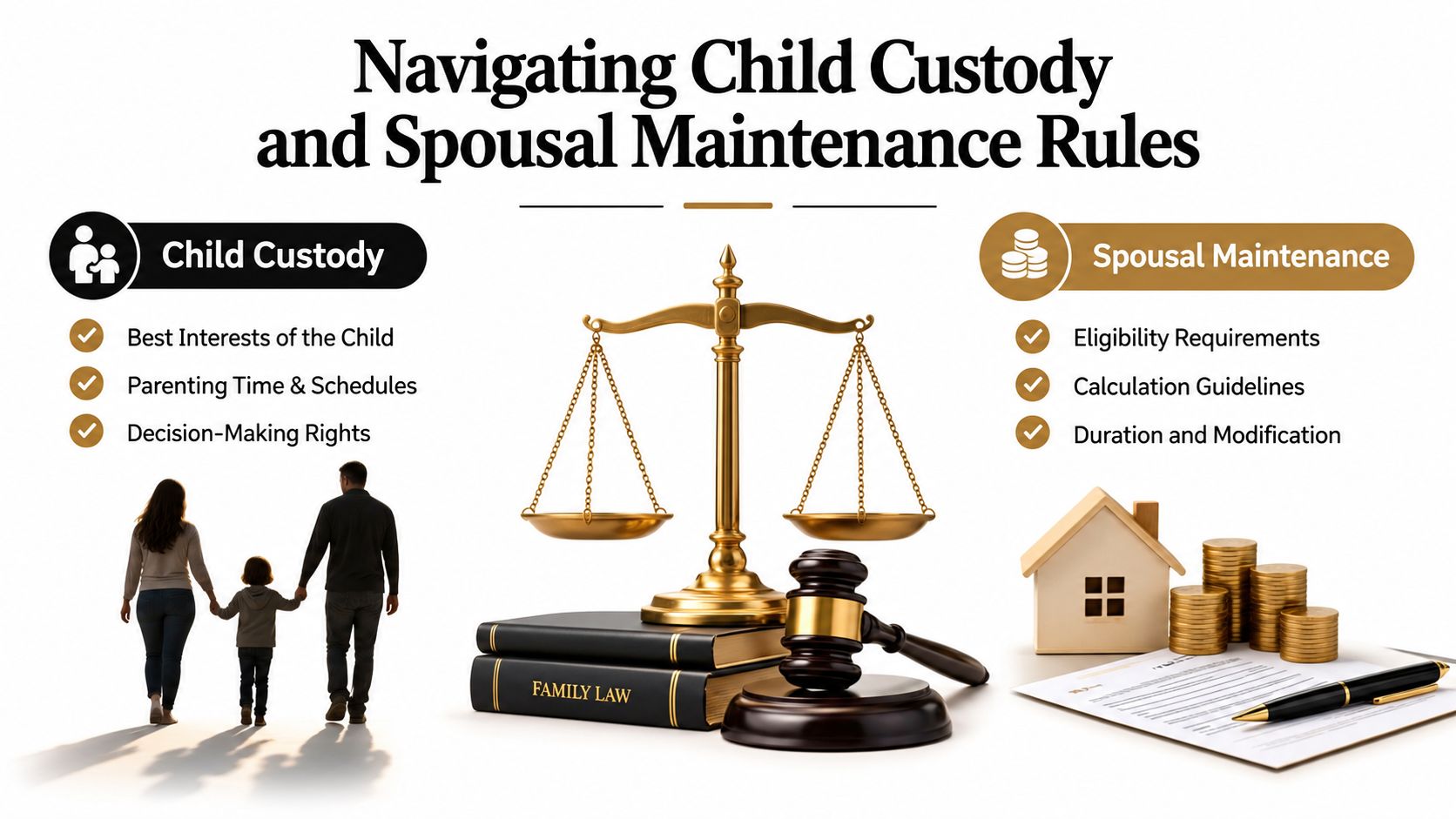
Navigating Child Custody and Spousal Maintenance Rules
Property division and family-related support don't operate under identical rules. Your agreement can establish detailed terms for dividing property and liabilities, but provisions involving children and support remain subject to legal standards that protect interests beyond the spouses' private bargain.
A parenting schedule must serve the best interest of the child. Child support belongs to the child, so parents can't use a property settlement to eliminate the child's right to support. A judge also evaluates custody, possession, access, and support through the applicable family-law standards rather than treating those issues as ordinary contract terms.
Property terms compared with family terms
| Issue | What your agreement can do | What remains subject to court review |
|---|---|---|
| Property and liabilities | Allocate assets, debts, and specified financial obligations | The court must still find the agreement just and right |
| Parenting arrangements | Record the parents' proposed schedule and responsibilities | The court evaluates the child's best interest |
| Child support | State the requested support arrangement | The child's right to support cannot be waived by the parents |
| Spousal maintenance | Address maintenance terms in the settlement | Eligibility and enforceability depend on applicable Texas law and the approved paperwork |
Spousal maintenance requires careful drafting because the parties may address it through an agreement, but the legal effect depends on whether the provision is contractual, court-ordered, or both. Don't assume that labeling a payment “maintenance” answers every question about modification, enforcement, duration, or termination.
Parents should keep the property settlement and child-related provisions coordinated without blending them carelessly. For example, transferring the house in exchange for taking a debt is a property term. Requiring a parent to surrender possession time to receive property is far more sensitive and may conflict with the child's interests.
Divorce With Children in Texas provides information about how custody, support, and parenting time are decided in a divorce. Your final paperwork should state the financial deal clearly while preserving the court's ability to address children's needs as circumstances change.
For parents: A settlement should reduce conflict, not turn your child's schedule or support into a bargaining chip.
Common Drafting Pitfalls That Jeopardize Your Settlement
A signed document can still be a poor settlement. The dangerous assumption is that any writing is better than no writing. In reality, unclear language can create the same conflict you were trying to avoid, while also making enforcement harder.
Ambiguity creates expensive questions
“Wife gets the house” isn't enough. Which property does that mean? Who pays the mortgage, taxes, insurance, repairs, and utilities before transfer? Who signs the deed? What happens if a lender won't remove the other spouse from liability?
The same problem appears with debt. “Husband assumes the credit cards” should identify the accounts and clarify the obligation between the spouses. Remember that an agreement between spouses may not release either person from a creditor's independent rights. Your agreement should allocate responsibility between you, but you should also ask counsel how to address lender liability.
Retirement accounts need more than a general promise. The agreement should identify the plan or account, the portion being transferred, valuation language, gains and losses where relevant, required tax treatment, and the order or form needed to complete the transfer. Real estate may require deeds, liens, legal descriptions, and coordination with lenders.
Business owners face additional concerns. The agreement should address ownership interests, valuation assumptions, control, distributions, buyouts, records, and debt. Dividing a Business in a Texas Divorce discusses how closely held businesses are valued and divided.
A practical drafting test
Read every provision as if your former spouse will dispute it. Ask:
- Can a stranger identify the asset? Replace labels such as “the investment account” with identifying details.
- Can you tell who must act? Assign responsibility expressly rather than relying on context.
- Can you identify completion? Define what counts as a completed transfer, payment, sale, or refinance.
- Can the court enforce the command? Use direct, consistent language in both the agreement and proposed decree.
- Can you prove compliance? Require written confirmation, delivery records, or other practical documentation where appropriate.
This video may help you think through the role of enforcement and compliance in a divorce settlement:
High-value estates and business interests deserve a coordinated review by family-law counsel and, when needed, financial, tax, or valuation professionals. The cost of careful analysis is easier to manage than a settlement that leaves ownership, debt, or transfer duties uncertain.
Filing Procedures and the Mandatory Waiting Period
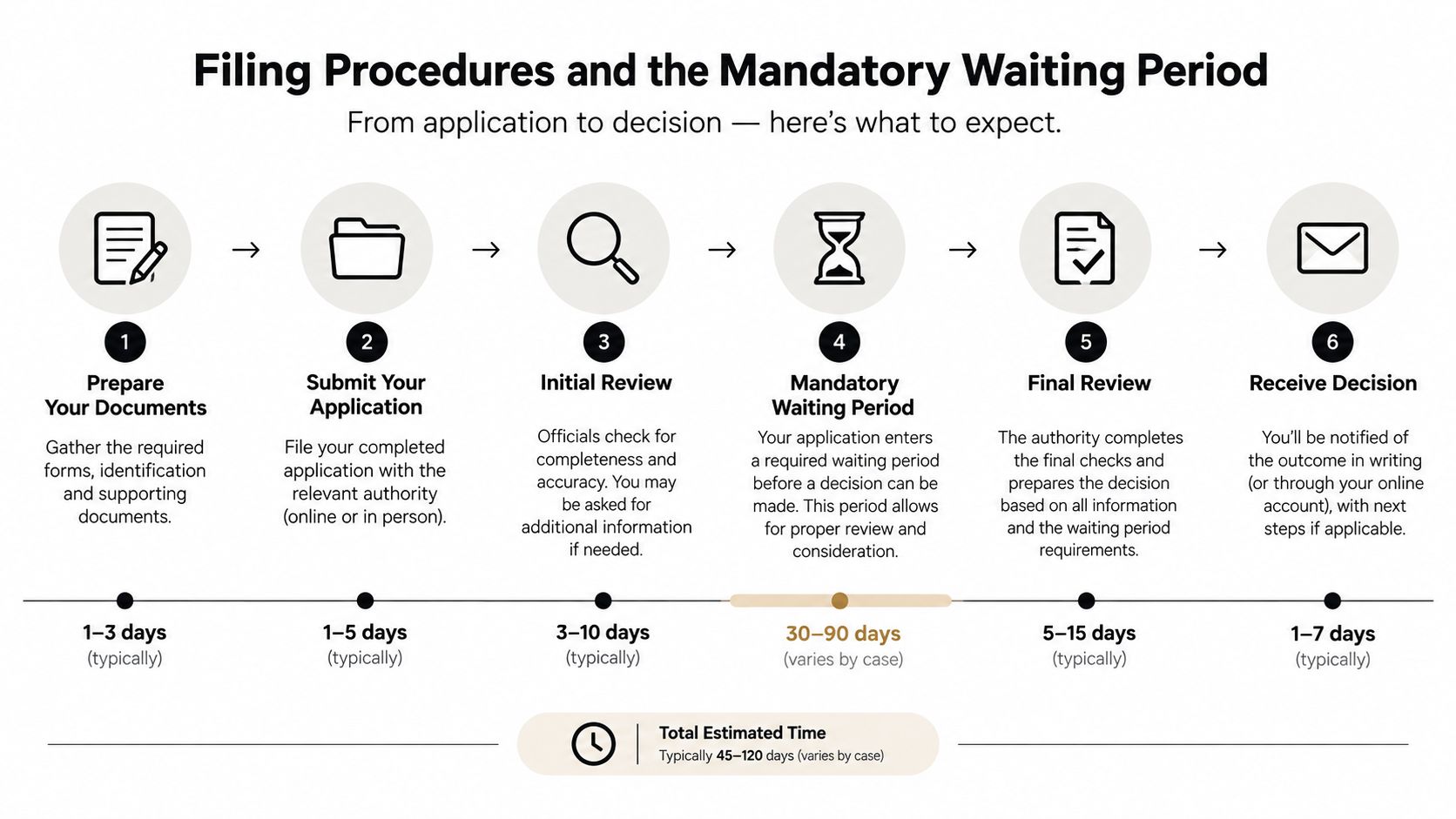
A negotiated settlement doesn't replace the divorce process. You still need to file the case, provide required notice or obtain a waiver where appropriate, exchange information, prepare the agreement and decree, and present the matter to the court for approval.
Texas Family Code section 6.702 creates a baseline waiting period. A court may not grant a divorce before the 60th day after the suit is filed, unless a family violence exception applies. Even if you reach agreement in mediation immediately, the judge can't finalize the divorce at the hearing until the statutory clock has run. Read the statute in Texas Family Code section 6.702.
A workable sequence
- File the petition. One spouse begins the divorce case in the proper Texas court.
- Complete service or waiver. The responding spouse receives formal notice or signs the legally appropriate waiver.
- Address temporary needs. If necessary, the court can address temporary possession, support, access, or financial responsibilities while the case remains open.
- Negotiate or mediate. The spouses can work toward a settlement through direct negotiations, mediation, collaborative methods, or litigation if agreement fails.
- Prepare the final documents. The agreement, decree, and any transfer orders must use consistent terms.
- Attend the final hearing. After the waiting period has elapsed and procedural requirements are satisfied, the judge reviews the agreement and enters the decree if the legal requirements are met.
Incorporating the agreement
Section 7.006 allows the court either to set the agreement out in full in the decree or incorporate it by reference. Incorporation can keep the decree from repeating every term, and the statute states that an agreement incorporated by reference isn't required to be filed with the clerk. That choice affects document handling and should be made with attention to enforceability, clarity, privacy, and the court's local procedures.
Ask your lawyer to confirm which documents must be signed before the hearing and which transfers occur afterward. A final decree may award an asset, but a deed, retirement order, lender document, or account form may still be needed to complete the practical transfer.
Your Next Steps for a Secure Texas Divorce
You don't need to solve every legal issue at once. You do need a disciplined process that prevents an emotional settlement from becoming an incomplete one.
Use this pre-signing checklist
- Gather financial records: Collect information for real estate, accounts, retirement interests, businesses, vehicles, insurance, and debts.
- Confirm ownership: Identify whether disputed assets are community or separate property and preserve documents supporting your position.
- Read every transfer term: Check names, account identifiers, legal descriptions, deadlines, signatures, and required forms.
- Protect your credit: Clarify who pays each debt and understand that a private allocation may not remove your responsibility to a third-party creditor.
- Separate child issues: Make sure custody, parenting time, and child support provisions protect the child's interests and comply with court requirements.
- Review maintenance language: Determine whether the provision is contractual, part of the decree, or both, and understand the consequences.
- Coordinate the paperwork: Compare the agreement, final decree, deeds, retirement orders, and other documents for conflicts.
- Plan the hearing: Confirm the waiting-period status, notice or waiver requirements, hearing date, testimony, and filing procedures with your legal team.
- Create a closing file: Keep the signed agreement, decree, receipts, transfer confirmations, and compliance records together.
Mediation can be an effective way to resolve financial and parenting disputes, but mediation doesn't remove the need for legal review. A settlement is only useful if the court can approve it and you can understand and enforce it later.
The family code 7.006 agreement incident to divorce Texas framework is powerful because it can connect a negotiated contract to a court judgment. That protection depends on complete disclosure, precise drafting, proper approval, and careful execution. If you own a business, hold a high-value estate, or share custody of children, individualized advice matters even more.
The Law Office of Bryan Fagan, PLLC helps Texas clients prepare, review, negotiate, and enforce divorce agreements involving property, debts, custody, support, and maintenance. Schedule a free consultation to discuss your settlement terms, filing timeline, and the steps needed to protect your financial future and family relationships.