Skip to content
When your child's well-being is caught in the crossfire of a tough custody battle, the uncertainty can be overwhelming. To get a clear picture of what's best for your child, a Texas court might appoint a Guardian Ad Litem (GAL). This isn't just another lawyer joining the case. A GAL is a court-appointed professional—usually an attorney—whose only job is to investigate your family’s situation and recommend what is in the best interest of your child.
Think of them as the judge's trusted, neutral investigator, dedicated to giving your child a voice when you and your co-parent can't agree.
Understanding The Guardian Ad Litem's Role In Your Custody Case

It can feel jarring to have a stranger step into the middle of your family's life, but understanding their purpose can bring you much-needed clarity. A Texas judge typically appoints a Guardian Ad Litem in high-conflict cases where you and your co-parent just can't agree on what’s best for your kids. Their involvement is a signal that the court needs an unbiased perspective, free from the emotional turmoil that naturally comes with a divorce or custody dispute.
Their entire mission is guided by the Texas Family Code, which demands that every custody decision prioritize the "best interest of the child." A GAL makes this happen by acting as an independent fact-finder. They aren’t there to take your side or your co-parent's side; their only client is your child's welfare.
The GAL's Primary Purpose
The GAL's main responsibility is to conduct a thorough and impartial investigation into your child’s world. This means gathering information from every possible angle to paint a complete picture for the judge.
This step-by-step process usually includes:
- Interviewing you, your co-parent, and your children (always in an age-appropriate way).
- Speaking with other important people in your child’s life, like teachers, doctors, therapists, or coaches.
- Conducting home visits to see the living environments firsthand.
- Reviewing relevant documents, such as school records, medical reports, and court filings.
Once this investigation is complete, the GAL submits a detailed report and makes a recommendation to the court. While this recommendation isn't legally binding, judges give it significant weight when making their final custody orders. It’s also important to understand how a GAL differs from other professionals you might encounter. If you want to learn more, you can check out our guide on how to request a child lawyer in a Texas custody dispute.
To help clarify the different professionals involved in your case, here’s a simple breakdown of who does what.
Key Roles in a Texas Child Custody Case
| Role | Who They Represent | Primary Duty |
|---|---|---|
| Guardian Ad Litem (GAL) | The child's best interests | To investigate your family's situation and make an unbiased recommendation to the court. |
| Your Attorney | You (the parent) | To advocate for your legal rights and desired outcomes in court. |
| Attorney Ad Litem (AAL) | The child's expressed wishes | To represent what your child says they want, acting as their personal lawyer. |
Navigating a case with a GAL can feel complicated, but remember their presence is meant to protect your child. By understanding their role, you can approach the process with more confidence and focus on what truly matters: securing a safe and stable future for your family.
The Guardian Ad Litem's Investigation Process
When a Guardian Ad Litem (GAL) is appointed to your case, it can feel like your entire family is suddenly under a microscope. That’s a perfectly normal reaction. Knowing what their investigation actually involves, however, can help replace that anxiety with a sense of control and clarity.
Think of the GAL as a neutral fact-finder for the court. Their one and only mission is to figure out what is truly in your child's best interest. They aren’t there to critique your housekeeping or dredge up old mistakes; their job is to observe, listen, and piece together a complete picture of your child's world so the judge can make a fair decision.
Gathering Information from All Sides
A GAL's investigation is methodical and thorough, designed to give the judge an unbiased perspective that cuts through the noise of parental conflict. To do this, they have to collect information from multiple sources to understand your family's unique situation.
This fact-finding mission is a multi-step process that usually includes:
- Interviews with Parents: The GAL will schedule time to meet with you and your co-parent separately. This is your chance to share your perspective, talk about your relationship with your child, and explain your ideal parenting plan. Honesty and cooperation are your best tools here.
- Conversations with Your Child: A huge part of the GAL's job is speaking directly with your child. These interviews are always handled in a sensitive, age-appropriate way. They often take place in a comfortable setting, like their school or a neutral office, to help your child feel safe enough to share their thoughts and feelings.
- Speaking with Collateral Contacts: The GAL will also reach out to other key people in your child's life. This "collateral" network might include teachers, doctors, therapists, coaches, or even close family friends who can offer objective insights into your child's well-being and daily life.
Home Visits and Document Reviews
Seeing where your child lives and reviewing important records are two more big pieces of the puzzle. This gives the GAL firsthand knowledge of the environment and history that shape your child's experiences.
A home visit isn't a white-glove inspection. The GAL isn’t there to judge a bit of clutter; they are there to see if the home is a safe, stable, and nurturing place for your child. They’ll look for common-sense things like proper sleeping arrangements, a space for homework, and general safety.
In addition to the home visit, the GAL will request and review key documents, such as:
- School report cards and attendance records
- Medical and mental health histories
- Any relevant court filings or police reports
In some cases, if a parent's mental fitness is a serious concern, the investigation might need to go a step further. You can learn more about how parent psychological evaluations impact custody decisions in Texas in our detailed guide.
The Final Report and Recommendation
After gathering all this information, the GAL pulls everything together into a detailed written report for the judge. A GAL often needs to research legal precedents and case specifics during their investigation, which can be made much easier with an advanced AI Agent for Legal Case Research.
The GAL's final report is the culmination of their entire investigation. It will summarize their interviews, home visits, and document review, concluding with a specific recommendation on custody, possession schedules, and other matters affecting your child.
This recommendation isn't the final order—only the judge has the authority to make that decision. However, since the GAL is the court's neutral expert, their report carries a lot of weight. That’s why participating in their investigation with honesty and a constructive attitude is one of the most important things you can do for your case.
When and Why a GAL Is Appointed in Texas
Watching your custody case grow more complex can feel like you’re losing control, especially when all you can think about is your child’s future. In Texas, a Guardian Ad Litem (GAL) isn't appointed in every family law case. Their involvement is a sign that the judge needs a clearer, unbiased picture to make a decision that truly protects your child.
The court typically brings in a GAL when the conflict between you and your co-parent is so intense that an impartial view is essential. They're also appointed when serious concerns about a child's safety or well-being surface. Think of it as a protective measure—a way to ensure your child's voice isn't drowned out by the legal noise.
Triggers for a GAL Appointment
Under the Texas Family Code, a judge has the authority to appoint a GAL in any case where they believe it serves the child's best interests. While it's up to the judge's discretion, some situations almost guarantee a GAL will be brought into your case.
A GAL is most often appointed when serious allegations arise that could directly harm your child's safety or emotional health. These red flags usually include:
- Allegations of Abuse or Neglect: If one parent accuses the other of physical, emotional, or sexual abuse, a judge will almost certainly appoint a GAL. Their job is to dig into these claims and report back to the court with their findings.
- Concerns About Substance Abuse or Mental Health: If a parent's drug or alcohol use, or an untreated mental health issue, is creating an unsafe environment for your child, a GAL can assess the reality of the situation and suggest necessary safeguards.
- High-Conflict Custody Disputes: In cases where you and your co-parent are at a complete stalemate—unable to communicate or agree on even the smallest things—a GAL offers a neutral perspective. Their focus is solely on what the child needs, not on your fight.
- Parental Alienation Concerns: If there's a suspicion that one parent is actively trying to turn your child against the other, a GAL will be tasked with investigating these toxic dynamics.
A judge can decide to appoint a GAL on their own (sua sponte) or after your attorney or your co-parent's attorney files a formal request, called a Motion to Appoint a Guardian Ad Litem.
The infographic below breaks down the core steps of a GAL’s investigation.
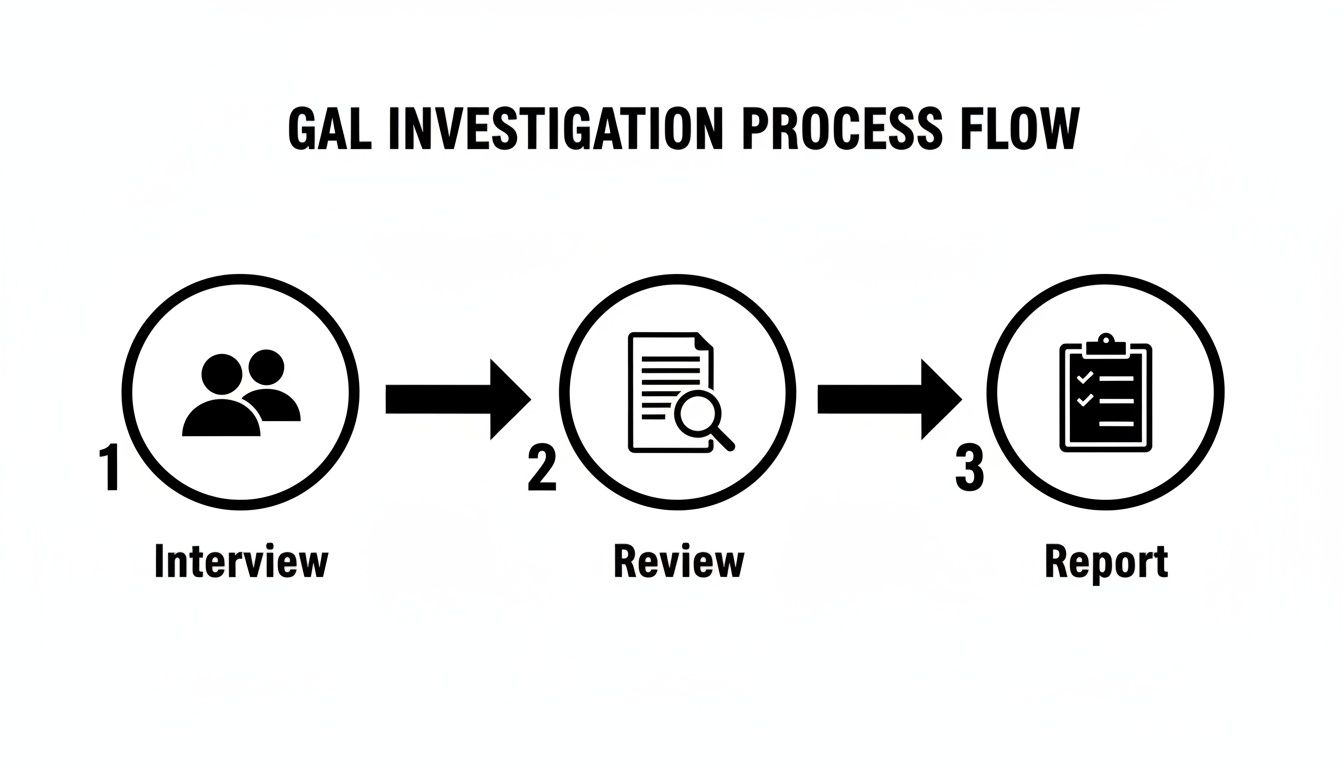
This process—interviewing everyone involved, digging through important documents, and delivering a final report—is designed to give the court a complete, unbiased view of your child’s world.
Who Pays for the Guardian Ad Litem?
One of the first practical questions you might have is, "Who pays for this?" A GAL is a professional who is paid for their time and expertise, and those costs are typically shared between you and your co-parent.
The court will issue a specific order that spells out how the GAL’s fees will be handled. While a 50/50 split is common, it's not set in stone. The judge can adjust the division based on each of your financial situations and ability to pay.
The financial strain of a divorce is already a heavy burden. With over a million children experiencing parental divorce each year, the demand for qualified guardians ad litem is substantial, highlighting just how critical their focused expertise is in these tough cases. If you're interested, you can read more about the challenges facing the GAL system and its effects on families nationwide.
How to Effectively Work with the Guardian Ad Litem
Having a Guardian Ad Litem assigned to your case can feel like your entire parenting history is about to go under a microscope. It’s completely normal to feel on edge. But how you handle yourself during this process can make a world of difference in the GAL’s final report. Remember, your cooperation, honesty, and organization are your best allies right now.

Try to think of the GAL as a professional partner whose only goal is your child's well-being. They aren't trying to catch you in a lie or hold past mistakes against you. Their job is to piece together the facts to recommend a safe, stable future for your child. When you present yourself as a reasonable, child-focused parent, you’re not just helping them do their job—you’re helping your case.
A Practical Guide to Your Interactions
Navigating your conversations and meetings with the GAL is all about a thoughtful approach. Small things can have a big impact. Treating the GAL with respect, responding quickly to their requests, and providing well-organized documents shows you’re taking this seriously and are committed to a good outcome.
On the flip side, being difficult, evasive, or constantly criticizing your co-parent can raise serious red flags. The GAL is evaluating your ability to co-parent effectively and put your child’s needs ahead of your own frustrations.
The best strategy is simple: be transparent and helpful. The GAL’s task is to understand your family’s dynamic. Your open cooperation gives them the clear, accurate information they need to make a fair and informed recommendation.
This approach doesn’t just build trust; it lets the GAL see your genuine commitment to what's best for your child.
Preparing for the GAL Interview
Your interview with the Guardian Ad Litem is one of the most crucial meetings you’ll have. This is your chance to share your perspective on what your child needs, your parenting style, and your vision for their future. A little preparation can go a long way.
To help you get ready, here are a few common areas a GAL will likely ask about:
- Your Child's Daily Life: They’ll want to know everything about your child’s typical routine—school, homework, friendships, and after-school activities.
- Your Parenting Approach: Be ready to talk about your discipline methods, how you support your child's emotional needs, and how you encourage their growth.
- Your Relationship with the Other Parent: The GAL will definitely ask about how you communicate with your co-parent and your ability to make decisions together for your child.
- Your Specific Concerns: This is your opportunity to calmly and factually voice any legitimate concerns you have about your child's safety or well-being.
- Your Proposed Parenting Plan: Explain what custody arrangement you believe is in your child's best interest and, most importantly, why.
Your attorney is an invaluable resource during this stage. For a deeper dive, it's a good idea to understand the full scope of how to prepare for a custody hearing in Texas.
Do's and Don'ts When Working with a Guardian Ad Litem
To keep things straightforward, here's a quick-reference guide to help you navigate your interactions with the GAL effectively and protect your child's best interests. Following this advice will help you build a constructive relationship and keep the focus where it belongs—on your child.
| Do | Don't |
|---|---|
| Be Honest and Transparent: Always tell the truth, even if it feels uncomfortable. Your credibility is everything. | Coach Your Child: Never tell your child what to say. The GAL is trained to spot this, and it will seriously damage your case. |
| Provide Documents Promptly: When asked for records or information, respond in a timely and organized way. | Speak Negatively About the Other Parent: Focus on facts and specific behaviors that impact the child, not on personal attacks. |
| Communicate Respectfully: Stay polite and professional in all your emails, calls, and meetings. | Be Argumentative or Defensive: If you disagree, state your position calmly and back it up with evidence. |
| Focus on Your Child's Needs: Frame your answers and concerns around what is best for your child, not what you want for yourself. | Withhold Information: Hiding relevant facts or documents will only create suspicion and hurt your credibility with the court. |
Ultimately, a good working relationship with the GAL is built on a foundation of respect, honesty, and a shared focus on your child's future. It's not always easy, but it’s always worth it.
Challenging a GAL's Recommendation in Court
Getting a Guardian Ad Litem’s report that you feel completely misses the mark on your family or what's best for your child is a gut-wrenching moment. It can be incredibly frustrating and even a little scary. The first thing to remember is that their report is just that—a recommendation. It is not a final, legally binding court order, and you absolutely have the right to challenge it.
This is where having an experienced Texas family law attorney in your corner becomes non-negotiable. Judges give a lot of weight to a GAL’s report, so successfully challenging it requires a sharp, evidence-based legal strategy. This isn’t about just venting your frustration; it's about systematically dismantling the report's credibility where it counts—in the courtroom.
Grounds for Challenging a GAL Report
You can't challenge a GAL’s findings simply because you don’t like the outcome. A judge needs to see legitimate legal reasons why the recommendation is flawed and should be set aside. Your attorney will be crucial in figuring out if your situation has the right ingredients for a formal challenge.
Valid grounds for a challenge usually boil down to a few key areas:
- A Biased Investigation: Did the GAL spend way more time with the other parent? Did it seem like they bought one side's story from the get-go, turning a blind eye to evidence that contradicted it? A lopsided investigation is a solid reason to object.
- Failure to Consider Key Evidence: Maybe the GAL blew past crucial school records, medical reports, or ignored what an important witness like a therapist or teacher had to say. If they missed a vital piece of the puzzle that would have changed the picture, you have grounds to fight back.
- Significant Factual Errors: Is the report littered with major mistakes about your living situation, your work schedule, or your child's specific needs? If you can show the very foundation of the report is built on bad information, you can undermine the entire recommendation.
- Exceeding Their Authority: A GAL is there to investigate and recommend what's in the child's best interest. They aren't supposed to play therapist or mediator, and they have to stick to the specific duties laid out in the court order that appointed them.
The Legal Process for a Challenge
Challenging the report isn't a casual conversation with the judge. It’s a formal legal process that takes place in court, usually during a final trial or hearing on custody. It's a structured part of the case where evidence and testimony are presented according to strict court rules. As your attorney prepares to challenge the GAL's recommendation, having access to the top legal research tools can make a huge difference in building a strong argument based on legal precedent.
The most powerful tool for challenging a GAL's report is the cross-examination. This is when your attorney gets to question the GAL under oath, right there in front of the judge.
During cross-examination, your lawyer will methodically pick apart the GAL’s investigation process. They'll ask about the evidence they looked at (and, just as importantly, what they didn't look at) and the logic behind their conclusions. The whole point is to expose any bias, factual mistakes, or weak spots in their report. By doing this well, your attorney can demonstrate to the judge exactly why the recommendation is flawed and shouldn't be followed. This process shows just how critical skilled legal representation is when your family's future is on the line.
What to Do Next
Facing a custody case with a Guardian Ad Litem can feel like you've been put under a microscope. It’s stressful, but remember this: the GAL’s entire job is to advocate for your child's best interests. Your calm, organized cooperation is the best way to show them you’re on the same team.

This process might feel overwhelming, but you are not powerless. By taking clear, practical steps right now, you can present your side effectively and give the GAL the information they need to make a fair recommendation.
Key Takeaway
Think of the following as your action plan for moving forward with purpose. Each step is designed to build a foundation of credibility and preparedness, demonstrating that you are a responsible, child-focused parent.
Your immediate priorities should be:
-
Gather Important Documents: Start collecting key paperwork now. This includes your child’s report cards, medical records, and anything else that paints a clear picture of their life and your involvement. Having these documents ready to go shows the GAL you are organized and have nothing to hide.
-
Make a List of Helpful Contacts: Who in your child’s life can speak to your parenting? Compile a list of names and contact info for teachers, doctors, coaches, or counselors. These are people who can offer a positive, third-party perspective on your family.
-
Consult with Your Attorney: This is the most critical step of all. Schedule a meeting with your family law attorney to map out a clear strategy for interacting with the GAL. They will help you prepare for interviews, organize your documents, and understand how to best frame your case.
The presence of a Guardian Ad Litem is an opportunity to highlight your strengths as a parent. By staying focused on your child's well-being and working constructively with both the GAL and your attorney, you can navigate this process with confidence.
We understand just how much is at stake for your family. If you're dealing with a custody dispute involving a GAL in Texas and need guidance, The Law Office of Bryan Fagan, PLLC is here to help. We invite you to schedule a free, confidential consultation with our experienced team to protect your family and your future.
Frequently Asked Questions About Guardians Ad Litem
It's completely normal to feel confused or even a little intimidated when you hear a Guardian Ad Litem (GAL) is being appointed to your custody case. You’re already dealing with the stress of a family dispute, and now there’s another person involved. Getting clear, straightforward answers can make a world of difference, helping you feel more prepared and in control.
We've put together some of the most common questions Texas parents have about the GAL process. Understanding these key points will help demystify the GAL’s role and show you how to navigate their investigation with confidence.
What Is the Difference Between a Guardian Ad Litem and an Attorney Ad Litem?
This is probably the most common point of confusion, and the distinction is critical. While both are attorneys appointed by the court, they serve two very different functions in your case.
Here's a simple way to think about it: a Guardian Ad Litem is focused on your child’s best interests, while an Attorney Ad Litem is focused on your child’s wants.
-
A Guardian Ad Litem (GAL) represents the best interests of the child. Their job is to be the court's eyes and ears—to investigate your family's situation and recommend a solution to the judge that promotes your child’s safety and well-being. This recommendation might not always line up with what your child says they want. The GAL is a neutral investigator for the court.
-
An Attorney Ad Litem (AAL) represents the expressed wishes of the child. They act as your child's personal lawyer, advocating for the outcome your child says they want. In Texas, an AAL is often required for older children who are mature enough to clearly state their preferences.
How Long Does a GAL Investigation Take?
There's no one-size-fits-all answer here—the timeline for a GAL investigation can vary quite a bit from one case to the next. Generally, you can expect the process to take anywhere from several weeks to a few months.
The biggest factor is the complexity of your case. Things that can extend the timeline include:
- Serious allegations of abuse or neglect that demand a deeper investigation.
- A long list of people to interview (like teachers, therapists, coaches, and extended family).
- Scheduling conflicts when trying to arrange interviews or home visits.
- The need for specialized evaluations, such as psychological assessments for a parent or child.
The GAL will try to work efficiently, but their main duty is to be thorough. For them, getting it right is always more important than getting it done fast.
Can I Refuse to Cooperate with the GAL?
Technically, you can refuse. But it's an incredibly bad idea and will almost certainly damage your case. The judge appointed the GAL because they need an unbiased, expert opinion to help them make the best decision for your child. Obstructing that process sends a very loud, very negative message to the court.
Refusing to cooperate with the Guardian Ad Litem can be interpreted by the judge as you having something to hide or being unwilling to put your child's best interests first. This kind of behavior will absolutely be documented in the GAL’s final report and can destroy your credibility.
Remember, the GAL is an officer of the court, and failing to cooperate can have serious consequences. Your best strategy is always to be transparent, responsive, and respectful. This approach shows that your focus is exactly where it should be—on creating a safe and stable future for your child.
Navigating a custody case involving a Guardian Ad Litem requires a clear strategy and experienced legal guidance. At The Law Office of Bryan Fagan, PLLC, we empower you with the knowledge and support needed to protect your family's future. If you are facing a complex custody dispute in Texas, schedule a free, confidential consultation with us today to understand your rights and options.