Skip to content
It's a gut-wrenching moment when you realize your child is pulling away during a contentious divorce, and you can't figure out why. In Texas, parental alienation isn't a specific lawsuit you can file, but it is a destructive pattern of behavior where one parent intentionally tries to poison your child's relationship with you. And make no mistake: Texas courts see these actions as a direct threat to a child's best interests, which can dramatically impact custody decisions.
Understanding Parental Alienation in Texas Courts

Watching your relationship with your child start to crack is one of the most painful things a parent can go through. You might see your child becoming oddly critical, distant, or even outright hostile. Often, they'll parrot negative things about you that sound like they came straight from your ex-partner’s mouth. This is the classic hallmark of parental alienation.
While you won't find a law titled "parental alienation" in the Texas Family Code, judges take the underlying behaviors extremely seriously. Why? Because every single custody decision in Texas hinges on one guiding principle: the best interest of the child.
How Texas Law Views Alienating Behaviors
When one parent actively sabotages the other, they aren't acting in their child’s best interest. They're causing deep emotional harm and interfering with your child's fundamental right to have a healthy relationship with both parents.
A Texas judge will be on the lookout for specific actions that reveal this harmful dynamic, such as:
- Badmouthing: Constantly tearing you down or criticizing your family and lifestyle in front of your child.
- Blocking Communication: Intentionally stopping phone calls, ignoring texts, or preventing video chats between you and your child.
- Interfering with Visitation: Regularly coming up with flimsy excuses to cancel your time or creating scheduling conflicts that make visits nearly impossible.
- Making False Allegations: Fabricating stories of abuse, neglect, or instability to turn your child—and sometimes the authorities—against you.
- Forcing the Child to Choose Sides: Creating loyalty conflicts that make your child feel like they have to pick one parent over the other.
The Best Interest of the Child Standard
A court’s entire focus is on creating an environment where your child can thrive—physically, mentally, and emotionally. Under Texas Family Code Section 153.002, judges are required to weigh several factors, including each parent's ability to encourage a positive relationship with the other parent. Alienating behavior is the polar opposite of this requirement.
A parent's willingness to foster a healthy and loving relationship between the child and the other parent is a key factor a judge will consider. Alienating behavior is the exact opposite of this and can be a deciding factor in a custody case.
Getting a handle on these core principles is the first step toward protecting your parental rights. For a deeper look into how all custody decisions are made, our firm has put together a comprehensive guide on Texas child custody laws. By understanding that the court’s job is to protect your child, you can build a case that clearly shows how the other parent's actions are causing direct harm.
Recognizing the Warning Signs of Alienation
It’s a confusing and gut-wrenching experience when your child’s attitude toward you suddenly shifts, leaving you wondering if it's just a phase or something far more serious. Learning to spot the difference between typical co-parenting bumps and a calculated campaign of parental alienation in Texas is the first critical step. The latter demands a strategic legal response to protect your most important relationship.
Knowing the specific signs can help you see a destructive pattern before it causes permanent damage. Alienation is almost never a single event; it’s a slow burn—a series of calculated actions and subtle comments designed to poison your child's love and trust in you.
Behavioral Red Flags in Your Child
The most painful signs of alienation often come directly from your child. They may not even realize they are being manipulated, but their words and actions can be a clear signal that something is deeply wrong. You aren't being overly sensitive; these are real warning signs that Texas courts are trained to look for.
Keep an eye out for these changes in your child’s behavior:
- Unjustified Criticism: Your child starts criticizing you for things that are untrue, irrational, or were never an issue before. A tell-tale sign is when their complaints sound rehearsed or use adult-like phrases.
- Weak or Absurd Justifications: When you ask why they’re upset, the reasons they give are flimsy or make no sense, like "you breathe too loud" or "I hate your new coffee table." This often means they are borrowing someone else's reasons instead of expressing their own genuine feelings.
- Lack of Ambivalence: Healthy relationships have good days and bad days. If your child suddenly sees one parent as 100% perfect and the other as 100% flawed, it’s a massive red flag for manipulation.
- Reflexive Support for the Alienating Parent: Without fail, your child automatically sides with the other parent in any disagreement, showing no independent thought or consideration.
- Absence of Guilt: Your child may say or do cruel things to you without a shred of remorse. This is unnatural, as kids typically feel guilty after hurting a parent they love.
- Spreading the Animosity: The negativity doesn’t stop with you. It often extends to your entire side of the family, including grandparents, aunts, and cousins they used to adore.
Actions of the Alienating Parent
While your child’s behavior is the symptom, the other parent’s actions are the source of the problem. These behaviors aren't just poor co-parenting—they are intentional moves meant to interfere with your parental rights and destroy your bond with your child.
In a Texas custody case, a judge will look very closely at a parent's actions to determine if they are encouraging a healthy relationship or actively working to tear it down. Documenting these specific behaviors is how you start to build your case.
To help you identify and track these destructive patterns, the table below contrasts common alienating tactics with the kind of healthy co-parenting behaviors Texas courts want to see.
Common Alienating Behaviors vs Healthy Co-Parenting
This table contrasts specific alienating tactics with the positive co-parenting behaviors Texas courts look for, helping you identify and document problematic actions.
| Alienating Behavior | Healthy Co-Parenting Behavior |
|---|---|
| Systematically blocking calls or texts between you and your child. | Encouraging frequent and open communication with the other parent. |
| "Forgetting" to inform you of important school events, doctor's appointments, or extracurricular activities. | Sharing all relevant information about the child promptly and cooperatively. |
| Making your child feel guilty for enjoying their time with you. | Speaking positively about the child’s time and experiences with the other parent. |
| Sharing inappropriate adult details about the divorce or your finances with the child. | Protecting the child from adult conflicts and keeping divorce details private. |
| Creating loyalty binds by saying things like, "If you loved me, you wouldn't want to go to your dad's house." | Reassuring the child that it is okay to love and spend time with both parents. |
If you recognize a consistent pattern of these behaviors, you are not just dealing with a difficult ex. You are likely facing parental alienation, and it's time to shift from hoping things get better to taking decisive legal action to protect your child and your rights.
Your First Steps When You Suspect Alienation
It’s a gut-wrenching feeling, suspecting your child is being turned against you. Your first instinct might be to react emotionally, but this is the moment for calm, strategic action. Taking the right steps now can protect your relationship with your child and build a solid foundation for any legal fight that lies ahead.
The single most powerful tool you have right now is documentation. Memories fade and feelings aren't evidence in a courtroom, but a detailed, consistent record is hard to deny. Start a journal, create a digital folder, use a spreadsheet—whatever works for you—but start recording everything.
Start Documenting Everything Immediately
Your goal here is to show a clear pattern of interference, not just a few isolated incidents. A vague claim like, "she always cancels my visits," won't get you very far. A judge needs to see specifics.
For every instance you suspect is part of the alienation, log the following:
- Date and Time: Pinpoint exactly when it happened.
- What Happened: Describe the event objectively. For example, "Received a text from my ex at 4:45 PM stating Johnny was suddenly 'too sick' for my scheduled 5:00 PM visitation."
- Who Was Involved: Note everyone present or part of the communication.
- Your Response: Detail how you handled it. For instance, "I replied calmly, 'I'm sorry to hear he's unwell. Please let me know when we can reschedule this week.'"
- Evidence: Save the text message, email, or voicemail. Take a screenshot and save it to your folder.
This methodical approach turns your emotional turmoil into concrete evidence. While you're gathering this, it's also wise to seek out professional parent consultation services. They can offer guidance on managing the complex emotional side of this process, which is just as important as the legal one.
Maintain a Calm and Consistent Presence
While you're documenting the other parent's negative behavior, your own conduct has to be flawless. I know it’s incredibly difficult, but you must remain the calm, stable, and loving parent your child needs. Don't retaliate. Don't badmouth your ex in front of your child. Never put them in the middle of it.
A Texas judge will scrutinize the behavior of both parents. By showing you're the parent consistently acting in your child's best interest—despite provocation—you strengthen your position immeasurably.
Your unwavering positivity and love create a safe harbor for your child. It reminds them of the truth of your relationship, even when they’re hearing confusing messages from the other side.
This process flow shows the logical steps from noticing the first warning signs to taking decisive action.
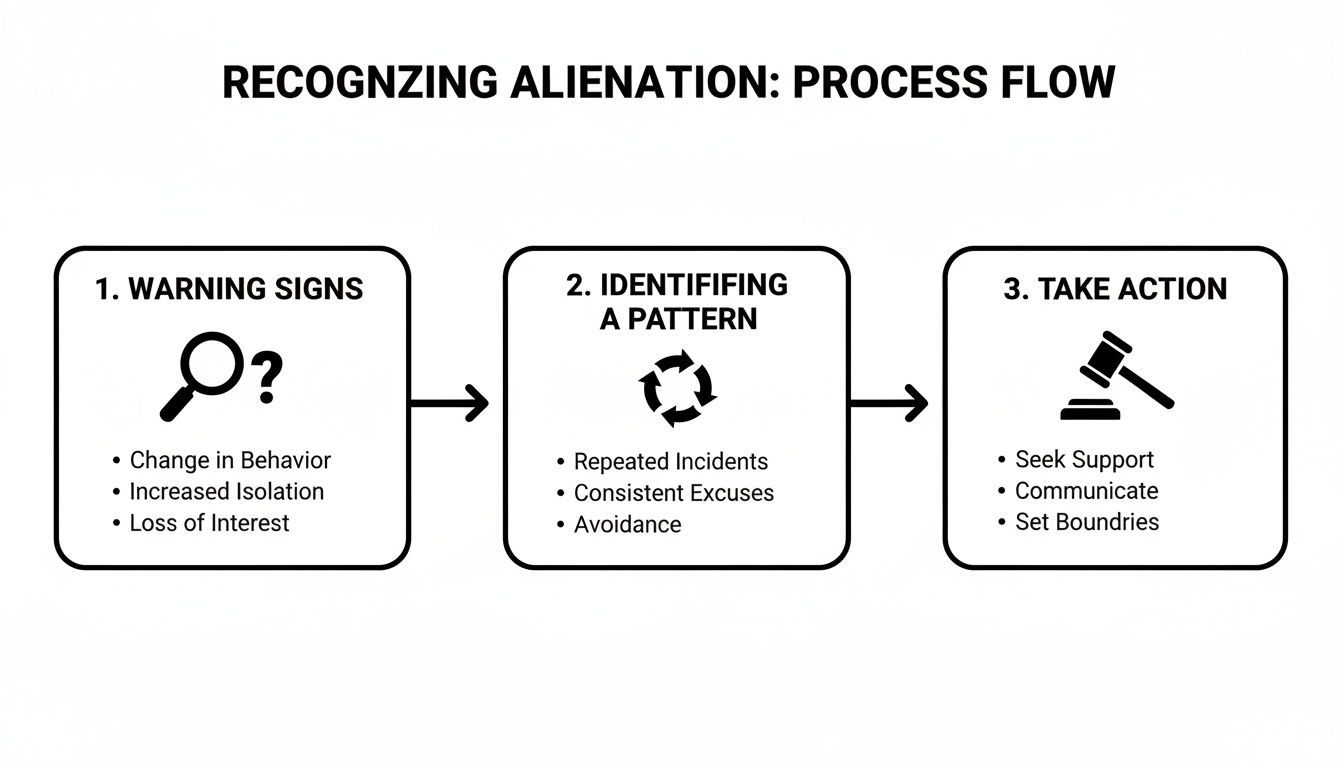
This visual guide drives home the point that recognizing alienation isn't about a single event. It’s about identifying a consistent pattern that demands a strategic response.
Consult With an Experienced Family Law Attorney
Once you've started documenting and have a few clear examples that point to a pattern, it's time to get legal advice. Don't wait until the situation has exploded into a full-blown crisis. An early consultation allows an attorney to review your evidence and start mapping out a legal strategy.
An attorney can advise you on what comes next, whether that's filing to modify your current custody orders or seeking immediate help from the court. In urgent cases, knowing how to file for temporary custody can provide the emergency relief needed to protect your child from further harm while the case moves forward.
How to Prove Parental Alienation in a Texas Courtroom
When you're caught in the middle of a high-conflict custody dispute, the sense of hurt and frustration is overwhelming—and completely valid. But inside a Texas courtroom, those feelings need to be translated into solid, undeniable evidence. A judge can't act on your word alone. They need to see a clear, documented pattern of harmful behavior before they will intervene in your child's life.
Proving parental alienation in Texas isn't about one dramatic "gotcha" moment. It's about methodically building a compelling case, brick by brick. The challenge is transforming your personal experience into a legal argument a judge can act on. That means gathering tangible proof showing how the other parent is actively trying to sever your relationship with your child.
The Power of Documented Evidence
Words can be denied or twisted, but written records are hard to dispute. The most powerful evidence you can present often comes directly from the alienating parent in their own words.
You need to become the archivist for your case, building a comprehensive library of evidence that paints a picture of a consistent pattern of behavior.
- Text Messages and Emails: Save every single hostile, manipulative, or obstructive message. One angry text might be explained away, but dozens of them over several months show a clear pattern of interference.
- Social Media Posts: Public posts or messages trashing you or spinning a false narrative about your parenting can be devastatingly effective in court. Take screenshots immediately, because this kind of evidence has a way of disappearing.
- Voicemails: Sometimes the tone says more than the words. Save any voicemails where the other parent is angry, controlling, or trying to manipulate you or your child. This digital trail can reveal their true intentions far better than any testimony ever could.
Testimony from Neutral Third Parties
While your own story is crucial, the court naturally views it as biased—you're in the middle of a conflict, after all. That's why testimony from neutral, credible third parties who have witnessed the alienation can be a total game-changer for your case.
These are people with no skin in the game who can speak to the changes they've seen in your child or in the other parent’s behavior.
A teacher observing that your child suddenly started repeating negative, adult-like phrases about you, or a therapist's professional opinion on the emotional harm being caused, can provide the objective validation a judge needs to see.
Think about people like:
- Teachers or school counselors
- Therapists or pediatricians
- Coaches or extracurricular leaders
- Trusted family friends or neighbors
Their impartial accounts can back up your claims and show the judge that this problem is real and observable to others.
The Role of Court-Appointed Professionals
In really tough cases involving parental alienation in Texas, judges often bring in court-appointed professionals to conduct an independent investigation. These experts serve as the eyes and ears of the court, giving an unbiased assessment of the family dynamic.
A Child Custody Evaluator is a mental health professional who does a deep-dive investigation. They will interview you, the other parent, the children, and collateral contacts like teachers or therapists. They also review documents and may conduct psychological testing to give the court a detailed report and recommendation.
An Amicus Attorney is a lawyer appointed specifically to represent the best interests of the child. They don't work for either parent. Their job is to investigate the situation for the court, talk to everyone involved, and tell the judge what custody arrangement they believe is best for the child.
These professionals cut through the "he said, she said" and give the judge a clear, expert opinion that often carries immense weight. Parental alienation inflicts deep psychological damage, and Texas courts will intervene decisively to protect a child's well-being. In 2023, Texas Children's Advocacy Centers served 55,298 children, many of whom needed counseling for trauma often tied to these very dynamics.
When courts find a parent is undermining the other's relationship, under Texas Family Code §153.134, it can absolutely tip the scales toward the targeted parent getting more possession time or even sole custody. You can read more about these statewide efforts to help children.
Legal Remedies and Court Orders for Alienation

Presenting a strong case is the first half of the battle. The second half is securing a court order that actually fixes the problem. After you’ve laid out all the evidence, you need to know what a Texas judge can realistically do to stop the alienating behavior and help you rebuild your relationship with your child.
Fortunately, judges have a range of powerful tools at their disposal. We’re not talking about a slap on the wrist. These are immediate interventions and long-term solutions designed to protect your child’s well-being.
The court’s primary goal is always to act in the best interest of the child, and that means taking decisive action to stop emotional harm. A judge won’t simply tell the other parent to "be nicer." Instead, they will issue specific, enforceable orders tailored to the severity of the situation.
Immediate and Temporary Orders
In cases of parental alienation in Texas, time is of the essence. You can’t afford to wait months for a final trial while the damage deepens. Your attorney can file a request for a Temporary Restraining Order (TRO) or other temporary orders to get immediate relief.
These orders can put a swift end to the most destructive behaviors. A judge might order the alienating parent to:
- Cease all negative talk: Prohibit them from speaking negatively about you in front of the child.
- Ensure communication: Mandate daily phone or video calls between you and your child.
- Follow the possession schedule: Strictly enforce the current visitation schedule, no more excuses.
As you navigate the court system to get these orders in place, a comprehensive guide on filing court documents can be an invaluable resource for understanding the procedural steps.
Long-Term Solutions and Modifications
If the evidence shows a persistent pattern of alienation, a judge can implement more robust, long-term remedies. These are often written into a modified or final custody order and are designed to fundamentally change the family dynamic for the better.
Some of the most effective solutions include:
- Ordering Reunification Counseling: This isn't your standard therapy. It’s a specialized, court-ordered process where a trained therapist works with you and your child to identify the source of the conflict, repair the emotional damage, and rebuild trust in a structured setting.
- Appointing a Parenting Facilitator or Coordinator: Think of these professionals as referees for high-conflict parents. They are neutral third parties, often attorneys or mental health professionals, appointed by the court to help you manage co-parenting. They can make limited decisions to resolve disputes and will report back to the judge if one parent isn't complying.
- Modifying the Possession Schedule: If the alienating parent has been consistently interfering with your time, a judge can modify the custody schedule to give you more possession. This could mean awarding you more weekends, longer holiday periods, or in serious cases, even the right to determine the child’s primary residence.
For particularly complex cases, the court may also appoint a legal representative just for your child. Understanding what a Guardian Ad Litem is can help you see how this professional advocates for your child's best interests directly to the judge.
The Most Serious Interventions
In the most severe cases of parental alienation—where a child's emotional health is at significant risk—a Texas judge can take even more drastic steps. These aren't ordered lightly. They are reserved for situations where other remedies have failed or the harm is profound.
A change in the primary conservatorship—meaning, who the child lives with—is the ultimate remedy for parental alienation. If a judge believes a parent's behavior is so toxic that it poses a direct threat to the child's well-being, they will not hesitate to change custody to protect that child.
Other serious interventions can include ordering supervised visitation for the alienating parent to ensure all future interactions with the child are positive and safe.
What to Do Next
Feeling lost in the emotional storm of parental alienation is completely understandable, but this is the moment for clear-headed, strategic action. Think of this as your roadmap forward—a concrete plan to protect the most important relationship in your life. You are not alone in this fight, and there is a legal path to get things back on track.
Remember, Texas courts make decisions based on evidence, not just raw emotion. Your most powerful tool right now is a calm, deliberate strategy.
Four Critical Steps to Take Now
To regain a sense of control and start building a strong case, zero in on these four essential actions. This isn't an exhaustive list, but it's the absolute foundation for what comes next.
- Document Everything Meticulously: This is non-negotiable. Start a detailed, dated journal of every missed visit, every hostile text, and every instance of interference from the other parent. Save screenshots, emails, and voicemails. A consistent, factual record of alienating behavior is the bedrock of your legal case.
- Stay Focused on Your Child: It’s tempting to fight fire with fire, but resist the urge to badmouth the other parent. Your child needs you to be their stable, loving, and consistent presence now more than ever. Your positive conduct will stand in sharp contrast to the other parent’s destructive actions when it’s time to present your case to a judge.
- Do Not Retaliate in Anger: Feeling hurt and angry is a natural response, but lashing out will only damage your case. When you're provoked, respond calmly and briefly, if at all. Your goal is to de-escalate conflict and demonstrate to the court that you are the reasonable parent focused solely on your child's well-being.
- Consult with Legal Counsel Immediately: Don't wait until the situation feels irreversible. An experienced family law attorney can look at the evidence you’ve gathered, explain your rights under Texas law, and help you build a legal strategy to protect your family.
The journey to combat parental alienation in Texas requires patience, persistence, and professional guidance. You have taken the first step by educating yourself. The next step is taking decisive action.
At The Law Office of Bryan Fagan, PLLC, we understand exactly what’s at stake. We are here to provide the compassionate, authoritative guidance you need to safeguard your family's future. Schedule a free, confidential consultation with us today to discuss your situation and learn how we can help protect your parental rights.
Frequently Asked Questions About Parental Alienation
When you're fighting for your relationship with your child, the legal maze of parental alienation can feel overwhelming. It’s natural to have a million questions running through your mind. Here, we’ll tackle some of the most common concerns we hear from parents in Texas, offering clear, direct answers to help you see the path forward.
Can I Lose Custody If I Am Falsely Accused of Alienation?
This is a huge fear for many parents, and for good reason. The good news is that an accusation is just that—an accusation. It’s not proof. Texas courts don't take these claims at face value; the other parent has to show a real, consistent pattern of harmful behavior with credible evidence. Simply throwing the term around isn't enough.
Your best defense is to build an undeniable record of your positive and engaged parenting.
- Document Everything: Keep a detailed calendar of your possession time, every school event you attend, and all your communications with your child.
- Show You're the Reasonable One: Save texts and emails where you try to co-parent in a healthy way, even if those efforts are met with resistance.
- Follow Court Orders to the Letter: Sticking to every detail of your current custody order shows the judge you are responsible, respectful of the court, and a stable force in your child's life.
Often, a false accusation can completely backfire when you can show it’s a baseless tactic designed to manipulate the court.
How Long Does It Take to Prove Parental Alienation in Court?
Proving parental alienation is definitely a marathon, not a sprint. Because the core of the case is showing a sustained pattern of behavior, these cases can easily take several months, and sometimes over a year, to work their way through the system. The timeline really depends on the court's schedule, the specific facts of your case, and whether experts like a custody evaluator get involved.
While the process can feel agonizingly slow, every step is critical. Gathering evidence, involving court-appointed professionals, and building your narrative all take time, but this methodical approach is what’s needed to build a case strong enough to convince a judge that intervention is essential for your child's well-being.
Will My Child Have to Testify in Court?
This is a major source of anxiety for any parent, but you can breathe a little easier here. Texas courts work very hard to protect children from the trauma of testifying in an open courtroom. It is extremely rare for a child to be called to the witness stand in a custody battle.
Instead, the judge has much better, more protective ways to hear what your child has to say. The most common approach is for the judge to speak with the child privately in their chambers—no parents, no lawyers, just a quiet, informal conversation. Another option is for the court to appoint an amicus attorney, who acts as the "eyes and ears" of the court, investigating the situation and reporting back on the child's wishes and best interests. This person serves as a buffer and an advocate for your child.
At The Law Office of Bryan Fagan, PLLC, we understand the pain and urgency you feel when your connection with your child is on the line. You don't have to go through this alone. Schedule a free, confidential consultation with our experienced legal team today. We'll listen to your story and help you build a powerful strategy to protect what matters most.