 Skip to content
Figuring out a child custody agreement can feel like trying to find your way in the dark.
A solid Texas child custody agreement template is like flipping on the lights. It gives you the essential structure to map out how you and your co-parent will raise your kids after you've separated, turning a deeply emotional process into a predictable path forward.
Why a Template Is Your First Step Toward Stability

When your world feels chaotic, having a plan brings a sense of calm and control. That’s exactly what a child custody agreement template does. It's not just another form—it's a strategic tool designed to help you build a stable, cooperative co-parenting relationship from the ground up.
Think of it as the ultimate checklist. A good template forces you to sit down and have the tough conversations now to prevent blow-ups later. Instead of staring at a blank page, you get a solid foundation built on the legal requirements of the Texas Family Code, walking you through every critical piece of a parenting plan.
Building a Foundation of Clarity and Predictability
The whole point of a custody agreement is to create a predictable world where your kids can feel secure and thrive. A template is your best friend in this process because it pushes you to define clear, enforceable rules for every part of co-parenting.
Without that structure, you’re stuck with fuzzy agreements that fall apart the minute there's a disagreement. For example, just saying you'll "share holidays" sounds great, but what does that actually mean? A template makes you spell it out:
- Who gets Thanksgiving in even-numbered years versus odd ones?
- How will you split up the two-week winter break from school?
- Does "Christmas" start the minute school lets out, or on Christmas Eve?
Getting these details down on paper eliminates confusion and cuts down on future fights. You're essentially creating a rulebook you both agree to follow, which gives your kids the consistency they desperately need. This approach works, which is why around 90% of custody arrangements in the U.S. are settled between the parents, often using templates as their guide. You can find more insights in these family law statistics.
A parenting plan template is the starting point for creating a legally sound and practical document. Before customizing it, it’s helpful to understand the core elements that Texas courts expect to see.
The table below breaks down the must-have components of any Texas custody agreement. Think of these as the non-negotiable building blocks of your plan.
Key Components of a Texas Custody Agreement
| Component | What It Covers | Why It's Critical |
|---|---|---|
| Conservatorship | Designates legal rights and responsibilities, like making decisions about education, healthcare, and religion. | This clarifies who has the final say on major life decisions, preventing future power struggles. |
| Possession Order | The detailed schedule outlining when each parent has physical custody of the child (weekdays, weekends, holidays). | A clear schedule provides predictability for the child and minimizes conflicts over parenting time. |
| Child Support | Specifies the amount, frequency, and method of financial support payments, including health insurance coverage. | Ensures the child's financial needs are met consistently and fairly, as required by Texas law. |
| Geographic Restriction | Defines the area where the primary parent can establish the child's residence, often limited to a specific county. | Prevents one parent from moving far away, which helps maintain the other parent's access to the child. |
Understanding these pillars will give you the confidence to start filling in the details for your family’s unique situation.
From Emotional Disputes to Practical Solutions
When you're separating, emotions are running high, and having a productive conversation can feel impossible. This is where a template really shines. It shifts the focus away from hurt feelings and toward practical, solution-oriented thinking.
The process becomes less personal. Instead of arguing over who is being "fair," you're both just filling in the blanks on a form. This structured approach helps you work together to create a document that not only meets legal requirements but actually works for your family. It's the first real step toward building your new normal—one based on clarity, respect, and a shared commitment to your kids.
Understanding the Core Elements of a Texas Parenting Plan
Trying to make sense of a child custody agreement template can feel like reading a foreign language. When you see words like "conservatorship" and "possession order," it's easy to feel intimidated. But these aren't just legal hurdles to jump over; they're the building blocks for your children's future stability.
Think of these legal terms as the Texas Family Code's way of defining the rules of the road for your new family structure. Each section is designed to answer a fundamental question: Who makes the big decisions? Where will the kids live day-to-day? And how will you both support them financially?
Let's break down what these core pieces really mean in plain English.
Conservatorship: Your Rights and Responsibilities
The first major piece of the puzzle is conservatorship, which is just the Texas term for legal custody. This part isn't about where your child sleeps each night; it’s about who has the legal authority to make critical decisions for them.
In the vast majority of Texas cases, courts start with the presumption that naming parents as Joint Managing Conservators (JMCs) is what's best for the child. This means you share the fundamental rights and duties of being a parent, but it doesn't automatically mean every single thing is split 50/50.
Your agreement needs to be specific about how you'll handle key decisions. For instance:
- Medical Decisions: Who picks the pediatrician or orthodontist? What's the protocol for an emergency room visit versus a routine check-up?
- Educational Decisions: Who has the final say on the school district? How will you agree on things like tutoring or special education programs?
- Psychological and Religious Upbringing: How will you make joint decisions about therapy, counseling, or religious education?
Typically, one parent is designated as the "primary" conservator. A key right that comes with this title is the exclusive ability to determine the child's residence, though it's usually restricted to a specific geographic area. Getting these details right is a cornerstone of building successful post-divorce parenting agreements in Texas.
Possession and Access: The Custody Schedule
While conservatorship covers your legal authority, possession and access is the legal term for the physical custody schedule. This is the nitty-gritty part of the template that maps out exactly when your child will be with each of you. It's the calendar that will govern your lives for years to come.
Texas provides a default schedule called the Standard Possession Order (SPO), which is presumed to be in a child's best interest. It’s a highly detailed calendar that clearly outlines:
- Regular weekend and weekday time for the non-primary parent.
- A holiday schedule that typically alternates major holidays from year to year (for example, you get Thanksgiving in odd years, and the other parent gets it in even years).
- A summer visitation plan that usually gives the non-primary parent an extended 30-day period.
The Standard Possession Order is a fantastic starting point because it’s been designed over many years to provide consistency and predictability for children. However, it's not a one-size-fits-all solution. It absolutely can—and should—be customized to fit your family's unique situation, like unconventional work schedules or your child's activities.
For example, if one parent is a firefighter who works a 24-on/48-off shift, the standard first, third, and fifth weekend of the month just won't work. In that scenario, you can propose a custom schedule that provides the same amount of time but actually aligns with your real life. The key is to be crystal clear to avoid arguments down the road.
Your template will walk you through creating this calendar. The more specific you are now, the fewer headaches you'll have later. Don't just agree to "split Christmas"—define the exact dates and exchange times to make sure everyone is on the same page and your child can enjoy a peaceful holiday.
Customizing Your Agreement for Your Family's Needs

Your family has its own unique rhythm, and your child custody agreement should reflect that. A generic template is a great starting point, but it's not the finish line. This is your chance to move beyond standard clauses and build a document that fits your real-world life, heading off future arguments before they can even start.
Think about it: most templates, including the Texas Standard Possession Order, don't automatically cover the little day-to-day situations that cause the most friction. Customizing your agreement is how you build a practical, clear plan that works for your family, not someone else's. This foresight turns a legal necessity into a functional roadmap for successful co-parenting.
Addressing Modern Communication and Boundaries
In today's world, co-parenting is about more than just drop-offs and pick-ups. Your agreement needs clear rules for digital communication to protect your peace of mind and, most importantly, your child's uninterrupted time with each parent.
Consider adding specific clauses that set clear expectations around calls and texts. For instance:
- Designated Call Times: You can specify that the non-possessory parent gets a video or phone call at a set time each evening, like 7:00 PM. This gives your child consistency and keeps calls from interrupting dinner or homework.
- Response Times: For non-urgent matters sent by text or email, you might agree to a 24-hour response time. This simple rule dials down the pressure for an instant reply and cuts down on potential conflict.
- Child's Cell Phone: If your child has a phone, the agreement should state that both parents will respect their private conversations and won't restrict communication with the other parent during their possession time.
Planning for Life's Major and Minor Events
A truly solid agreement anticipates future questions and provides the answers right there in black and white. This is where you can tackle the topics that standard templates often miss but are common sources of disagreement down the road.
One of the most valuable but frequently forgotten clauses is the Right of First Refusal. This provision simply requires one parent to offer the other the chance to watch the kids before calling a babysitter or another relative if they need to be away for a set amount of time (say, more than four hours). This can dramatically increase parenting time and ensures the child stays with a parent whenever possible. Many parents find this strengthens their co-parenting relationship and is a key part of successfully navigating joint custody in Texas.
Other crucial customizations to think about include:
- New Romantic Partners: You can include a clause that requires a waiting period (e.g., six months) or until a relationship is serious and established before introducing a new partner to the children.
- Extracurricular Costs: Go beyond the basics of child support. Get specific about how you'll split costs for sports, music lessons, or school trips. A 50/50 split for activities you both agree on is a common and fair arrangement.
- Travel Agreements: Your plan needs to detail the rules for both out-of-state and international travel. This should include providing the other parent with a full itinerary, flight information, and contact numbers well in advance.
When it comes to international trips, the agreement must be crystal clear to prevent any possibility of parental abduction. Your U.S. agreement should include provisions for passport control and how you'll resolve any disputes over international travel plans.
Navigating Child Support and Financial Duties
Money is one of the biggest points of conflict for any couple, and that doesn't change during a divorce. Creating a clear, comprehensive financial plan from the start can head off most of those future arguments. A good custody agreement template gives you the structure to tackle these issues head-on, creating a transparent and enforceable roadmap for your child's financial well-being.
Putting these details in writing now transforms potential future fights into simple, agreed-upon procedures. The entire goal is to make sure your child’s needs are always met without confusion, resentment, or constant back-and-forth.
Calculating Child Support in Texas
In Texas, child support isn't a number you just pull out of thin air. The Texas Family Code lays out specific guidelines to calculate the amount, which is legally presumed to be in the child's best interest. The whole calculation hinges on the net monthly resources of the parent who will be paying support (the "obligor").
The formula is straightforward. It starts with a percentage of the obligor's net income, and that percentage goes up depending on the number of children involved:
- One Child: 20% of net resources
- Two Children: 25% of net resources
- Three Children: 30% of net resources
These percentages continue to climb with more children. While this formula is the standard starting point, a judge can deviate from it if there's solid evidence showing the guideline amount would be unfair or inappropriate. For example, a child with significant special needs might require expenses far beyond what the standard calculation covers. You can get a much clearer picture by using a detailed guide that explains how to calculate child support in Texas.
Addressing Health Insurance and Medical Expenses
The monthly child support check is just one piece of the financial puzzle. Your agreement absolutely must state who is responsible for providing health and dental insurance for your children.
Typically, the court will order one parent to maintain this coverage. It's also common for the parent paying the insurance premium to get a credit for that cost, which can reduce their monthly child support obligation.
But what about everything insurance doesn't cover? Your agreement needs a clear method for splitting these costs:
- Deductibles and co-pays
- Out-of-pocket prescription costs
- Braces or other major orthodontic work
- Vision care, like eye exams, glasses, or contacts
A fair and common approach is to split these uncovered medical expenses 50/50. The key is to outline a simple process. For instance, the agreement could state that one parent sends the other an invoice and a copy of the bill within 30 days of paying it, with reimbursement due within 30 days of receipt.
Planning for Other Essential Costs
Life with kids is full of expenses that don't fit neatly into "child support" or "medical bills." A thorough custody agreement template will force you to think about these costs and make a plan. Leaving these details unaddressed is an invitation for conflict down the road.
Take some time to think through and include terms for how you'll handle all the other costs that are guaranteed to pop up.
Here is a quick checklist of common financial topics that you and your co-parent need to decide on.
Common Financial Topics to Address in Your Agreement
| Financial Item | Common Arrangement Options | Tip for Clarity |
|---|---|---|
| Extracurricular Activities | Split costs 50/50 for activities that are mutually agreed upon in writing (like via email or text). | Require written agreement before a child is signed up. This prevents one parent from unilaterally committing the other to a significant expense. |
| School Supplies & Fees | Alternate years for buying back-to-school supplies or split the cost of annual registration fees. | Set a reasonable budget cap per child per school year to keep costs predictable and fair. |
| Summer Camps & Childcare | Split the costs based on each parent's income, or 50/50 if incomes are similar. | Specify a deadline for deciding on summer plans, such as April 1st, to avoid last-minute disagreements and stress. |
Getting these items documented removes the guesswork and potential for arguments when the school supply list or summer camp bill arrives.
Common Mistakes to Avoid With Custody Templates
Relying on a generic child custody agreement template without carefully customizing it is like using a map from another city to navigate your own—you're bound to get lost and frustrated. A template is an incredible starting point, but treating it as a finished product can create years of conflict.
Understanding the most common pitfalls is the first step toward building a plan that is strong, clear, and durable. By avoiding these errors, you can transform your template from a source of potential conflict into a tool for lasting peace.
The Danger of Using Vague Language
One of the biggest mistakes you can make is using fuzzy, unenforceable language. Terms like "reasonable visitation" or "flexible communication" might sound cooperative on paper, but they are disastrous in practice.
Your idea of "reasonable" might be a phone call every night, while your co-parent thinks once a week is sufficient. Who’s right? Without a specific definition, you both are—and you'll likely end up fighting about it constantly. A strong agreement replaces ambiguity with precision.
Instead of "reasonable," define the terms:
- Specify Communication: State that the non-possessory parent can have one 15-minute video call per day between 6:00 PM and 7:00 PM on school nights.
- Define "Timely": Don't just say you'll respond to each other in a "timely manner." Agree to a 24-hour response window for non-emergency emails or texts.
Your custody agreement should function like a detailed instruction manual. The goal is to create such clarity that a complete stranger could pick it up and know exactly what is supposed to happen, and when. This level of detail doesn't mean you can't be flexible with each other later. It just means that when you disagree, you have a clear, legally binding rulebook to fall back on.
Failing to Detail Holiday and Summer Schedules
Holidays and summer breaks are prime time for conflict if they aren't meticulously planned out. Simply agreeing to "split the holidays" is a recipe for disaster. While the Texas Standard Possession Order provides a great framework, you need to fill in the blanks to match your family's traditions and reality.
A well-drafted holiday schedule will address specifics like:
- Exact Exchange Times: Does the Christmas holiday begin when school is dismissed or at 6:00 PM on Christmas Eve?
- Three-Day Weekends: Does a holiday weekend like Memorial Day override the regular weekend possession schedule?
- Summer Possession: When must the non-primary parent declare their extended summer possession dates? A common and fair deadline is April 1st.
By detailing these schedules now, you protect your children from the stress of watching their parents argue over cherished family events year after year.
Omitting a Dispute Resolution Method
No matter how perfect your agreement seems today, disagreements will happen. People change, circumstances evolve, and new challenges arise. A huge mistake is failing to include a built-in process for resolving these future disputes without immediately running back to court.
Including a mediation clause is a powerful, proactive solution. This provision requires you and your co-parent to attend mediation with a neutral third party to try and resolve a conflict before filing any motions with the court.
This simple clause can save you thousands of dollars in legal fees and immense emotional stress. Per the Texas Family Code, Chapter 157, going to court to enforce an order is a serious, often adversarial process. Mediation provides a lower-conflict, collaborative environment to find solutions first.
Making Your Agreement Legally Binding in Texas
You’ve put in the hard work and finally have a child custody agreement that feels right for your family. It’s a huge relief, but that document is not the final step. To give your agreement real legal teeth, you need to turn it into an enforceable Texas court order.
Until a judge signs off on it, your agreement is not truly binding. If your co-parent suddenly decides to ignore a key term, you’d have almost no way to enforce it without a formal court order. Making it official holds both of you accountable to the promises you made to each other and your children.
The Non-Negotiable Attorney Review
Before you file anything with the court, your top priority should be having an experienced Texas family law attorney review your completed agreement. This isn’t just a friendly suggestion; it's a critical safeguard for your parental rights and your child’s future.
An attorney will comb through the document, checking for a few key things:
- Compliance with Texas Law: They'll make sure every part of your agreement meets the standards of the Texas Family Code and serves the best interest of the child, which is the court's number one priority.
- Enforceable Language: It’s easy to use vague phrases that sound good but are impossible to enforce. A lawyer will spot and fix ambiguous terms that could lead to a return trip to court.
- Protection of Your Rights: Your attorney is your advocate. They’ll ensure the agreement is fair and that you haven’t unintentionally signed away any of your fundamental parental rights.
This infographic drives home some of the common pitfalls that a thorough legal review can help you steer clear of.
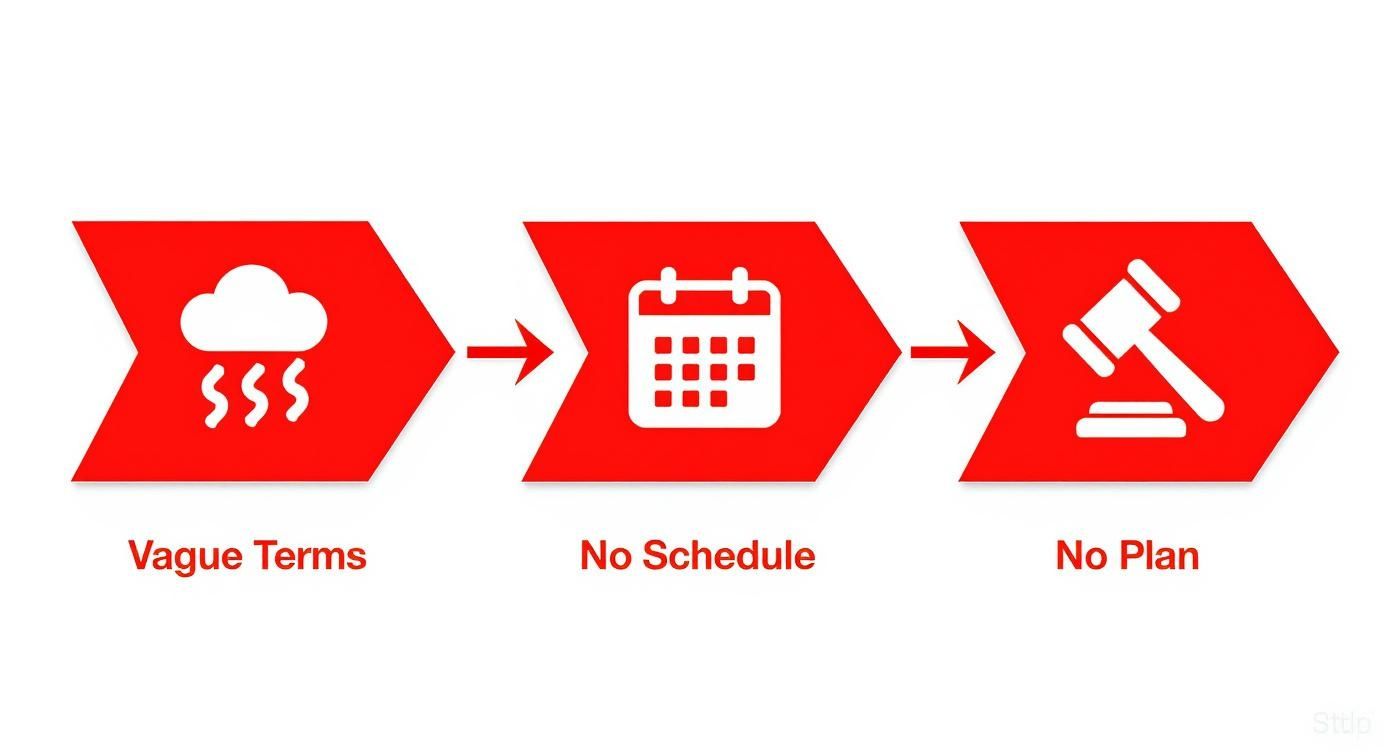
As you can see, unclear terms, schedules that lack detail, and not having a solid plan for disagreements can completely undermine an otherwise good agreement.
Filing with the Court
Once your attorney gives you the green light, the next move is to file the agreement with the court so it can be incorporated into a final order. This step-by-step process usually happens in one of two ways, depending on your situation:
- As part of a Divorce Decree: If you and your co-parent are divorcing, your custody agreement will be attached to and become an official part of your Final Decree of Divorce.
- In a Suit Affecting the Parent-Child Relationship (SAPCR): If you were never married, you'll need to file what's known as a SAPCR. This is the legal process for unmarried parents to get a judge to approve their agreement and issue a formal custody order.
A judge will personally review your proposed plan to make sure it’s genuinely in your child's best interest before signing it. Once that signature is on the page, your agreement is no longer just a plan—it's a legally binding court order.
After you have a binding order, it's also smart to think about practical steps like protecting a PDF document from editing to ensure the final version can't be accidentally or intentionally altered.
Got Questions About Your Texas Custody Agreement? We’ve Got Answers.
As you get closer to finalizing your custody agreement, it's completely normal for a few last-minute questions to pop up. Getting clear, straightforward answers is key to moving forward with confidence and ensuring the plan you’ve worked so hard on actually gives your family the stability it needs.
Let’s walk through some of the most common questions we hear from parents just like you.
Can We Just Use a Template and Skip the Lawyers?
You can absolutely start with a template—it's a great way to structure your conversation and get your thoughts on paper. But please have separate family law attorneys review it before you sign anything. It’s a small investment that can save you a world of hurt later.
An attorney’s job isn’t to complicate things. It's to make sure the language you used is specific and enforceable under the Texas Family Code. They’ll also spot any potential loopholes that could leave your parental rights vulnerable. Trying to save money now by skipping a legal review could lead to incredibly expensive and stressful court battles down the road.
What Happens if We Agree on Everything?
That's fantastic! When you and your co-parent are on the same page, the next step is to make your agreement official. A signed document sitting in your desk drawer isn't legally binding. It has to be incorporated into a final court order and signed by a judge.
This process happens in one of two ways:
- It becomes part of your final divorce decree.
- If you were never married, it will be an order in a Suit Affecting the Parent-Child Relationship (often called a SAPCR).
A judge has to sign off on your plan, confirming it’s in your child's best interest. Once that happens, it becomes a legally enforceable court order.
How Do We Change the Custody Agreement Later On?
Life happens. Kids grow up, jobs change, and people move. What works today might not work in five years, and Texas law understands that.
To formally change a Texas custody order, one of you will need to file a Petition to Modify the Parent-Child Relationship. You can't just agree to new terms over text or a handshake—those informal changes won't hold up in court.
To get a modification approved, you’ll have to prove two things:
- There has been a "material and substantial change" in circumstances.
- The change you're asking for is in your child's best interest.
Only a new court order can legally change the old one.
Schedule Your Free Consultation & Secure Your Custody Plan
You've put in the hard work to create a plan that puts your children first. Don't leave these final, critical steps to chance. The attorneys at The Law Office of Bryan Fagan, PLLC are here to review your agreement, guide you through the court process, and give you the peace of mind that your family's future is secure. Schedule your free consultation with us today.


