Skip to content
The quickest way to get a divorce in Texas is an uncontested divorce, and the fastest legally possible timeline is 61 days because Texas requires a 60-day waiting period before a judge can finalize the case. In plain English, “uncontested” means you and your spouse agree on every issue, sign the needed paperwork, and avoid the disputes that turn a simple case into a long one.
If you're reading this, you may already be emotionally done with the marriage and just want to know how to move forward without dragging the process out. That feeling is common. The good news is that Texas does give you a clear path to a faster divorce, but speed depends on preparation, cooperation, and making careful choices early.
Fast doesn't have to mean careless. In fact, the divorces that move most smoothly are usually the ones where both spouses slow down just enough to get the details right the first time.
Understanding the Fastest Path to Divorce in Texas
When clients ask, “What is the quickest way to get a divorce in Texas?”, the answer is usually the same. The fastest path is an uncontested divorce.
That means both spouses agree on the terms of the divorce instead of fighting through hearings, discovery, mediation disputes, or trial settings. Texas law sets the outer boundary on speed. The quickest legally permissible timeframe to finalize a divorce in Texas is 61 days, and that only works if you meet the residency rules of living in Texas for six months and in the filing county for 90 days before filing, as explained in this discussion of Texas divorce timing and residency requirements.
What uncontested really means
Many people think “uncontested” just means both spouses want a divorce. That's not enough.
An uncontested case works only when you both agree on the full outcome, including property, debts, and, if you have children, the parenting terms. If one issue remains open, the case can shift into a contested track.
Practical rule: A divorce is only “fast” when the paperwork matches a real agreement.
Why cooperation matters more than anything else
Texas courts can process agreement more quickly than conflict. If you and your spouse can exchange information, make decisions, and sign documents without delay, you remove many of the usual bottlenecks.
That doesn't mean you should rush into a bad deal. If you own a home, run a business, hold retirement accounts, or share parenting responsibilities, the better strategy is to be thorough and efficient at the same time. A poorly drafted decree can create problems long after the divorce is final.
Here's the trade-off to keep in mind:
| Approach | Likely result |
|---|---|
| Fast and organized | You move through the legal process with fewer avoidable delays |
| Fast but careless | Missing terms, rejected paperwork, or unfair agreements can slow you down later |
| Highly conflicted | The case usually takes much longer because court involvement increases |
For parents, speed should never come at the cost of a workable parenting plan. For business owners and people with significant assets, speed should never come at the cost of clarity on valuation, division, and future obligations. The goal is a divorce that is both prompt and durable.
Texas's 60-Day Waiting Period What You Need to Know
Texas puts one firm brake on every divorce case. You can't finalize your divorce immediately after filing.
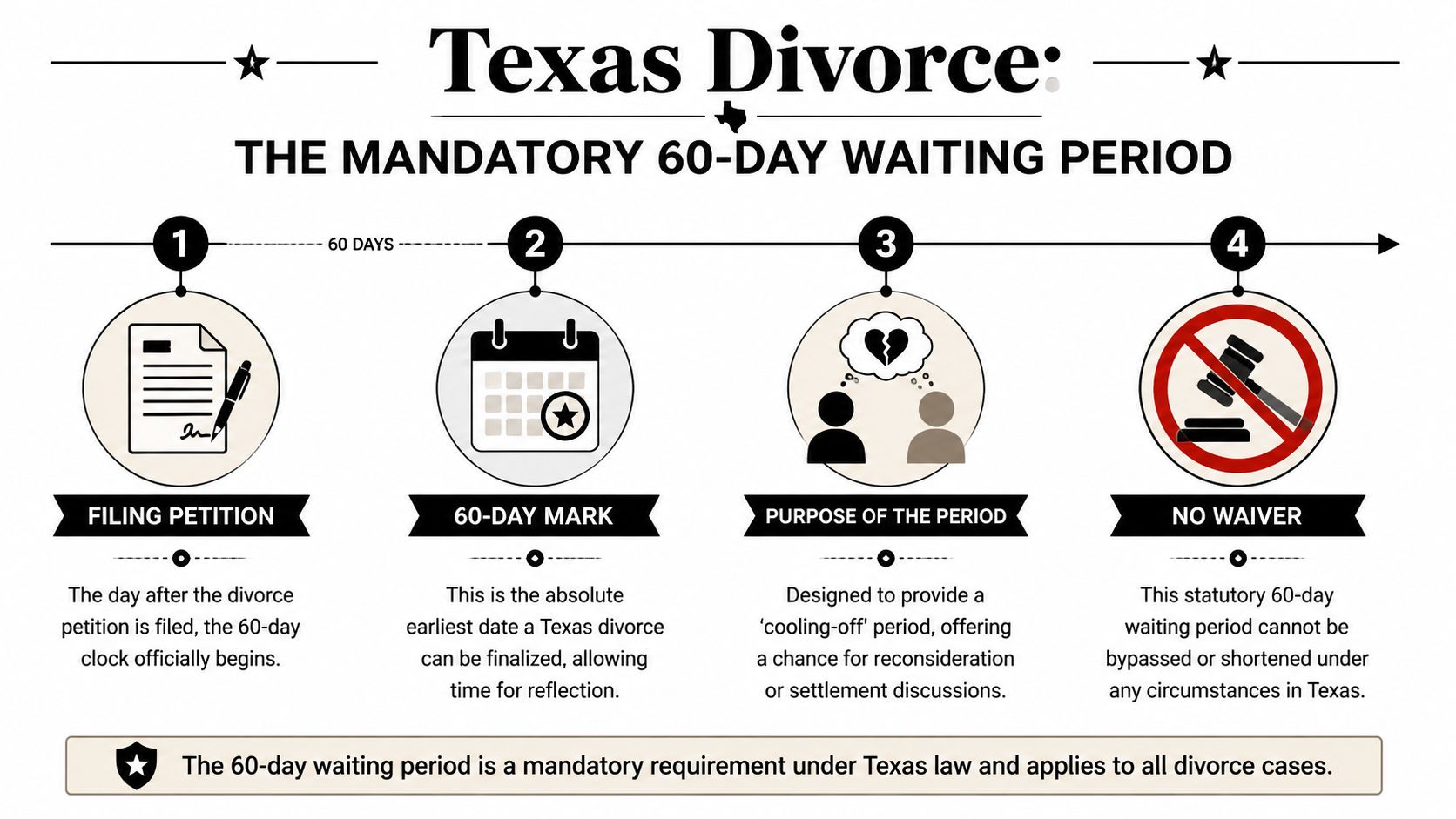
Texas law requires a 60-day waiting period from the filing date before a divorce can be finalized, unless the wait is waived because a spouse was convicted of family violence against the petitioner or there is an active protective order, as described in this overview of the Texas divorce 60-day waiting period.
Why Texas makes you wait
This period is often called a cooling-off period. The basic idea is simple. The law gives couples a short window to reconsider, gather documents, negotiate terms, and avoid impulsive decisions.
For some families, those 60 days are enough to turn a chaotic breakup into a manageable legal process. If you need a fuller explanation of how the timeline works, this guide on navigating the Texas divorce 60-day waiting period helps put the rule into practical terms.
When the clock matters most
The waiting period affects strategy. If your goal is speed, you should use that time wisely instead of treating it like dead space.
During that period, many spouses work on:
- Drafting the decree: The final order needs to be complete and specific.
- Exchanging information: You both need a clear picture of assets, debts, and parenting needs.
- Addressing short-term issues: If immediate rules are needed about bills, possession of the home, or children, Temporary Orders During a Texas Divorce explains how the court sets the rules while the divorce is pending.
The fastest cases aren't the ones where people ignore the waiting period. They're the ones where people prepare so well during it that nothing is left undone when the court is ready.
The family violence exception
This part confuses many people. There are limited situations where the waiting period may be waived. The two exceptions identified in the verified material are a family violence conviction against the petitioner or an active protective order.
If you believe abuse is part of your case, don't assume the exception applies automatically. Courts still look carefully at the legal record and supporting proof. In those situations, safety comes first, and the paperwork has to support the request.
Is an Uncontested Divorce Right for You
An uncontested divorce is fast because it removes conflict from the court process. But it only works when the agreement is complete, not partial.
Texas procedure rewards cooperation here. A 61-day divorce requires an uncontested process where the respondent signs a Waiver of Service, which avoids a 20+ day response period, and both parties sign the Final Decree before the final hearing. Any dispute over assets or custody makes the 61-day result impossible, according to this explanation of the uncontested divorce timeline in Texas.
The four areas where full agreement matters
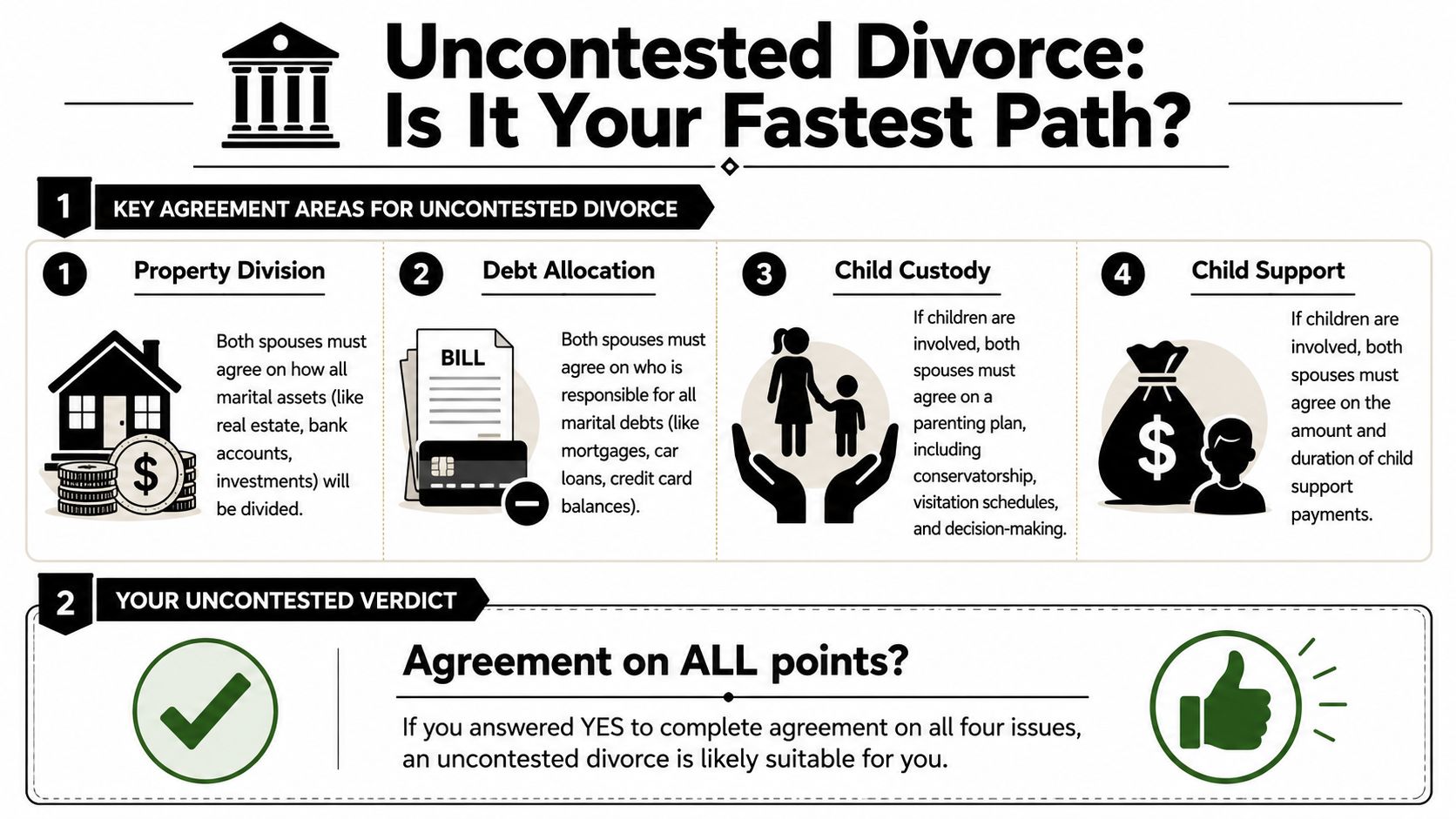
Use this checklist accurately. If even one answer is “not yet,” your case may need more negotiation before it can move on the fastest track.
- Property division: Do you both agree on what happens to the house, vehicles, bank accounts, retirement funds, and personal property?
- Debt allocation: Have you decided who will handle credit cards, loans, tax debt, and other shared obligations?
- Child custody arrangements: If you have children, do you agree on conservatorship, possession, and decision-making?
- Support issues: Are you on the same page about child support, and if relevant, spousal maintenance?
A simple way to test your case
Here is a practical standard:
| Question | If your answer is yes | If your answer is no |
|---|---|---|
| Do you agree on every major term? | You may be a good candidate for uncontested divorce | Your case may slow down quickly |
| Will your spouse sign documents promptly? | You remove service-related delay | Formal service may be required |
| Can you both stay civil long enough to finish paperwork? | The process is more likely to stay streamlined | Communication problems can create setbacks |
Where people get stuck
Some couples say they “agree” but haven't discussed the hard parts. They agree in general, but not in writing. Or they agree on the house but forget the mortgage, taxes, or refinancing issue. Or they agree on parenting time but not on who makes medical or school decisions.
That's where “fast” can become fragile.
Agreement isn't enough if it's vague. Judges need clear terms they can sign, and you need orders you can actually follow.
For parents, this means a parenting plan has to work in real life, not just sound fair in a quick conversation. For business owners and spouses with high-value estates, it means identifying what exists, what might be community property, and how the final decree will address control, transfer, or buyout issues.
Your Step-by-Step Guide to an Uncontested Divorce
The uncontested path is straightforward when both spouses stay organized. Each step matters because a small mistake early can delay the final hearing later.
Step 1 Confirm that Texas can hear your case
Before anything else, make sure you meet the residency rules. If you file too soon or in the wrong county, the court can reject the case and you lose time.
You also need to think about what kind of divorce you're filing. Most fast divorces are no-fault and based on the simple reality that the marriage can't continue. If your situation involves children, real estate, a family business, or retirement accounts, it helps to identify those issues before filing so the final paperwork doesn't need major revisions later.
Step 2 File the Original Petition for Divorce
The petition opens the case. It tells the court that you want a divorce and starts the legal timeline.
Keep this filing accurate and consistent with the outcome you expect. If your case is meant to be uncontested, your filing should support that path rather than create confusion about disputed issues. For a broader walkthrough, this guide to the complete step-by-step process for filing an uncontested divorce in Texas is a useful companion.
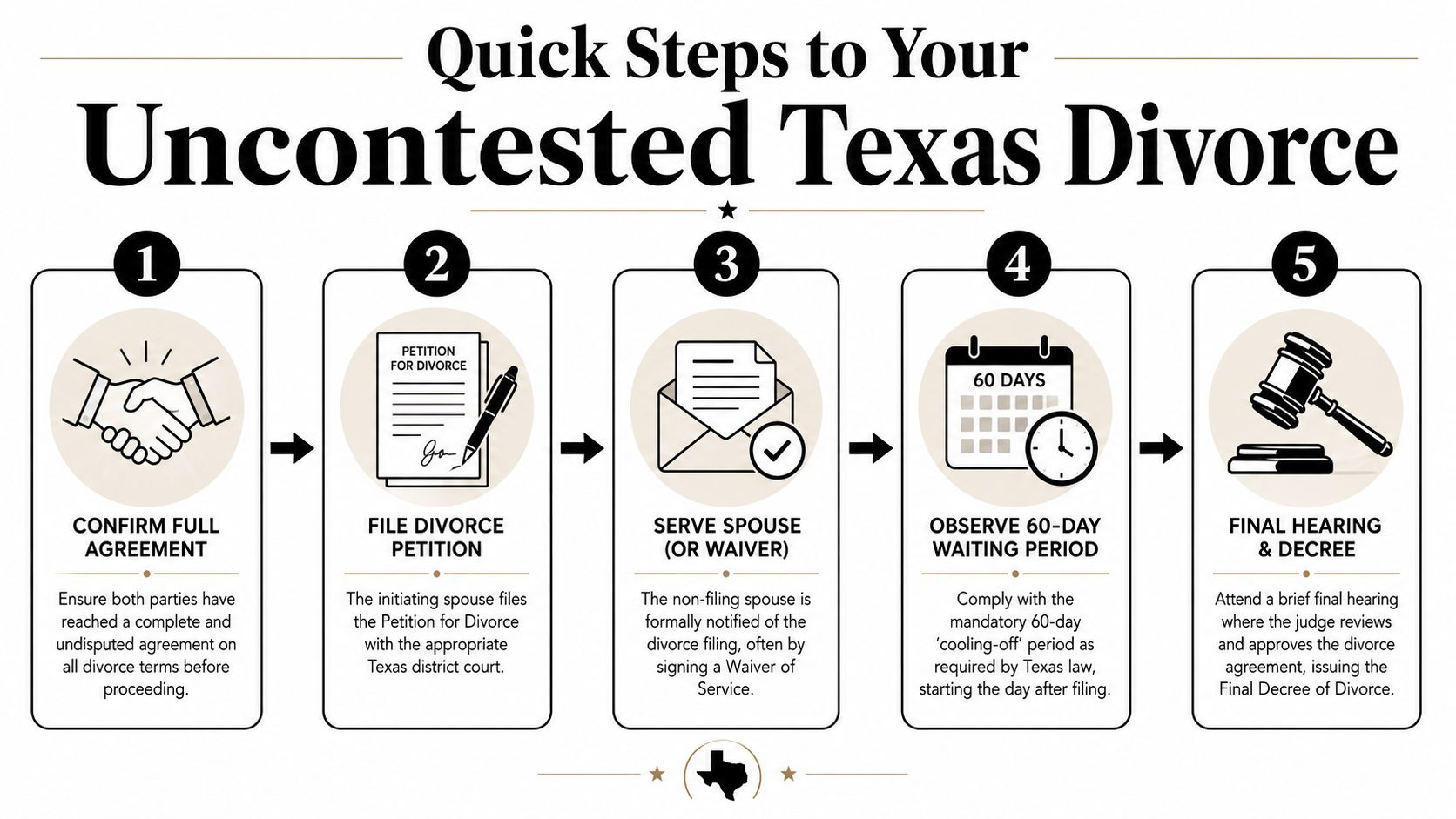
A visual overview can also help if you're trying to see the process in order:
Step 3 Handle service the smart way
After filing, your spouse must be legally notified. In the fastest uncontested cases, the respondent signs a Waiver of Service instead of forcing formal service through a sheriff, constable, or process server.
This step sounds minor, but it has a big practical effect. Prompt cooperation here removes a common delay and keeps the case on the efficient track.
Step 4 Use the waiting period to build the final decree
Thoroughness is paramount here. Your Final Decree of Divorce should spell out the exact terms of the agreement.
Focus on practical detail, especially in these situations:
- If you're a parent: Include a clear possession schedule, support terms, and decision-making rules. You may also want to review related topics like custody, support, mediation, and enforcement so the decree works beyond the day it is signed.
- If you own a business: Identify whether the business interest needs to be divided, offset, or left with one spouse under agreed terms.
- If you have substantial assets: Make sure the decree addresses real property, retirement issues, investment accounts, and debts with enough precision to avoid future conflict.
Client-focused advice: A decree should answer tomorrow's questions today. If a bank, school, title office, or co-parent reads it later, the order should still make sense.
Step 5 Attend the prove-up hearing
The last step in many uncontested divorces is a short court appearance often called a prove-up. The judge reviews the paperwork, confirms the legal requirements are met, and signs the decree if everything is in order.
If your forms are complete and your agreement is clear, this hearing is often brief. But if the paperwork is missing terms, uses vague language, or conflicts internally, the court may require corrections before signing.
That is why the quickest route isn't just about filing fast. It's about preparing a final package the judge can approve without hesitation.
How to Avoid Common Delays That Slow Down Your Divorce
You file on time, both spouses agree the marriage should end, and you expect the rest to move quickly. Then the case stalls because a retirement account was described too loosely, one parent assumed the holiday schedule could be worked out later, or a signature was missed. That is how many "simple" divorces lose time in Texas.

Fast divorces work like a well-packed suitcase. If everything is organized before you leave, the trip goes smoothly. If one item is missing, the delay often happens at the worst possible moment. In divorce, speed usually comes from careful preparation, not from cutting corners.
The delays that catch people off guard
Some problems look small but stop a case cold:
- Incomplete paperwork: A missing signature, incorrect date, or inconsistent term can keep a judge from signing the decree.
- Loose settlement terms: Spouses may agree on the house or the bank account, but leave out who refinances, who pays a tax bill, or when a transfer must happen.
- Slow responses: Even cooperative spouses can lose momentum if draft reviews sit unanswered for days or weeks.
- Court calendar issues: Courts set hearings based on their own schedules, and availability varies by county. This guide to Texas divorce court scheduling and delays explains why timing on paper and timing in real life are not always the same.
- Digital conflict: Angry posts, deleted messages, or subscription activity can create side disputes that were never part of the original plan. In some cases, your digital footprint in divorce proceedings can turn an agreed case into a contested one.
Speed and thoroughness have to work together
Many spouses hear "fast" and think "file first, fix later." Texas divorce does not reward that approach. Courts want orders they can sign and parties can follow.
A better strategy is to treat every open issue like a loose screw in a chair. The chair may still stand for a while, but the weakness shows up when weight is put on it. A decree with vague language often creates the same problem. It may look finished until the bank, employer, title company, or co-parent tries to use it.
Best practices if speed matters to you
| Delay | Better choice |
|---|---|
| Vague agreement | Put exact duties, deadlines, and property terms in writing early |
| Missing documents | Review names, dates, account details, and signatures before filing |
| Emotional texting and arguments | Keep communication brief, civil, and focused on unresolved terms |
| Waiting until the last minute | Use the waiting period to finish drafts, gather records, and confirm details |
One more point causes confusion. Some people delay hard conversations because they want to "keep things friendly." In practice, avoiding a disagreement now often creates a bigger problem later. It is usually faster to resolve a refinancing deadline, school pickup schedule, or debt payoff term before the hearing than to fix an unclear order after the judge reviews it.
A careful note about family violence waivers
Some readers ask whether abuse can shorten the process. Texas Family Code 6.702 does allow waiver of the 60-day waiting period in certain family violence cases, but courts expect solid proof. Documents such as a protective order, police report, or other clear evidence may matter.
If that applies to you, build the request around what the court can verify. A waiver is not based only on the fact that abuse occurred. It is based on whether the legal proof is strong enough for the judge to act on it.
Fast results usually come from good preparation. They rarely come from rushing through forms and hoping the court will sort them out.
When to Seek Legal Counsel for Your Divorce
You and your spouse may agree that the marriage should end, agree on the house, and even agree on a parenting schedule. Then the paperwork starts, and small gaps turn into real delays. A missing retirement term, an unclear refinance deadline, or custody language the court will not sign can slow down a case that felt "simple" a week earlier.
That is the point where legal counsel can save time, not add conflict. In a fast Texas divorce, a lawyer's job is often the same as a good building inspector's job before closing. Find the weak spots early, fix them once, and keep the process from stalling later.
Situations where legal review is especially wise
A careful review makes sense if any of these apply:
- You have minor children: Parenting plans, child support, conservatorship terms, and pickup or holiday details need to be clear enough for a judge to approve and for both parents to follow.
- You own a home or business: Property language should cover who keeps the asset, who pays the debt, and what deadline applies if one spouse must refinance or transfer title.
- You have retirement or investment accounts: The divorce decree and any later transfer documents need to match. If they do not, delays and expensive corrections can follow.
- There is a power imbalance: If one spouse controls the money, records, passwords, or timeline, an "agreement" may reflect pressure more than fairness.
- Digital evidence may matter: Online posts, subscriptions, messages, and account activity can affect strategy in some cases. This overview of your digital footprint in divorce proceedings explains how personal online conduct can become relevant.
What a lawyer actually does in a fast divorce
Many people hear "attorney" and expect a fight. In an uncontested divorce, the work is usually preventive and practical.
A lawyer can review whether your proposed decree is specific enough to enforce, check for missing property terms, catch wording that could cause a judge to reject the paperwork, and help resolve the one or two issues that are still stuck. That kind of review supports the goal of speed because it reduces the chance of redoing forms, resetting a hearing, or signing an order that creates a new dispute after the divorce is final.
Legal advice is also useful when your spouse has already spoken with counsel. Even if you want to keep the process cooperative, it helps to have someone explain what the draft order does in plain English. Fast does not mean careless. It means making informed decisions in the right order, with enough review to keep today's shortcut from becoming next year's cleanup project.