Skip to content
Facing a divorce is overwhelming enough without having to worry about the cost.
If you and your spouse can agree on how to move forward, an uncontested divorce is the most affordable and peaceful path to resolving your marriage in Texas. Most couples find the total cost lands somewhere between $300 and $5,000. This cooperative approach allows you to finalize your separation and start your next chapter without a draining, expensive court battle.
Your Guide to an Affordable Texas Divorce

The word "divorce" often brings to mind stressful courtroom arguments and overwhelming legal bills, but your experience doesn’t have to be that way. When you and your spouse can communicate and agree on the major terms of your separation, an uncontested divorce provides a simpler, faster, and much less painful solution. It’s an approach that puts you back in control of your emotional and financial future.
This guide is designed to give you a clear, honest breakdown of the financial side of the process. We will walk you through every potential expense, from basic court filing fees to what a lawyer might charge, so you understand exactly where your money is going and can plan with confidence.
What Does "Uncontested" Really Mean?
In Texas, an uncontested divorce simply means you and your spouse have worked out a complete agreement on all critical issues before finalizing your case. This agreement must cover all the key areas:
- Property Division: How you will divide your marital assets (like your home and savings) and debts (like credit cards and loans).
- Child Custody and Support: Where your children will live, the visitation schedule for each parent, and how they will be supported financially.
- Spousal Support: Whether one spouse will provide temporary financial support to the other after the divorce.
When there’s nothing left to argue about, the court’s role is primarily to review your agreement and make it official. This cooperative spirit is what dramatically lowers the uncontested divorce in Texas cost, as it eliminates the need for expensive legal conflict and court time.
The Texas Family Code makes it clear: the heart of an uncontested divorce is a complete agreement. This alignment doesn't just make the legal process smoother—it empowers you to stay in the driver's seat and control the outcome of your own future.
For a clearer picture, here is a quick look at the typical expenses you might encounter.
Typical Cost Breakdown for an Uncontested Texas Divorce
| Expense Category | Typical Cost Range | What It Covers |
|---|---|---|
| Court Filing Fees | $250 – $400 | The mandatory fee to file your initial divorce petition with the county court. |
| Service Fees | $0 – $150 | The cost to have your spouse formally served with papers (waived if they sign a waiver). |
| Flat-Fee Attorney | $1,500 – $5,000+ | Hiring a lawyer to handle all paperwork, filings, and the final hearing for a set price. |
| DIY / Online Service | $300 – $1,000 | Using an online platform to generate your divorce forms, which you then file yourself. |
| Mediation (Optional) | $500 – $2,500 | Hiring a neutral third party to help you and your spouse reach an agreement on sticking points. |
This table provides a general overview, but please remember that every family's situation is unique. The total expense depends heavily on factors like the court filing fees in your county—which usually run between $250 to $400—and whether you decide to hire an attorney to manage the process for a flat rate.
To get a deeper understanding of how these costs can shift, you can check out our guide on analyzing attorney fees and court costs in a Texas divorce.
Decoding the Essential Divorce Expenses
Thinking about divorce often brings up financial fears, but understanding the basic costs is the first step toward taking control. Every divorce in Texas, no matter how amicable, comes with a set of foundational expenses. These are the administrative costs of legally ending a marriage—they are predictable, non-negotiable, and form the baseline for your total budget.
Even if you and your spouse handle everything yourselves without lawyers, you cannot avoid these core fees. The court system requires them to process your case from the initial filing to the final decree. Let's break down exactly what these essential expenses are so you don't face any surprises.
The First Hurdle: Court Filing Fees
The very first cost you'll encounter is the court filing fee. This is what the county court charges just to open your divorce case. It gets your paperwork into the system and assigns your case an official number.
These fees vary across Texas, as each county sets its own rate. Generally, you can expect this fee to be somewhere between $250 and $400. This one-time payment covers the administrative work done by the court clerk’s office. It is a mandatory cost paid by the spouse who files the Original Petition for Divorce.
Under the Texas Family Code, filing the Original Petition for Divorce officially begins the legal process. The fee is a standard part of civil procedure that ensures the courts have the resources to manage cases.
Notifying Your Spouse: The Cost of Service
Once you file the petition, Texas law requires that your spouse be formally notified. This is called "service of process," a crucial step to ensure both parties are officially aware that a legal action has started. You have a couple of options here, each with a different price.
If your divorce is truly cooperative, your spouse can simply sign a Waiver of Service. This document confirms they have received a copy of the petition and agree to skip the formal delivery process. Filing this waiver is free and is the ideal method for an amicable divorce.
However, if your spouse is unwilling or unable to sign the waiver, you will need to pay for formal service. This usually means hiring a sheriff, constable, or private process server to hand-deliver the documents, which typically costs between $75 and $150. It is a small but necessary expense to fulfill a critical legal requirement.
Finalizing Your Divorce: Certified Copies of the Decree
After the mandatory 60-day waiting period and a brief final hearing, the judge will sign your Final Decree of Divorce. This is the official document that legally dissolves your marriage. While your divorce is final the moment the judge signs, you will need official, certified copies of this decree for various administrative tasks.
You'll need certified copies to:
- Change your name on your driver's license and Social Security card.
- Update ownership of vehicle titles.
- Remove a spouse's name from a real estate deed.
- Divide retirement accounts like a 401(k) or pension.
Each certified copy usually costs a small fee, often around $20 to $30, paid to the court clerk. It’s wise to get at least two or three copies right away to handle these post-divorce updates smoothly. To see how all these pieces fit into the bigger picture, our overview of the cost of divorce in Texas provides a broader perspective.
The Value of an Attorney in an Agreed Divorce
When you and your spouse agree on everything, you might wonder: is hiring a lawyer an unnecessary expense? It's a fair question. However, even in an amicable divorce, an experienced attorney can be one of the most valuable investments you make for your future.
Think of a lawyer not as a fighter for a battle you aren't having, but as an expert guide—someone to ensure the path you are on is secure and legally sound. Their job is to be your safety net. They will review your agreement, spot potential problems you might overlook, and ensure your final decree is legally enforceable and accurately reflects your intentions, all while complying with the Texas Family Code. This step can prevent costly mistakes that could send you back to court years from now.
Flat-Rate Fees vs. Hourly Billing
As you research legal help, you will find two main fee structures: flat-rate fees and hourly billing. For an uncontested divorce, a flat-rate fee is almost always your best option. You pay a single, upfront price for the entire process, from drafting the first document to attending the final hearing with you. This provides cost certainty and significant peace of mind.
Hourly billing is the standard for contested cases where the timeline is unpredictable. You are billed for every minute the attorney and their staff spend on your file, and those costs can add up quickly. For an agreed divorce, a flat-fee package is the most predictable and affordable choice.
The infographic below breaks down the core administrative costs that every divorce has to cover. These are the foundational courthouse expenses that are typically rolled into an attorney's flat-fee package.
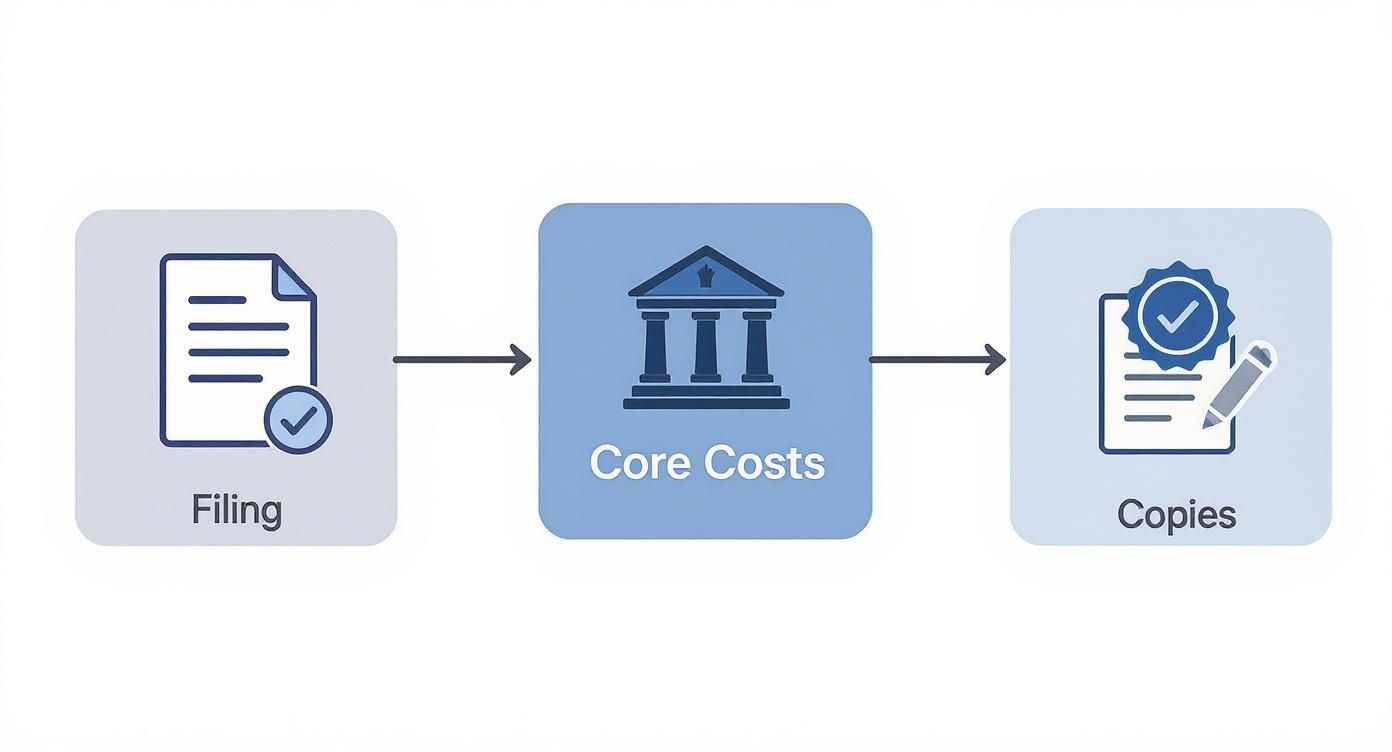
As you can see, the essential courthouse charges—like filing fees, service costs, and fees for certified copies—are a built-in part of every divorce, and they all contribute to the final price tag.
What Does a Flat Fee Usually Cover?
Knowing what you’re getting for your money is key to comparing your options and avoiding surprise bills. A comprehensive flat-fee service for an uncontested divorce should cover the entire process from start to finish.
Typically, this includes:
- Initial Consultation: A meeting to discuss your case, review your agreement, and explain the legal steps.
- Drafting All Documents: Preparing the Original Petition for Divorce, the Waiver of Service, and the most critical document—the Final Decree of Divorce.
- Filing with the Court: Submitting all paperwork to the county clerk and managing your case file.
- Communication: Keeping in touch with you and the court's staff throughout the mandatory 60-day waiting period.
- Final Hearing Representation: Attending the brief final court appearance with you to get the judge’s signature on your decree.
It is just as important to ask what is not included. For example, dividing a 401(k) requires a complex document called a Qualified Domestic Relations Order (QDRO), which almost always costs extra. Always get a clear, written list of exactly what services are covered. For a great checklist on what to ask, see our guide on what to ask a divorce attorney.
The average cost for an uncontested divorce in Texas with a lawyer ranges from $1,500 to $5,000, which includes both attorney fees and all court costs. Studies show that 72% of Texas divorce attorneys offer flat-rate packages, with the average fee landing around $2,200.
Choosing the right lawyer is a significant decision. You need someone who knows Texas family law inside and out but also understands the emotional weight of what you are going through. While it's about a different legal field, this article offers some great expert guidance on choosing a legal professional that can help you know what qualities to look for in an advocate who will protect your interests.
Hidden Complexities That Can Increase Your Divorce Costs
Believing your divorce will be simple because you and your spouse agree on the big picture is a great start. However, it's easy to overlook how certain life circumstances can add necessary—and often unexpected—layers to the process. Even when everyone is on the same page, factors like having minor children or complex financial assets will increase the legal work required. And more legal work means a higher uncontested divorce in texas cost.
This doesn't mean your divorce is suddenly becoming a fight. It just means your situation has complexities that need proper legal solutions to protect everyone involved. Think of it like building a house: a simple one-story home is straightforward. But adding a second floor or a custom workshop requires more detailed blueprints and specialized contractors. It's the same with divorce. Cases involving children or significant assets demand more specialized legal documents to get everything right under Texas law.
When You Have Children
If you and your spouse share minor children, your divorce decree must include detailed orders for their care and financial well-being. This isn't just a good idea—it's a strict requirement under the Texas Family Code. The goal is to create a stable, predictable future for your kids, and doing that correctly requires careful legal drafting.
Your divorce decree will need to spell out two critical components:
-
A Possession Order: This is the official custody schedule that details exactly when each parent will have the children. Most families in Texas follow the Standard Possession Order (SPO), a comprehensive calendar covering weekdays, weekends, holidays, and summer breaks. Crafting an SPO that fits your family’s unique needs while complying with state law is a crucial extra step.
-
Child Support Calculations: The decree must also legally establish who pays child support and how much. This involves a precise calculation based on the non-primary parent's net monthly income and the number of children, all according to strict Texas guidelines. It also needs to include clear provisions for who provides health and dental insurance.
Getting these elements right requires precise legal language to make them enforceable down the road. An experienced lawyer ensures your parenting plan is crystal clear, comprehensive, and truly protects your children's best interests, which helps prevent future confusion and conflict.
Navigating Complex Property and Assets
The second major factor that can drive up costs is the type of property you own. Dividing a checking account is one thing, but dividing assets like retirement funds, a family business, or real estate requires specialized legal tools to do it correctly and avoid significant tax consequences.
It only takes one complex asset to turn a simple paperwork filing into a much more involved legal process. Addressing these items correctly from the start saves you from costly legal battles and financial losses down the road.
Certain assets require far more than a simple mention in the final decree. Here are a few common examples that add to the legal workload:
- Retirement Accounts (401(k)s, Pensions): To divide a 401(k), IRA, or pension, you need a special court order called a Qualified Domestic Relations Order (QDRO). This is a separate, highly technical legal document that instructs the plan administrator on how to split the funds. Drafting and getting a QDRO approved by both the court and the plan administrator is a specialized service that adds to the overall cost.
- Real Estate: If you own a home or other property together, your divorce will likely require a Special Warranty Deed to transfer ownership from one spouse to the other. You may also need a Deed of Trust to Secure Assumption to protect the spouse whose name is coming off the mortgage.
- A Family Business: Valuing and dividing a shared business interest is one of the most complex parts of property division. This step often requires a business valuation expert and carefully drafted legal language to ensure a fair and clean split of the business assets.
These situations do not mean your divorce is contested. They simply mean your uncontested divorce requires a higher level of legal expertise to finalize correctly. Knowing about these potential needs upfront helps you set a more realistic budget from the start.
Practical Ways to Keep Your Divorce Costs Low
Knowing your divorce doesn't have to be a financial nightmare is reassuring, but actively taking steps to lower the bill gives you real control. You have a surprising amount of power to influence the final cost by being proactive and cooperative. Your willingness to prepare ahead of time can directly translate into money saved on attorney fees and other expenses.

Let's walk through some actionable strategies you can use to lessen the financial impact of your divorce without cutting legal corners.
Open Communication Is Your Best Tool
The most powerful cost-saving tool you have comes from you and your spouse. Open, honest, and productive communication is the absolute bedrock of an affordable divorce. The more you can agree on before you ever step into an attorney's office, the less your legal team has to do.
Try to sit down and work through the major items:
- Property and Debts: Make a list of everything you own and owe together. Start discussing who will take what—the house, the cars, the credit card debt, the bank accounts.
- Child-Related Matters: If you have children, talk about a potential custody schedule and how you will handle financial support. Reaching a basic understanding here saves a tremendous amount of time and money.
These conversations are rarely easy, but every decision you make together is one less issue an attorney has to resolve for you.
Get Organized Before You File
Imagine paying your lawyer their hourly rate just to sort through a box of disorganized receipts. You can avoid this by gathering and organizing all your essential financial documents beforehand. When you give your lawyer a neat, complete file, they can get straight to work on the legal tasks instead of expensive administrative ones.
Your time is valuable, but in a divorce, your attorney's time is your money. The better organized your information is, the more efficient your legal team can be, directly reducing your overall costs.
Start a folder and begin collecting these key documents:
- Recent tax returns (at least the last two years)
- Bank and credit card statements
- Your mortgage or lease agreement
- Retirement and investment account statements
- Vehicle titles and loan information
- Pay stubs for both of you
This simple act of preparation can easily save you hundreds, if not thousands, of dollars in legal fees.
Consider Mediation for Minor Disagreements
Even in an agreeable divorce, you might hit a snag on one or two issues. Instead of letting that derail the entire uncontested process, consider using a mediator. A mediator is a neutral third party trained to help you and your spouse find common ground and work out a compromise.
Mediation is a far more affordable solution than going to court. A few hours with a mediator to resolve a sticking point is significantly cheaper than having two attorneys go back and forth on the issue. It's a low-cost, effective way to keep your divorce on an amicable and affordable track.
Applying for a Court Fee Waiver
If you are facing genuine financial hardship, you may not have to pay the court's mandatory filing fees. Texas courts allow individuals with low income to waive these costs by filing a Statement of Inability to Afford Payment of Court Costs.
You will generally need to meet one of these conditions to qualify:
- Your household income is at or below 125% of the Federal Poverty Guidelines.
- You receive government benefits like SNAP, TANF, or Medicaid.
- You can demonstrate that paying the fees would prevent you from providing for your family's basic needs.
You can file this form with your Original Petition for Divorce. If the court approves it, you can move forward with your case without paying the filing fee, saving you several hundred dollars right from the start.
Frequently Asked Questions About Divorce Costs
https://www.youtube.com/embed/BQdcXTrEMVo
Working through the details of a divorce can feel overwhelming, and it's completely normal to have questions. You deserve clear, straightforward answers to feel confident about the road ahead. Here are a few of the most common questions we hear about the cost and process of an uncontested divorce in Texas.
How Long Does a Texas Uncontested Divorce Take?
An uncontested divorce is, without a doubt, the fastest way to dissolve a marriage in Texas. The timeline is mostly determined by the state's mandatory 60-day waiting period. This clock starts the day you file the Original Petition for Divorce.
If you and your spouse have all your agreements and paperwork ready, your divorce can be finalized as soon as 61 days after filing. Most uncontested cases are completely resolved within 60 to 90 days. It is a far more predictable and streamlined path than a contested divorce, which can easily drag on for a year or more.
Do My Spouse and I Need Separate Lawyers?
Yes, and this is a critical point. While it might seem like an easy way to save money, a single attorney cannot legally represent both spouses in a divorce. A lawyer's job is to be a dedicated advocate for their client's best interests. Trying to advocate for two opposing sides creates an unavoidable conflict of interest.
However, there is a common and cost-effective solution. One spouse can hire an attorney to draft all the legal documents. The other spouse can then review the paperwork on their own or hire their own attorney for a limited-scope review. This approach is much cheaper than both sides paying for full representation and ensures the process remains fair for everyone.
Under Texas law, an attorney has an ethical obligation to provide undivided loyalty to their client. Representing both parties would violate this core principle, which is why separate legal counsel is essential for protecting each spouse's individual rights.
What Happens if We Disagree on Something Midway Through?
It happens. Sometimes a new point of disagreement comes up even after you’ve started a smooth process. If a conflict arises, it doesn't automatically mean you are headed for an expensive court battle. Your case would temporarily become "contested," but you have options.
First, you can always try to work through the issue yourselves. If that doesn't work, hiring a mediator for a single session is an excellent, low-cost way to find common ground. This allows you to resolve that specific dispute and get your divorce back on the uncontested track, preventing the uncontested divorce in texas cost from ballooning into full litigation expenses.
Practical Next Steps for an Uncontested Divorce in Texas
Ending a marriage is emotionally challenging enough without wrestling with a confusing and expensive legal system. Choosing an uncontested divorce is the clearest, most affordable path toward your new beginning. Now that you understand what goes into the total uncontested divorce in Texas cost, you are in a position to make smart, confident decisions for your future.
Knowledge gives you power in this process. Knowing how court fees, attorney rates, and unique factors like children or property affect the bottom line allows you to plan ahead and avoid financial surprises. You have learned that the best tools for keeping costs down are not legal tricks—they are good communication, organization, and a willingness to work together.
Even when things are amicable, the legal details are what secure your future stability. A well-drafted Final Decree of Divorce is more than just paperwork; it is the legal foundation for the next chapter of your life. It protects your parental rights, secures your share of the marital property, and ensures the agreements you made are fully enforceable. Getting it right the first time provides peace of mind and prevents costly legal battles down the road.
The path forward starts with one simple step. You don't have to navigate this process alone.
At The Law Office of Bryan Fagan, PLLC, we guide Texas families through the divorce process with compassion and expertise. We invite you to schedule a free, no-obligation consultation to talk about your unique situation, go over your options, and get a clear, straightforward estimate of your uncontested divorce costs. Take that first step toward your new beginning by contacting us today at https://texasdivorcelawyer.us.