Skip to content
Are you a grandparent in Texas, heartbroken and afraid you might be cut off from your grandchildren's lives during a family crisis? You're not alone in that fear. The thought of losing that precious bond is devastating, and you're right to be concerned—Texas law fiercely protects a parent's right to raise their child as they see fit.
This guide will walk you through this complex legal world with the clarity and compassion you deserve.
Your Cherished Bond with Your Grandchildren
The relationship you have with your grandchildren is one of life’s greatest gifts. You're a source of stability, unconditional love, and the keeper of family stories. So, the thought of a divorce, death, or bitter family fight severing that connection is nothing short of heartbreaking.
It's common for you to feel powerless in these situations, caught in the middle of a storm you can't control and completely unsure of where you stand legally.

While your role is vital, it's crucial to understand a core principle in Texas family law: the parental presumption. Courts start with the strong belief that fit parents know what's best for their own children. This means you don't have an automatic, built-in right to see your grandkids.
Understanding the Legal Hurdle
To get a court to step in, you can't just say you miss your grandchildren and want to see them. The law sets a very high bar. You must be able to prove that being denied access to you would cause significant harm to your grandchild’s physical health or emotional well-being.
This guide is here to translate what that legal standard means in the real world. We'll break down:
- The specific parts of the Texas Family Code that apply to grandparents.
- The circumstances that give you legal "standing" to even file a lawsuit.
- The kind of evidence you'll need to build a strong case in court.
- The critical difference between seeking visitation (possession) and fighting for custody (conservatorship).
You are not just a visitor in your grandchild's life; you are a pillar of their support system. While the legal path is steep, specific avenues exist to protect your relationship when it truly is in the child's best interest.
Navigating this process requires knowledge, a solid strategy, and the right legal guidance. You don't have to walk this path alone. Our goal is to give you the information you need to make empowered decisions for yourself and the grandchildren you love so dearly.
The Legal Foundation for Grandparents' Rights
To really get a handle on your rights as a grandparent in Texas, we first need to talk about a core legal concept called the “parental presumption.” This is the bedrock belief in our legal system that fit parents act in their child's best interests. The constitution gives them the fundamental right to raise their children as they see fit, which means they get to decide who their kids see—including you.
Because this presumption is so strong, Texas law doesn't just hand you an automatic right to see your grandchildren. Your love and your bond, no matter how deep, don't automatically grant you legal standing to demand visitation from a court. Instead, you're facing a significant legal mountain you have to climb before a judge will even hear your side of the story.
The High Bar of "Significant Impairment"
The law requires you to prove that a parent’s decision to cut you off will cause actual harm to your grandchild. This isn't just about the child being sad or missing you. The Texas Family Code requires you to show that without a relationship with you, the child's physical health or emotional well-being would be significantly impaired.
This is an intentionally high standard to meet. The court has to be convinced that the parent isn't just making a choice you disagree with, but a choice that is actively damaging to the child. You'll need to bring clear, compelling evidence to the table to overcome that parental presumption and prove your involvement is truly necessary for the child’s well-being.
A judge once explained it perfectly: "It isn't what's best for the child that a grandparent has to prove. They have to prove that it is harmful to the child to not have that grandparent in their life." This subtle but critical distinction is at the heart of every grandparents' rights case in Texas.
Understanding the Texas Family Code
The specific laws that govern your ability to file a lawsuit are found in the Texas Family Code, primarily in Sections 153.432 through 153.434. These statutes lay out the precise rules for what's known as a "grandparent access" suit.
Let’s break down what this means in plain English:
- You need "standing." This is a legal term for having the right to file a lawsuit in the first place. Not every grandparent has it.
- You must file a sworn affidavit. When you file your petition, you have to include a signed statement (an affidavit) laying out the specific facts that support your claim that denying you access would significantly harm your grandchild.
- The harm must be provable. Your affidavit can't just be based on your feelings or opinions. It needs to contain concrete examples and facts that, if true, would meet that high standard of significant impairment.
This initial hurdle—proving you have the right to even make your case—is often the most challenging part of the entire process. Without meeting these strict legal requirements, a court will likely dismiss your case before you ever get the chance to tell the full story of your relationship with your grandchild. You can learn more about the basics of these requirements by exploring Texas grandparent rights.
When You Can Legally Seek Visitation
Feeling cut off from your grandchild is a deeply painful experience. But in the eyes of the law, simply wanting to see them isn’t enough to get you into a courtroom. Texas law is very particular about when a grandparent has the legal right—what’s known as standing—to file a lawsuit asking for visitation.
Think of standing as the key that unlocks the courthouse door. Without it, you can’t even begin to make your case to a judge. Your situation has to fit one of the specific scenarios laid out in the Texas Family Code before you can move forward.
Scenarios That Grant You Legal Standing
The law recognizes that certain family crises can create a void for a child, opening the door for a grandparent to step in. Generally, you have standing to sue for visitation if your child—the grandchild's parent—meets one of these conditions:
- They have been incarcerated in jail or prison for at least three months.
- They have been declared incompetent by a court.
- They are deceased.
- They do not have actual or court-ordered possession of or access to the child.
These situations create a legal pathway because the parent's ability to care for their child or make decisions is severely limited. For example, if your son passed away, you may have standing to ask for court-ordered time with his child. But there's a crucial catch: at least one of the grandchild’s biological or adoptive parents must still have their parental rights intact. If both parents have had their rights terminated, these specific rules for grandparent access no longer apply.
This decision tree helps visualize the key questions a Texas court will consider when evaluating a grandparent's request for visitation.
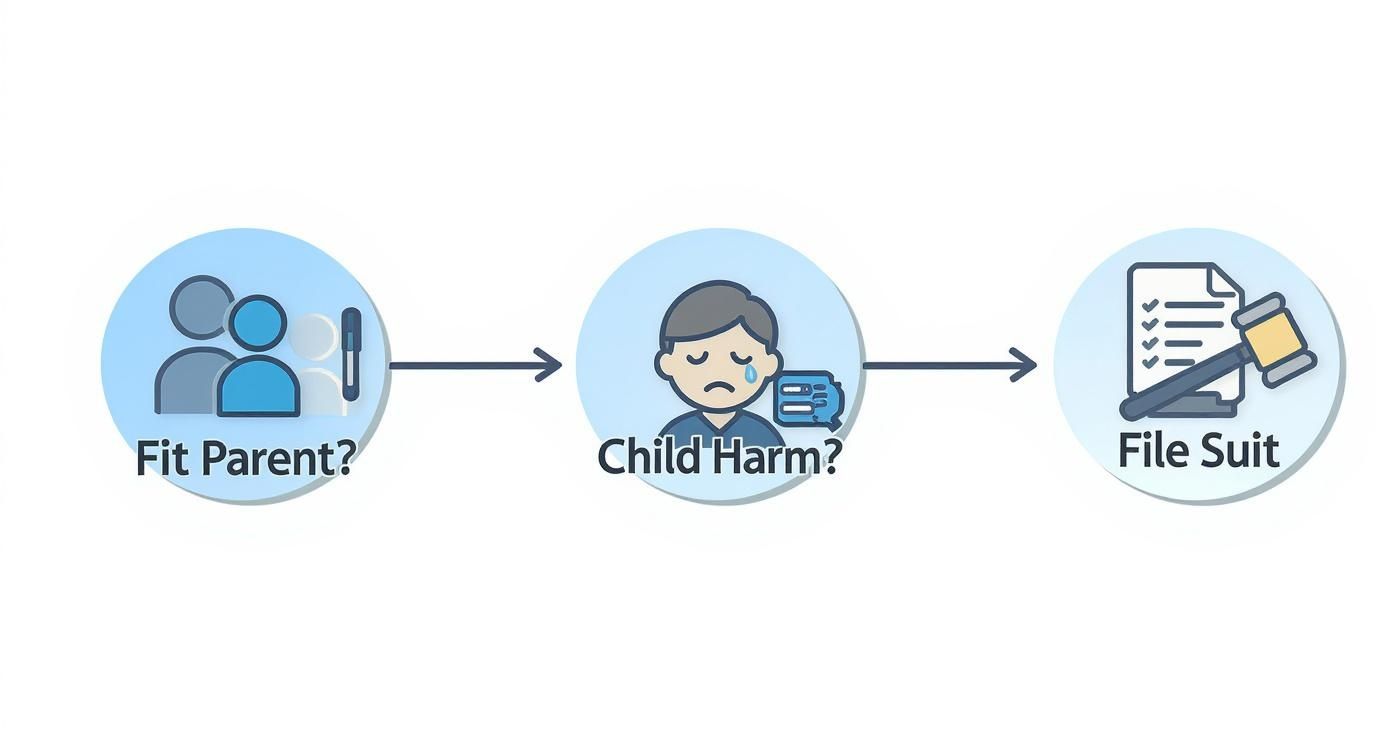
As the chart shows, your entire case hinges on proving that denying you access would actually harm the child. This is the high bar you must clear before a court will even consider intervening against a fit parent's wishes.
Do You Have Legal Standing for Grandparent Visitation?
Wondering if your situation qualifies? This checklist breaks down the scenarios that Texas law recognizes for granting grandparents the right to file for visitation.
| Scenario | Does This Grant Standing? | Key Consideration |
|---|---|---|
| My child (the parent) has been in jail for 4 months. | Yes | The incarceration must be for at least three months. |
| My child has passed away. | Yes | This is one of the clearest grounds for standing. |
| My child’s ex won’t let me see my grandchild. | Maybe | Only if your own child does not have court-ordered or actual access to the grandchild. |
| I’ve been raising my grandchild for the last year. | Yes | You likely have standing under the six-month caregiver rule. |
| My child and their spouse are happily married and won't let me visit. | No | The law presumes fit parents can decide who sees their children. |
| Both of my grandchild's parents had their rights terminated. | No | Grandparent access statutes do not apply in this specific situation. |
Remember, this is just the first step. Meeting one of these requirements only gets you in the door; it doesn't guarantee you'll win.
The Six-Month Residency Rule
There's another, less common path to establishing standing that doesn't rely on your own child's status. You may be able to file a suit for custody (known as conservatorship) if you have had "actual care, control, and possession" of your grandchild for at least six months.
This six-month period must have ended no more than 90 days before you file your lawsuit. This rule is designed for grandparents who have already stepped into a parental role, providing the child's primary care day in and day out.
Proving standing is not the same as winning your case. It is merely the first, non-negotiable step that allows you to present your evidence. Without it, the court simply doesn't have the authority to hear your request.
Understanding if your situation fits these strict criteria is the most important first step. If you aren't sure whether you can sue for custody or visitation in Texas, it's critical to analyze your circumstances against these legal requirements. Our firm can help you figure out if you have a valid legal basis to file a suit.
What Happens If You Meet the Requirements
If your situation lines up with one of these legal scenarios, congratulations—you've unlocked the courthouse door. You can now file what's called an "Original Petition in Suit Affecting the Parent-Child Relationship."
But that’s not all. You must also include a sworn affidavit with your petition. In this legal document, you have to state, under oath, the specific facts and reasons you believe that denying you access to your grandchild would significantly impair their physical health or emotional well-being. This affidavit is your first official opportunity to tell the court why your involvement is so critical.
A judge will review your petition and affidavit to see if the facts you’ve presented, if true, would be enough to justify a court order. If so, your case can move forward. If not, the court is required to dismiss your lawsuit. It’s a high-stakes process from the very beginning, where every step demands precision.
How to Prove a Child Is Being Harmed
This is where the real fight begins. When you step into a Texas courtroom, it's not enough to talk about how much you love your grandchild or how much they miss you. The law has a much higher bar: you must prove that the parent's choice to cut you off will cause significant impairment to your grandchild’s physical health or emotional well-being.
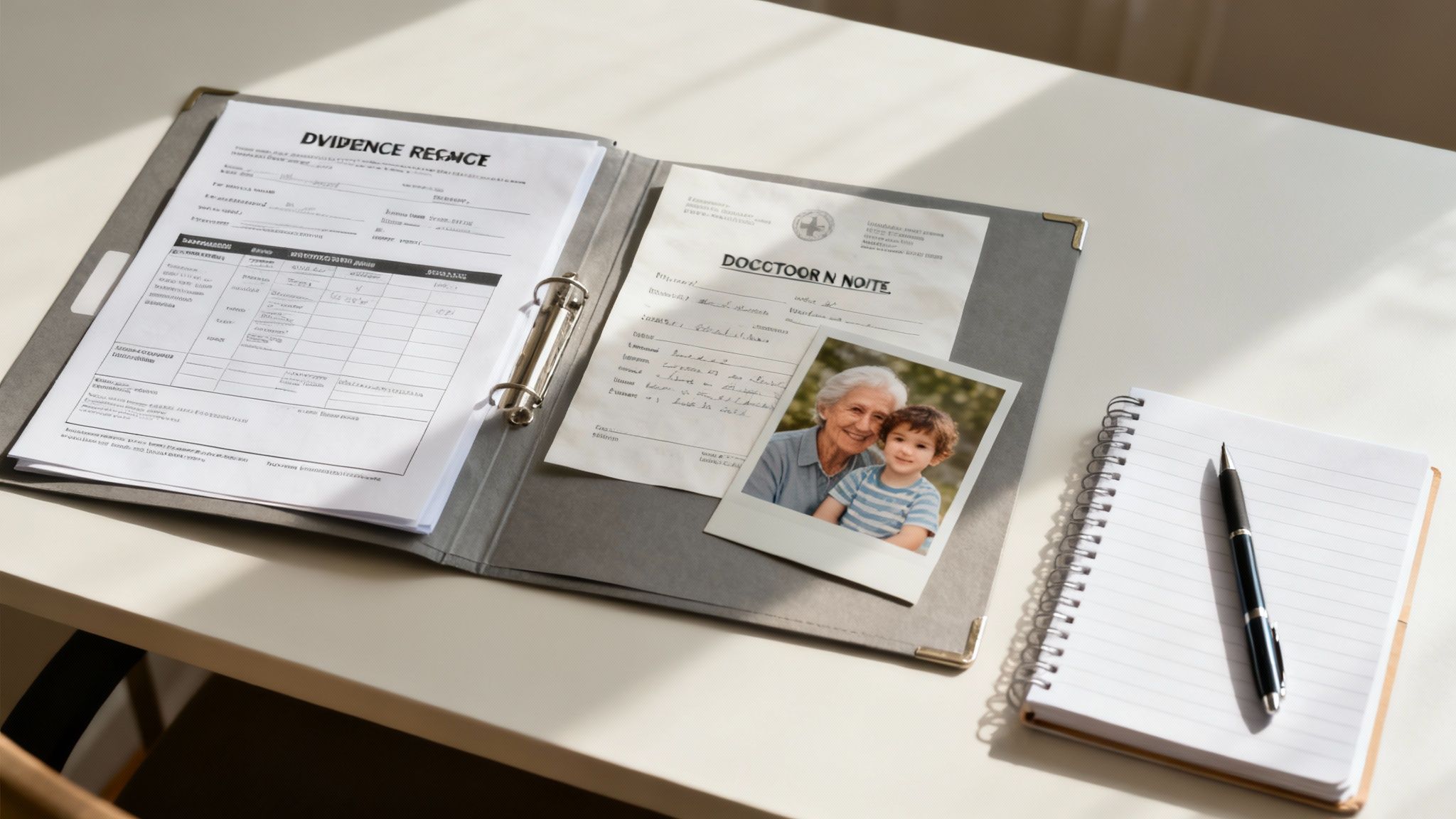
As heartfelt as your words may be, they won’t be enough on their own. You have to build a case with cold, hard evidence—the kind that paints an undeniable picture for the judge. Your job is to show that you are a stabilizing, positive force in the child's life, and that removing you would actively harm them.
Building a Foundation of Evidence
Think of yourself as a historian piecing together the story of your relationship. You're not just collecting photos of happy memories; you're gathering proof that you played a crucial, supportive role in your grandchild's life.
Start by collecting tangible proof of your bond and your involvement. Your documentation should include things like:
- Photographs and Videos: Gather pictures and videos of you together at holidays, school functions, doctor’s visits, and just everyday moments.
- Communication Logs: Save records of phone calls, texts, and emails between you, your grandchild, and the parents to show a consistent pattern of contact.
- School and Medical Records: Were you listed as an emergency contact? Did you attend parent-teacher conferences? These documents are powerful proof of your involvement.
- Financial Records: Keep receipts for things like clothes, school supplies, medical co-pays, or sports fees you covered. This demonstrates your financial support.
This collection of evidence establishes a clear history that you weren't just a visitor—you were a core part of the child's support system.
The Power of Third-Party Testimony
While your documents are a great start, some of the most compelling evidence will come from neutral, third-party professionals. These are people who can speak to your grandchild’s emotional state and the importance of your relationship without any personal bias getting in the way.
A judge is far more likely to be convinced by the objective observations of a teacher or a therapist than the emotional pleas of family members. Their testimony can shift your case from a "he said, she said" argument into a clear, fact-based case for the child's best interests.
Think about who in your grandchild's life has witnessed the impact of your absence. You might need to get testimony from:
- Teachers or School Counselors: They can speak to any changes in the child’s behavior, grades, or mood that happened after you were cut off.
- Therapists or Psychologists: If your grandchild is in therapy, their counselor can offer a professional opinion on the emotional harm caused by losing a key attachment figure.
- Doctors or Pediatricians: A doctor might be able to testify about physical symptoms of stress or anxiety, like stomachaches or sleep problems, that have appeared in the child.
These professional opinions can give the court the persuasive evidence it needs to see that the parent's actions are causing real harm.
Identifying Specific Harmful Behaviors
The court needs to see more than just a broken heart. You need to present concrete evidence of specific behaviors or circumstances in the parent's home that are harming the child. This could mean showing that a parent is neglectful, struggles with substance abuse, or is engaging in behavior that puts the child at risk.
Sometimes, the harm is more subtle, like a parent actively trying to turn a child against you. This is a damaging form of manipulation, and you can learn more about how to prove parental alienation in our detailed guide. Documenting these specific actions is absolutely critical to overcoming the powerful parental presumption.
Proving significant impairment is, without a doubt, the toughest part of any grandparents rights Texas case. It demands a thoughtful, strategic approach to gathering and presenting evidence. Ultimately, the strength of your case hinges on your ability to show, not just tell, the court why your grandchild needs you in their life.
Seeking Custody When a Grandchild Is at Risk
Sometimes, just fighting for visitation isn’t enough. When a child’s home environment becomes dangerous, you may feel an urgent, gut-wrenching need to step in and provide a safe harbor. This is the most serious step a grandparent can take—moving beyond asking for access and into seeking legal custody.
In Texas, what we typically call "custody" is legally known as conservatorship. Asking a court to name you a managing conservator over a parent is an extraordinary request reserved for the most severe circumstances. You are essentially asking a judge to declare that a parent is unable or unwilling to provide a safe home for their own child.
This is a high-stakes legal battle, and the court will only grant it if you can prove that the child's current living situation presents a real and immediate danger to their physical safety or emotional well-being.
The Standard for Seeking Conservatorship
Unlike a visitation case, where you must prove harm from your absence, a custody case requires you to prove harm from the parent's presence. The Texas Family Code sets an incredibly high bar for this. You must show the court that the child’s present circumstances would significantly impair their physical health or emotional development.
This isn't about minor parenting disagreements. It requires strong, undeniable evidence of serious issues, such as:
- Physical or emotional abuse by a parent.
- Severe neglect of the child’s basic needs.
- A parent’s ongoing, untreated substance abuse.
- A parent’s incarceration or complete abandonment of the child.
- Exposure to domestic violence or other dangerous activities in the home.
When a grandchild's safety is compromised by a parent's destructive behavior, understanding the dynamics at play is crucial. For instance, exploring strategies for navigating relationships with a narcissist can offer valuable insights into the challenges and potential risks your grandchild may be facing.
The Six-Month Possession Prerequisite
Before a court will even consider your request for conservatorship, you typically must meet a critical prerequisite. You must be able to prove that you have had “actual care, control, and possession” of your grandchild for at least six months. This six-month period must have ended no more than 90 days before you file your petition with the court.
Think of this rule as the court's way of giving legal standing to grandparents who have already stepped into a parental role. If your grandchild has been living with you and you've been their primary caregiver, this requirement demonstrates to the court that you are already the child's de facto parent and a source of stability.
Taking Emergency Action
What if your grandchild is in immediate danger and you can’t wait six months? In crisis situations, you may need to act swiftly. The law thankfully provides a path for that.
If you have evidence that your grandchild is in immediate physical or emotional danger, you can request a Temporary Restraining Order (TRO) and ask to be named the temporary managing conservator. This is a critical legal tool for intervening when a child’s safety is at risk. You can find out more about this process by reading our guide on filing an emergency petition for custody.
Seeking custody is a profound act of love and protection. It means you are willing to step up and provide the safety and stability your grandchild desperately needs when their parents cannot.
Navigating the Texas Court Process
Facing the court system can feel overwhelming, but understanding the step-by-step process can give you confidence. The entire legal journey for grandparents' rights in Texas begins by filing a specific document known as an Original Petition in a Suit Affecting the Parent-Child Relationship (SAPCR).
This petition is your official entry into the court system. It’s the document that tells the judge who you are, who the child and parents are, and exactly what you’re asking for—whether it's visitation rights (legally called "possession and access") or full custody ("conservatorship"). You'll file it with the district clerk in the county where your grandchild lives.
Once your petition is filed, you have to formally notify the child's parents that you have filed a lawsuit. This critical step is called "service of process," and it’s legally required to make sure everyone is aware that a case has begun.
The Initial Court Steps
After the parents have been served with the lawsuit, the wheels of justice start turning. One of the first major events is often a temporary orders hearing. Think of this as a mini-trial where a judge makes temporary decisions that will stay in effect while the full case moves forward. For example, a judge could grant you temporary visitation with your grandchild right then and there.
From there, your case moves into the discovery phase. This is the official evidence-gathering stage of the lawsuit. During discovery, you and the parents can formally request information from each other. This includes asking for documents, sending written questions that must be answered under oath, and conducting depositions (out-of-court testimony). This is where you methodically build the factual foundation of your case.
The Texas legal process is structured and deliberate, designed to give everyone a fair shot to present their side. Each step, from filing that first petition to gathering your evidence, is a building block toward a final outcome that puts the child's best interests first.
Mediation: The Path to Agreement
Before you ever see the inside of a courtroom for a final trial, nearly every Texas court will require you and the parents to attend mediation. This is a confidential meeting where everyone involved—you, the parents, and your lawyers—sits down with a neutral third-party mediator. The mediator’s only job is to help you find common ground and hash out a settlement.
Mediation is often where cases get resolved. It allows for creative, flexible solutions that a judge simply can't order from the bench. If you reach an agreement, it can be turned into a legally binding court order, saving everyone the emotional and financial toll of a full-blown trial.
Grandparents’ rights cases in Texas are heavily shaped by past court decisions that try to balance a parent's rights with a child's well-being. The famous U.S. Supreme Court case Troxel v. Granville established that fit parents are presumed to act in their child’s best interest. Texas law takes that principle and requires grandparents to prove that denying them access would actually harm the child's physical or emotional well-being. Discover more insights about how these legal standards are applied in Texas on ondafamilylaw.com.
Getting all the legal paperwork right for these steps is absolutely essential. Modern tools can offer a huge helping hand with AI for family law document drafting.
If mediation doesn't work out, your case will be scheduled for a final trial. That’s when a judge or jury will hear all the evidence and make the final decision. Knowing this roadmap from the beginning can make the entire journey feel much more manageable.
What to Do Next to Protect Your Relationship
Realizing you might need to fight a legal battle just to see your grandchildren is a uniquely painful and exhausting experience. But you aren't without options. The first, and most important, step is to start documenting everything meticulously. Keep a detailed log of every visit, phone call, text, or time you provided care for your grandchild.
If it’s still possible, try your best to keep the lines of communication with the parents calm and respectful. Sometimes, a simple, heartfelt conversation can clear up a misunderstanding and restore access without ever setting foot in a courtroom. But if that approach isn't working, you have to be ready to act decisively.
When to Take Legal Action
If you've been completely cut off and you genuinely believe your absence is harming your grandchild’s well-being, it's time to start thinking about your legal options. The truth is, the requirements for proving your case under Texas law are incredibly strict, and the emotional stakes for your family are as high as they get.
At this stage, the single most critical move you can make is to find an experienced family law attorney who specializes in grandparents rights in Texas. A lawyer who knows this specific area of the law can give you an honest, no-nonsense evaluation of your case. They'll help you gather the exact kind of evidence the court needs to see and become a powerful advocate for your grandchild’s best interests.
You are your grandchild's advocate. Taking the step to understand your legal rights is not about starting a fight; it's about protecting a vital family bond that supports your grandchild's emotional health and stability.
Your next steps need to be clear and strategic. Don't let fear or uncertainty keep you from acting.
Key Takeaway
Here’s a straightforward plan for what to do now:
- Document everything related to your history and involvement in your grandchild’s life.
- Attempt respectful communication with the parents, but only if it feels safe and productive.
- Recognize when dialogue has failed and it's time to shift your strategy.
- Consult with a specialist in Texas family law to understand your rights and build a solid plan.
Protecting that precious bond with your grandchild requires a blend of compassion and decisive action.
Navigating the complexities of grandparents’ rights in Texas demands experienced and empathetic legal guidance. At The Law Office of Bryan Fagan, PLLC, we understand what’s at stake and are here to help you protect your relationship with your grandchild. Schedule a free, confidential consultation with us today to understand your options and take the first step toward securing your family’s future. Visit us at https://texasdivorcelawyer.us to learn more.