Skip to content
Deciding to grow your family through adoption is one of the most hopeful, life-changing moments you can experience.
The legal journey to get there, however, can feel overwhelming when you're already managing so much. In Texas, the adoption process is a structured legal path designed with one critical goal: ensuring children are placed in safe, permanent, and loving homes. This journey involves key steps like a home study, background checks, and a final court hearing that makes your family official. Before you get there, you need to understand the different roads you can take to build the family you envision.
Understanding Your Adoption Journey in Texas
Expanding your family through adoption is a profound decision, but it’s completely normal for the path forward to seem filled with questions and legal complexities. You are not alone in feeling this way. At its core, the adoption process in Texas is governed by the Texas Family Code, which prioritizes the best interest of the child above all else. Our goal is to demystify this process and give you the clarity and confidence you need to take your first steps.

The Primary Paths to Building Your Family
Texas law provides several distinct avenues for adoption, each with its own procedures and timeline. Figuring out which option is the right fit for your family's circumstances and goals is the best place to start.
Here are the most common paths you can take:
- Private Infant Adoption: This route typically involves working with an adoption agency or an attorney to be matched with a birth mother who is making an adoption plan for her newborn.
- Adoption from Foster Care: This is a way to provide a permanent, loving home for a child currently in the care of the Texas Department of Family and Protective Services (DFPS).
- Stepparent or Relative Adoption: This process legally solidifies a bond that already exists, common when a stepparent or another family member, like a grandparent, adopts a child they are already raising.
As you start this journey, preparing your existing children for welcoming a new addition can make the transition smoother for everyone. To help you visualize the differences, the table below breaks down the key factors to help you think about which direction best suits your family.
Comparing Adoption Paths in Texas
| Adoption Type | Typical Child Age | Primary Oversight | Key Consideration |
|---|---|---|---|
| Private Infant Adoption | Newborn to 1 year | Licensed Adoption Agency/Attorney | Often involves a shorter wait time but higher costs. |
| Adoption from Foster Care | Infant to 18 years | DFPS | Financial assistance is often available from the state. |
| Stepparent/Relative Adoption | Varies | Texas Family Court | Focuses on terminating the absent parent's rights. |
Each of these paths leads to the same beautiful outcome: a family. The right choice for you depends on your personal circumstances and what you're looking for in your adoption journey.
Key Milestones in Every Texas Adoption
No matter which path you choose, you will encounter a few key milestones. The first major step is the home study—an evaluation by a licensed social worker to ensure your home is a safe and stable environment. This process involves interviews, background checks, and a review of your financial stability.
The legal framework for adoption isn’t just about rules; it’s about creating a secure, permanent, and loving future for a child. An experienced family law attorney ensures every detail is handled correctly, protecting your rights and your future family from potential legal challenges.
After a successful home study and placement, the next phase involves legally terminating the biological parents' parental rights. This is a sensitive but critical step that must be handled with legal precision. In situations where the biological father is unknown or unconfirmed, understanding the nuances of Texas paternity laws becomes essential to ensure the adoption is legally secure and cannot be challenged later.
The state’s commitment to finding children permanent homes is significant. Over a recent ten-year period, 53,412 children were adopted through the Texas child welfare system alone, and the number of annual adoptions has grown by over 27%. This data shows a strong, sustained effort to unite children with forever families, and you can be a part of that.
Preparing for the Texas Home Study
For many hopeful parents, the words "home study" can stir up a mix of excitement and anxiety. If you’re picturing a white-glove inspection where a stranger judges your decorating choices, take a deep breath. That’s not what this is about.
Let’s reframe this critical step in the adoption process texas. Think of it less like an audit and more like a partnership. A licensed social worker isn't there to find fault; they're there to help you prepare, to make sure you have a solid foundation, and to ensure a child will be joining a safe, stable, and loving home. It's about being ready, not being perfect.
What's Actually Involved?
The home study is a detailed portrait of your life—your history, your home, and your heart for adoption. It’s a multi-part process designed to give the court a complete picture of who you are.
First, you'll need to gather paperwork. You’ll need to pull together several documents to verify your identity, financial health, and overall stability.
- Financial Records: This usually means tax returns, recent pay stubs, and a basic budget to show you have the means to support a child.
- Health Statements: You'll need a letter from your doctor confirming you're physically and mentally healthy enough for the demands of parenting.
- Personal References: You will ask a few friends, colleagues, or mentors to write letters that speak to your character and readiness to be a parent.
- Background Checks: This is non-negotiable. Every adult living in your home must complete state and federal criminal background checks, plus a child abuse registry check.
While the paperwork lays the foundation, the substance of the home study comes from the interviews and the visit to your home.
The Interviews and Home Visit
The interviews are really just conversations. They’re a chance for the social worker to get to know you beyond the documents. You can expect to talk about your childhood, your relationship with your partner (if applicable), your support system, and your ideas about parenting. Honesty is your best policy here. The social worker is trying to understand your strengths, how you handle stress, and what your parenting philosophy looks like. They might ask how you plan to handle discipline or how you’ll talk to your child about their adoption story.
The home study isn't about passing a test. It’s a constructive dialogue aimed at preparing you for success. Being open about your past and realistic about your expectations shows maturity and readiness—exactly what social workers are looking for.
When it comes time for the home visit, the focus is on one thing: safety. Your social worker is looking for common-sense safety measures.
- Are your smoke and carbon monoxide detectors working?
- Are firearms or hazardous materials (like cleaning supplies) stored securely?
- Is there a safe and appropriate place for a child to sleep?
- Is the home generally clean and free of obvious hazards?
You don’t need a perfect nursery. You just need to demonstrate that you've created a secure environment where a child can thrive. This part of the adoption process texas is all about giving the court confidence that your home is a safe haven.
Getting Ready: Your Next Steps
The home study is a major milestone. A little prep work can make the entire experience feel empowering instead of stressful.
- Start Gathering Paperwork Now: Don't wait. Begin collecting your financial records, reaching out to your references, and getting your health statements in order.
- Talk It Out: Have real conversations with your partner or a close friend. Think through the big questions about your parenting values and how you want to raise a child.
- Do a Safety Sweep: See your home from a child’s perspective. Cover outlets, secure heavy furniture, and put locks on low cabinets. Addressing these things now shows you're proactive.
By treating the home study as a collaborative and constructive step, you can walk into it with confidence. After all, you and the social worker share the exact same goal: creating a wonderful, permanent home for a child who needs one.
The Legal Steps to Finalize Your Adoption
The moment a child is finally placed in your home is what this entire journey is all about. While the emotional connection feels immediate, the legal process to make your family official is just beginning. This part of the adoption process texas can feel technical, but it’s a necessary path to making everything permanent. We're here to translate these legal steps into a clear, understandable roadmap for you.
This visual guide breaks down the essential components you'll encounter during this stage.
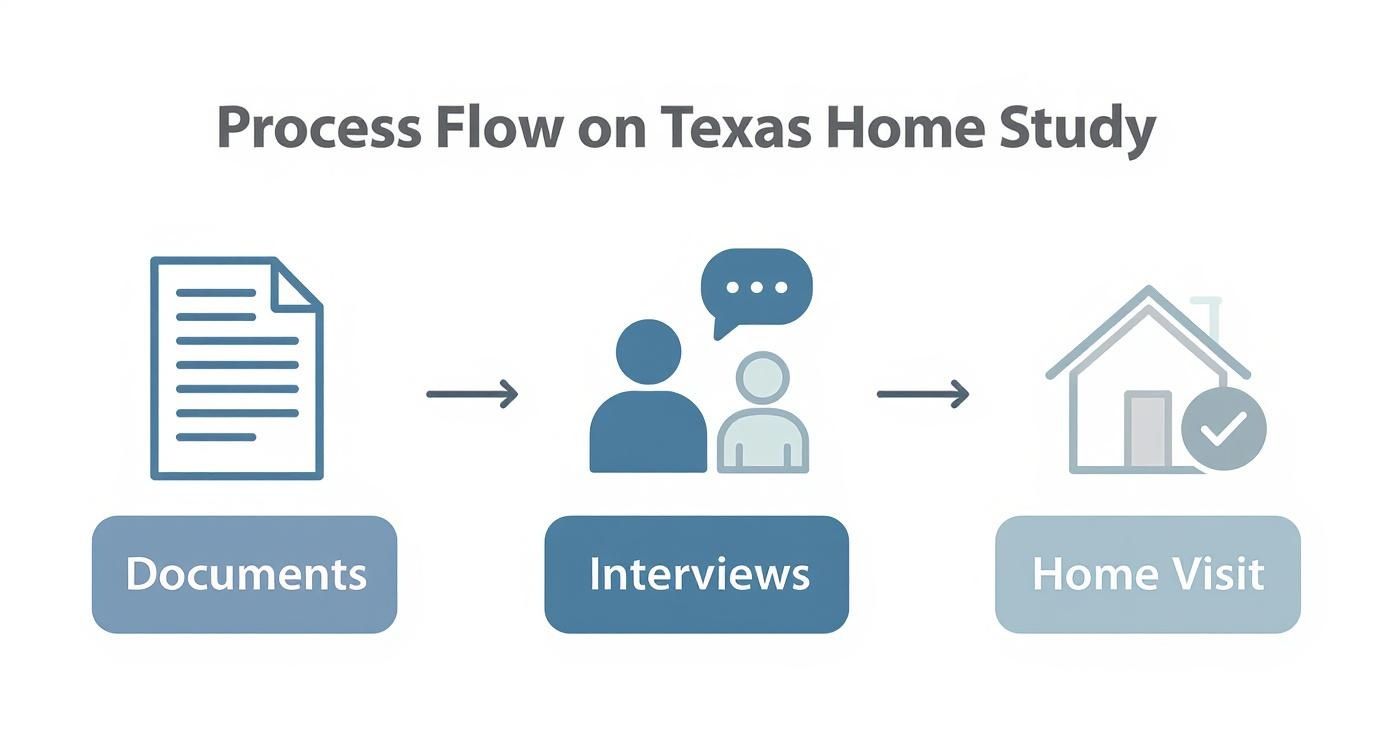
Following this process carefully ensures every legal detail is handled, leading to a secure and joyful finalization for your family.
Filing the Petition and Terminating Parental Rights
The first formal step is filing a document called the Original Petition for Adoption with the appropriate Texas court. This document states your intention to adopt a specific child and shows that you meet all of the state’s requirements, setting the legal stage for everything that follows.
At the same time, a sensitive but critical legal action must happen: terminating the biological parents’ parental rights. This permanently severs the legal ties between the birth parents and the child, clearing the way for you to become the child's legal parents. Without this, an adoption cannot be finalized.
This termination can happen in a couple of ways under the Texas Family Code:
- Voluntary Relinquishment: In many private adoptions, a birth parent makes the courageous decision to voluntarily sign legal documents giving up their parental rights. In Texas, a birth mother cannot sign this affidavit until at least 48 hours after the child’s birth. This waiting period is designed to ensure her decision is made with a clear mind and without pressure.
- Involuntary Termination: When a parent is unwilling or unable to consent, a court may be asked to terminate their rights. This is common in foster care adoptions where a child was removed due to abuse or neglect. The court must find that the parent has committed an act that meets specific grounds listed in the Texas Family Code, such as endangerment, abandonment, or failure to support the child.
This is arguably the most legally complex part of the process. Having an experienced family law attorney is absolutely essential to make sure every notice is properly served and every legal standard is met, protecting your adoption from future challenges.
The Post-Placement Supervision Period
Once the child is living with you, Texas law requires a period of post-placement supervision, usually lasting several months. This involves a series of visits from a social worker. Think of these not as inspections, but as supportive check-ins to see how everyone is adjusting.
The social worker will observe how you interact with the child, offer resources, and document the family’s progress in a report for the court. They want to see that the child is bonding with you and that you're meeting all their needs. This is your chance to show the court that this placement is thriving and is truly in the child’s best interest.
This period is about demonstrating stability and love in action. The social worker's positive report becomes a key piece of evidence at your final hearing, confirming for the judge that your home is the permanent, nurturing environment this child deserves.
For many adoptive families, the legal rights of birth parents are a major concern. It's crucial to understand the grounds for termination and the finality of the court's decision. You can learn more about the complexities surrounding Texas laws on getting your child back after adoption to see how the state works to provide permanence and security for the child once the process is complete.
The Finalization Hearing: The Day It Becomes Official
After the post-placement period is successfully finished and all legal requirements are met, your attorney will schedule the finalization hearing. This is the day you’ve been waiting for.
Unlike the tense hearings you might see in a divorce or custody case, an adoption finalization is a joyous, celebratory event. You, your child, and often extended family will go before a judge. Your attorney will present the final evidence, including the social worker’s report, and you’ll affirm your commitment to parent the child.
The judge will then sign the Decree of Adoption. With that signature, your child becomes legally and forever a member of your family. You are granted all the rights and responsibilities of a parent, and a new birth certificate will be issued with your names on it. It’s a powerful, emotional moment that marks the official beginning of your new family.
Setting Realistic Adoption Timelines
One of the first questions you probably asked was, "How long is this going to take?" There's no simple answer because no two adoption journeys are the same. The path you choose—whether it’s adopting from foster care or pursuing a private infant adoption—will dramatically shape the timeline.

This waiting period is often the most emotionally challenging part of the adoption process in Texas. Understanding the factors that influence these timelines helps you set realistic expectations and prepare for the natural ups and downs ahead. It’s not about rushing things; it’s about being informed and emotionally ready for the wait.
Why Wait Times Vary So Dramatically
The type of adoption you pursue is the single biggest factor affecting your timeline. For instance, adopting an older child or a sibling group from the Texas foster care system can often move more quickly because these children are already legally free for adoption.
Private domestic infant adoption involves a different kind of waiting. In this scenario, you are waiting to be chosen by a birth mother. That matching process is deeply personal and can take anywhere from a few months to a few years. For private domestic infant adoptions, the average wait time for a match ranges from 12 to 24 months. You can discover more insights about Texas adoption wait times to get a clearer picture.
The emotional key to navigating the wait is to reframe it as a period of preparation. Use this time to read, connect with other adoptive families, and strengthen your own support system. This is an active part of your journey, not just a pause.
The timelines for adoption in Texas can be hard to predict, but understanding the general estimates for each pathway helps you prepare mentally and financially.
Estimated Texas Adoption Timelines
This table shows typical timelines for different adoption pathways, helping you set realistic expectations.
| Adoption Pathway | Average Wait Time for Placement | Post-Placement to Finalization |
|---|---|---|
| Private Infant Adoption | 12 to 24 months, sometimes longer | Typically 6 months |
| Foster Care Adoption | 6 to 18 months (after certification) | Typically 6 months |
| International Adoption | 1 to 3+ years | Varies by country |
| Stepparent Adoption | N/A (child already in home) | 3 to 6 months |
These figures are averages. Your personal journey might be shorter or longer depending on the unique circumstances of your case.
Common Factors That Can Cause Delays
Beyond the type of adoption, several legal hurdles can extend your timeline. Being aware of these potential bumps can help you manage your expectations and work proactively with your attorney to address them.
Common delays in the adoption process in Texas often include:
- A Contested Termination of Parental Rights: If a biological parent fights the termination in court, it can add significant time and complexity. This is where having an experienced family law attorney is non-negotiable.
- Navigating the ICPC: Adopting a child from another state is governed by the Interstate Compact on the Placement of Children (ICPC). Getting approval from both states' agencies involves a mountain of paperwork and can add weeks or even months to your timeline.
- Incomplete or Missing Paperwork: The adoption process is document-heavy. Any missing information or an incorrectly filed form can bring everything to a halt until it’s corrected.
Understanding these variables from the start allows you to approach your adoption journey with patience and perspective. Every step, including the waiting, is part of building a strong foundation for your family.
Common Questions About Adopting in Texas
Starting your adoption journey is bound to bring up questions. Getting clear, straightforward answers is the first step toward peace of mind. Here are some of the most common questions our family law attorneys hear about the Texas adoption process, answered in plain English.
How Much Does It Cost to Adopt a Child in Texas?
The answer varies wildly depending on which path you take. Adopting from the Texas foster care system is the most affordable route and often costs very little. The state provides support and you may even be eligible for financial subsidies.
Private domestic infant adoption is a major financial undertaking, with costs often ranging from $30,000 to $60,000 or more. These fees typically cover agency services, legal representation for you and the birth mother, her medical bills, and counseling. International adoptions have a similar price tag, plus added expenses for travel and immigration.
The key to managing adoption costs is to do your homework and plan ahead. Understanding the financial commitment of each path from the beginning lets you prepare and avoid surprises, making the journey smoother.
A good attorney can break down the legal fees for you and make sure every financial transaction is handled ethically and legally under Texas law.
Can a Single Person Adopt a Child in Texas?
Yes, absolutely. Texas law is clear: any single adult who is at least 21 years old is eligible to adopt. Your marital status is not a barrier. The home study process evaluates your stability, maturity, and support system—the same factors considered for a married couple. The focus is on your ability to provide a safe, nurturing, and permanent home for a child.
What Happens If a Birth Parent Changes Their Mind?
This is a valid concern for almost every hopeful adoptive parent. The adoption process in Texas has specific legal safeguards to protect everyone involved.
Under the Texas Family Code, a birth mother cannot legally sign papers to relinquish her parental rights until at least 48 hours after giving birth. This mandatory waiting period ensures the decision is made thoughtfully. Once this document is properly signed and witnessed, it is generally considered irrevocable, meaning the decision is permanent and legally binding.
The birth father's rights must also be legally addressed. If he doesn't sign a voluntary relinquishment, a court may need to terminate his parental rights. This is where things can get complicated, and having a skilled attorney in your corner is critical to protect your adoption from future challenges.
Do I Really Need an Attorney to Adopt in Texas?
While not strictly required in every scenario (like some agency-led foster adoptions), it is highly advisable to have your own lawyer. Adoption is a formal legal proceeding that permanently creates new parental rights while severing old ones. An adoption attorney is your personal advocate, whose only job is to protect your interests and your future family.
Here’s why having your own legal counsel is so important:
- Getting it Right: They ensure every document is filed correctly and on time.
- Navigating Termination: They handle the complex process of terminating birth parent rights according to the strict standards of the Texas Family Code.
- Giving You Security: They ensure your adoption is legally sound and secure from potential challenges, providing priceless peace of mind.
For any private, stepparent, or independent adoption, an attorney is essential. The legal maze, especially around the custody rights for unmarried parents and potential paternity claims, demands professional legal skill.
Taking Your First Step in the Texas Adoption Process
You’ve made it this far, which means you have a solid map of the Texas adoption process—from those first quiet thoughts to the incredible day a judge signs the final decree. The path is clear. Now, it’s about taking that first step with confidence. While the journey has its share of procedures, building your family through adoption is an achievable and deeply rewarding goal. You just need the right people in your corner.
The adoption process in Texas is a journey of the heart, built on a foundation of legal precision. Knowing your rights, understanding the steps, and having compassionate, expert guidance can make all the difference. You don't have to figure this out alone.
For many, the decision to adopt comes after a long, difficult road, sometimes after choosing to stop fertility treatment to adopt. It's also helpful to know the reality of the need in Texas, where older kids and teens often wait much longer for a family. You can see the data by reading the full report about Texas adoption statistics.
At The Law Office of Bryan Fagan, PLLC, we believe every family deserves clarity and confidence as they grow. If you are ready to take the next step or simply want to understand your options better, we invite you to schedule a free, no-obligation consultation with our team. Let us help you navigate this path with the care and legal skill your future family deserves.